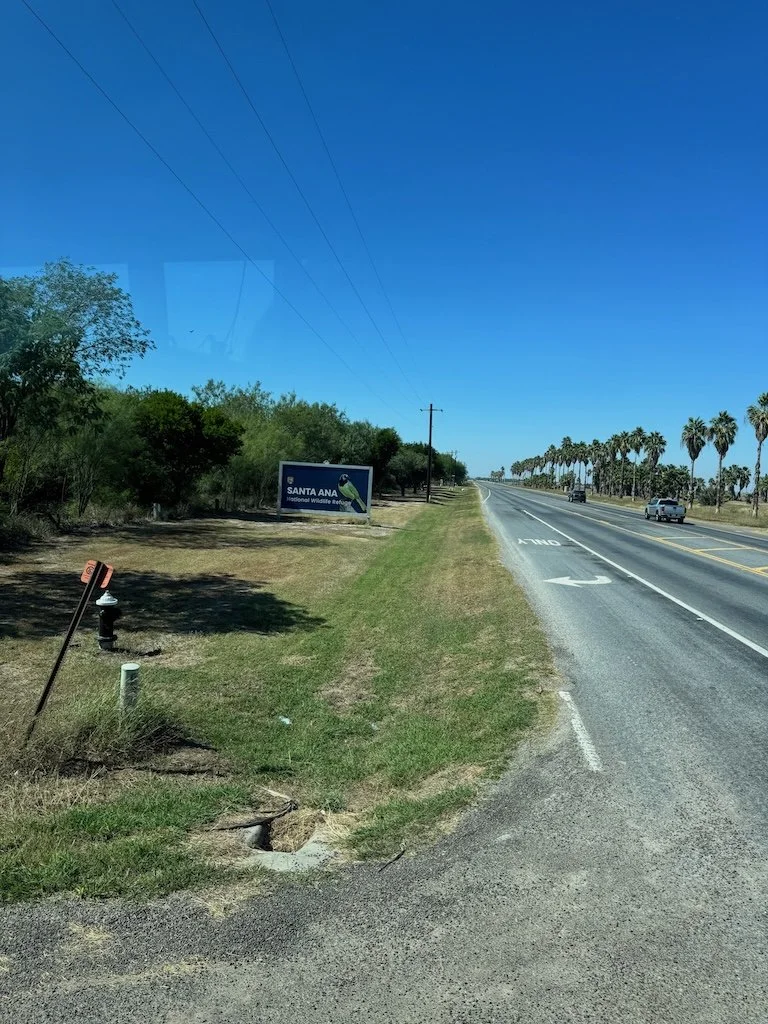
Santa Ana National Wildlife Refuge

We visited the Santa Ana National Wildlife Refuge on the third morning of the Rio Grande Valley Birding Festival. The visitor center was not open (it was during the government shutdown), but the restrooms were. I knew the morning was going to include some hiking, so I brought along my trekking poles and they worked great – I got tired, but my back didn’t hurt!

There was a lot to see. The highlights in my photographs were:

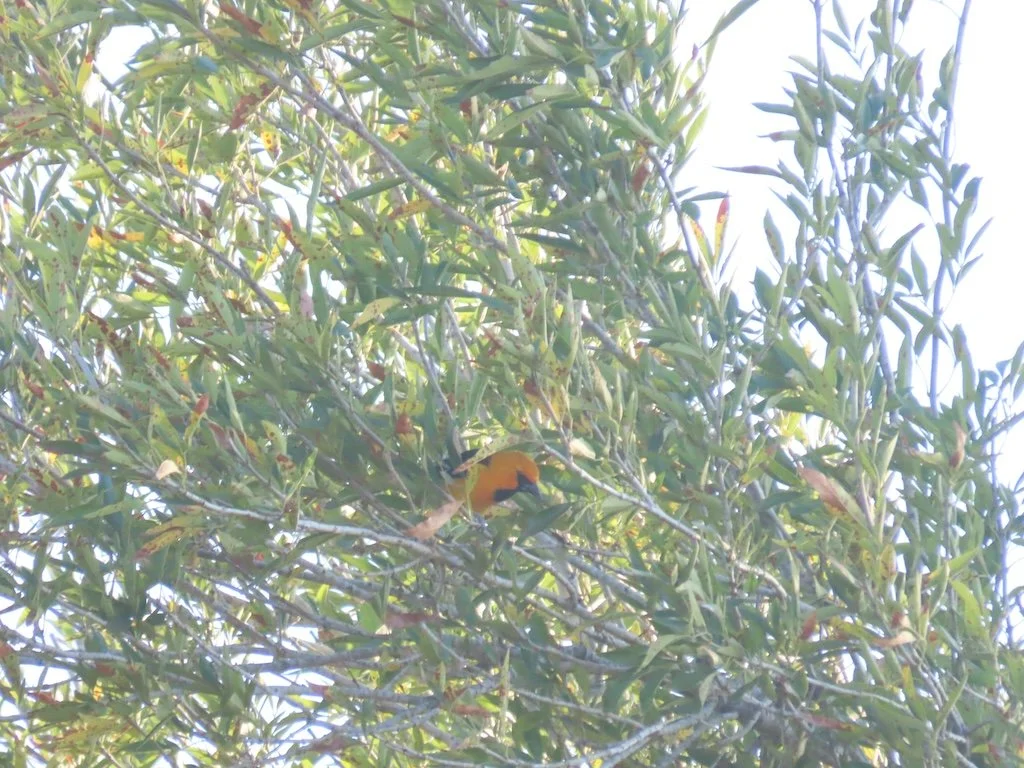
Altamira oriole and a nest created by the species
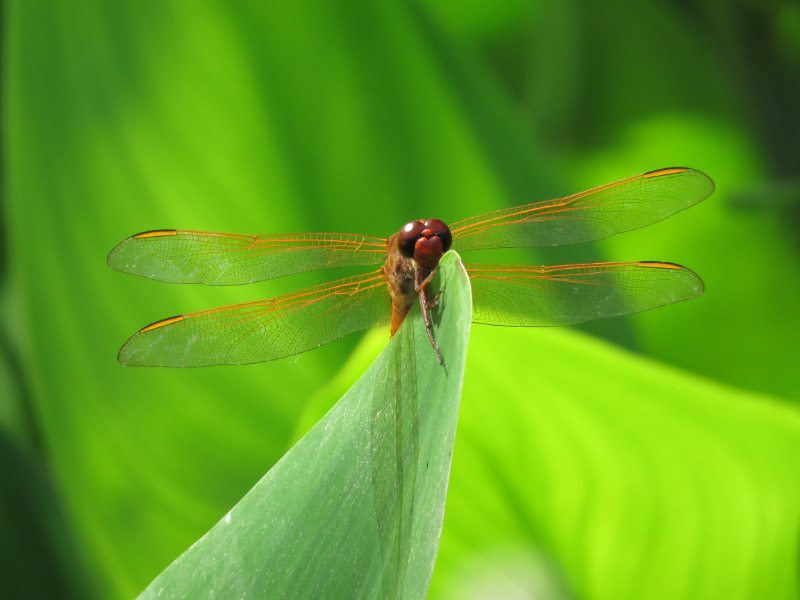
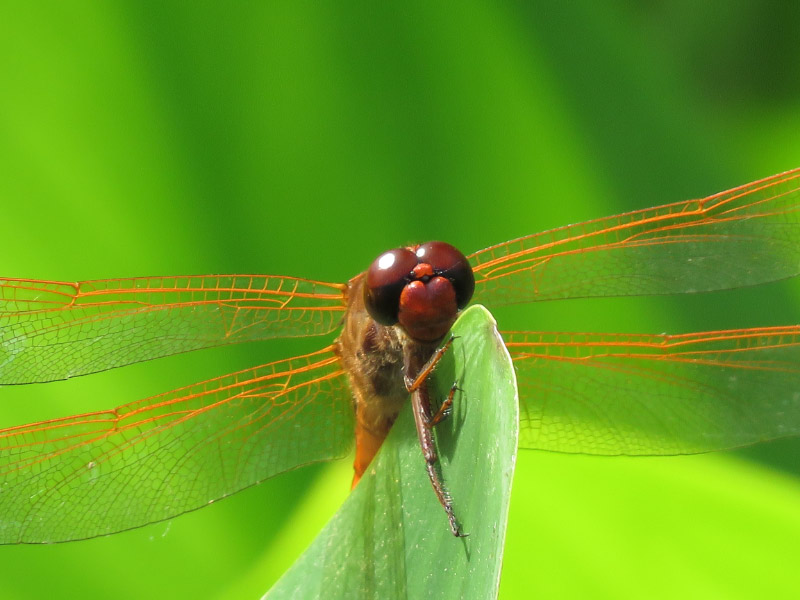
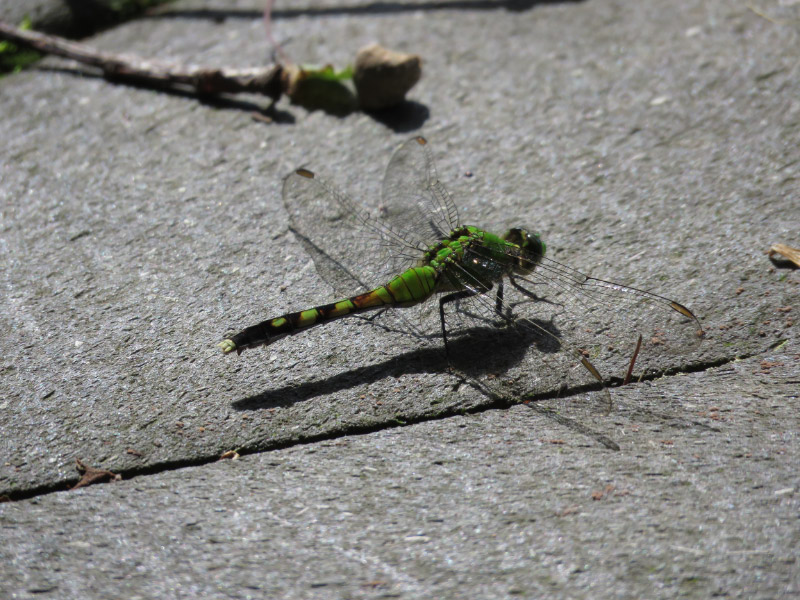
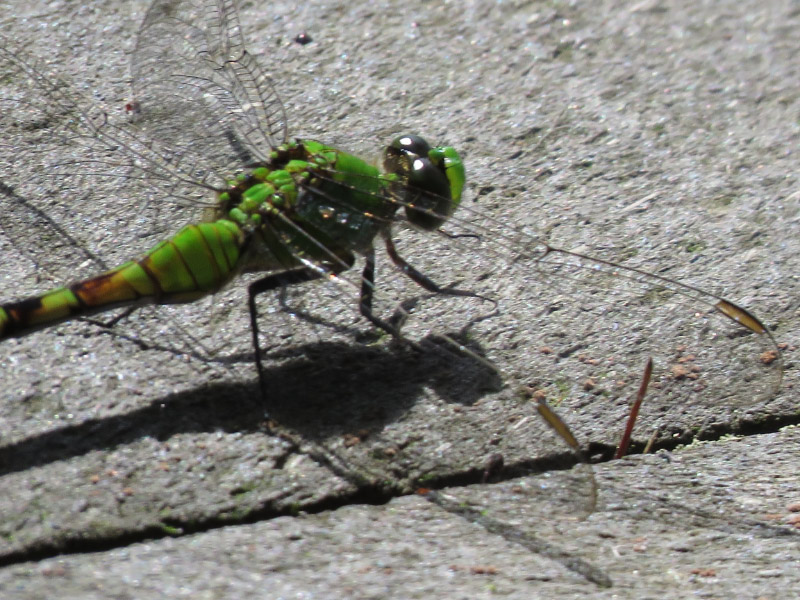
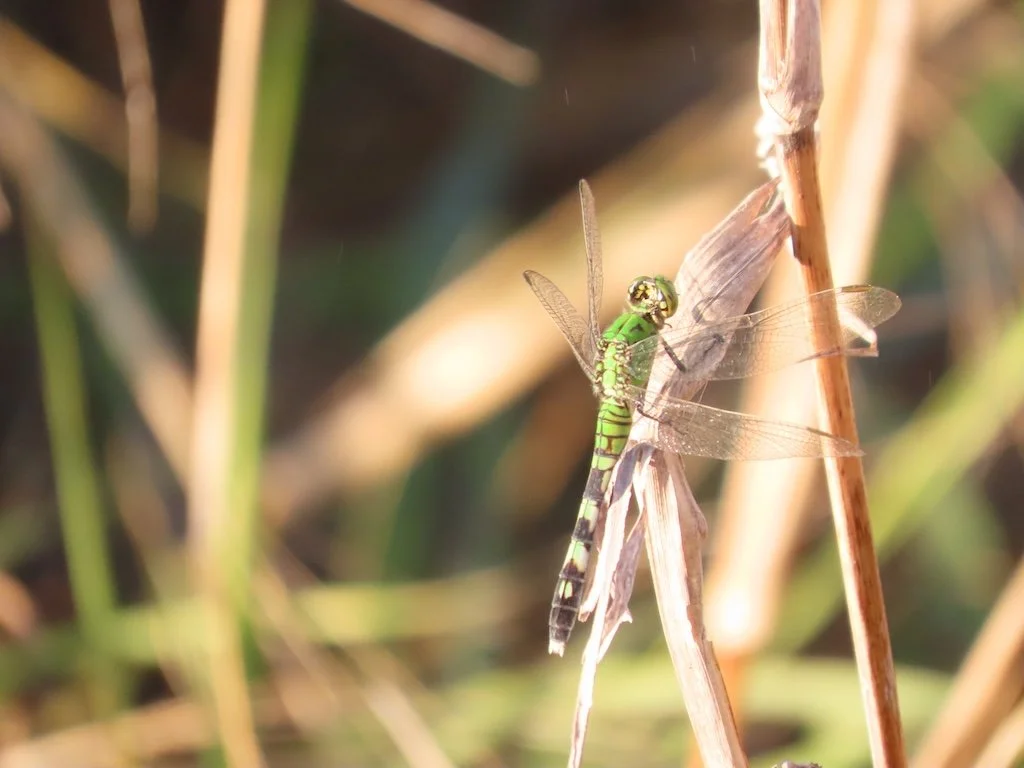
Eastern Pondhawk (dragonfly)
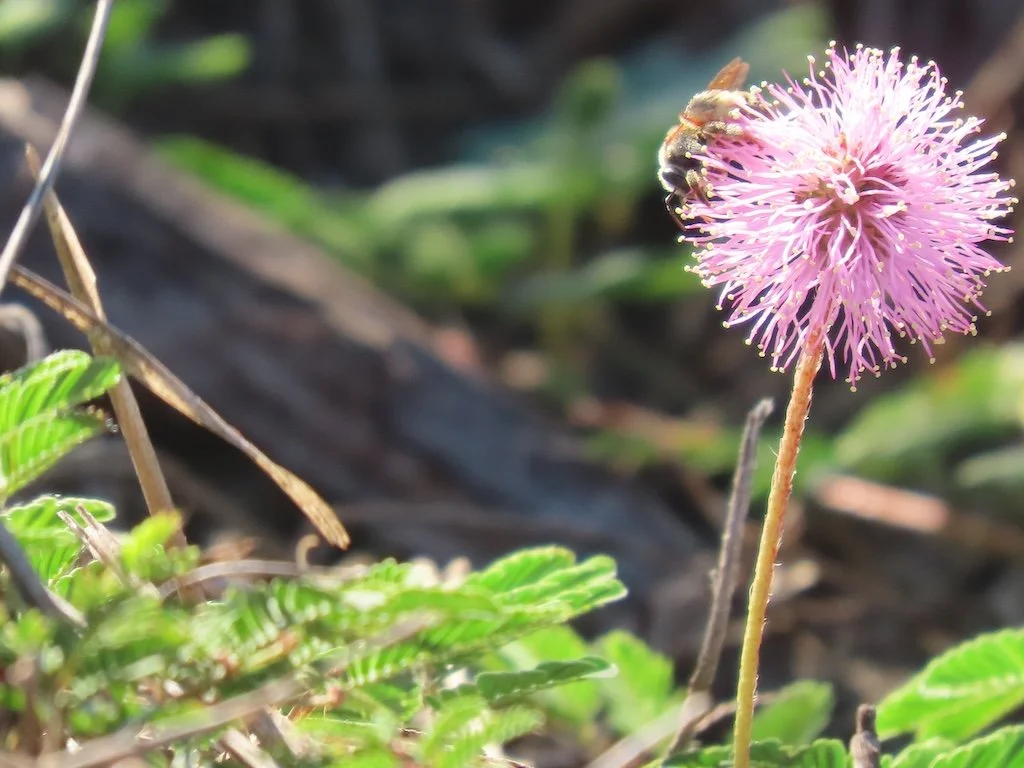
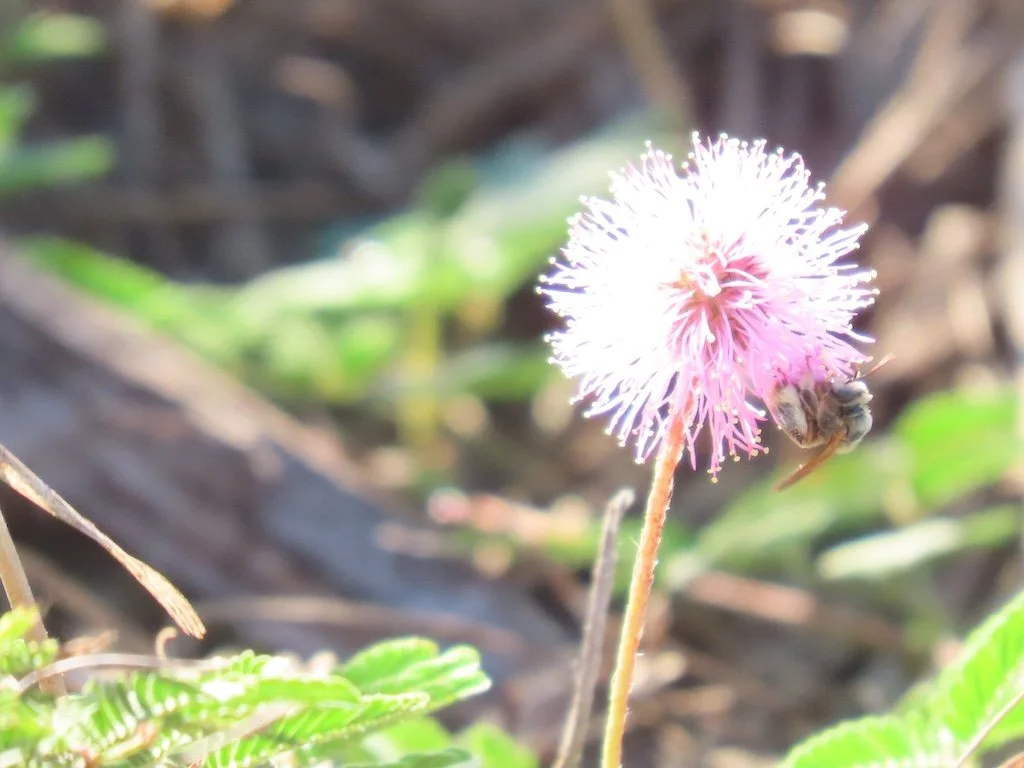
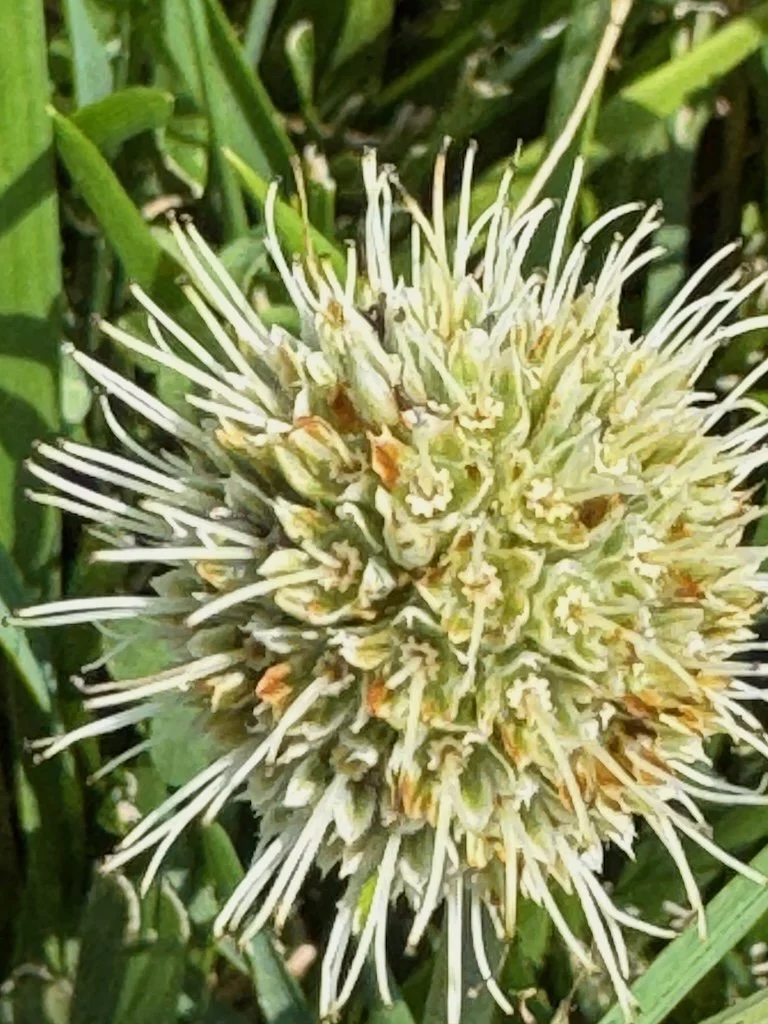
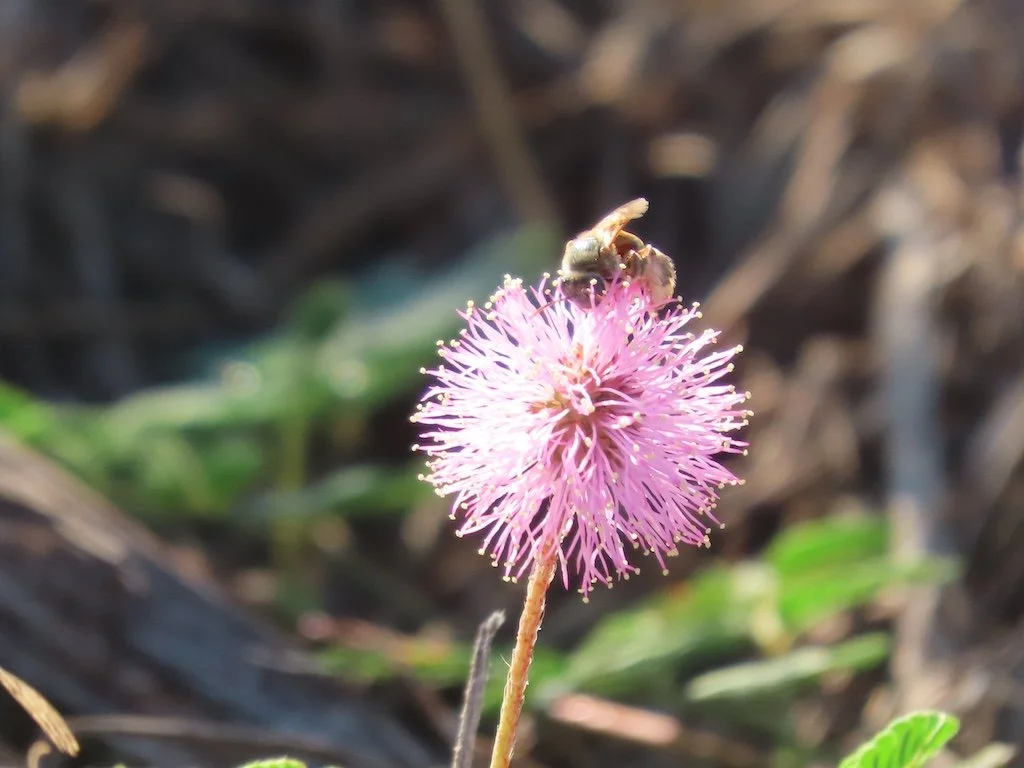
A bee on the ground mimosa - Powderpuff (Mimosa strigillosa)
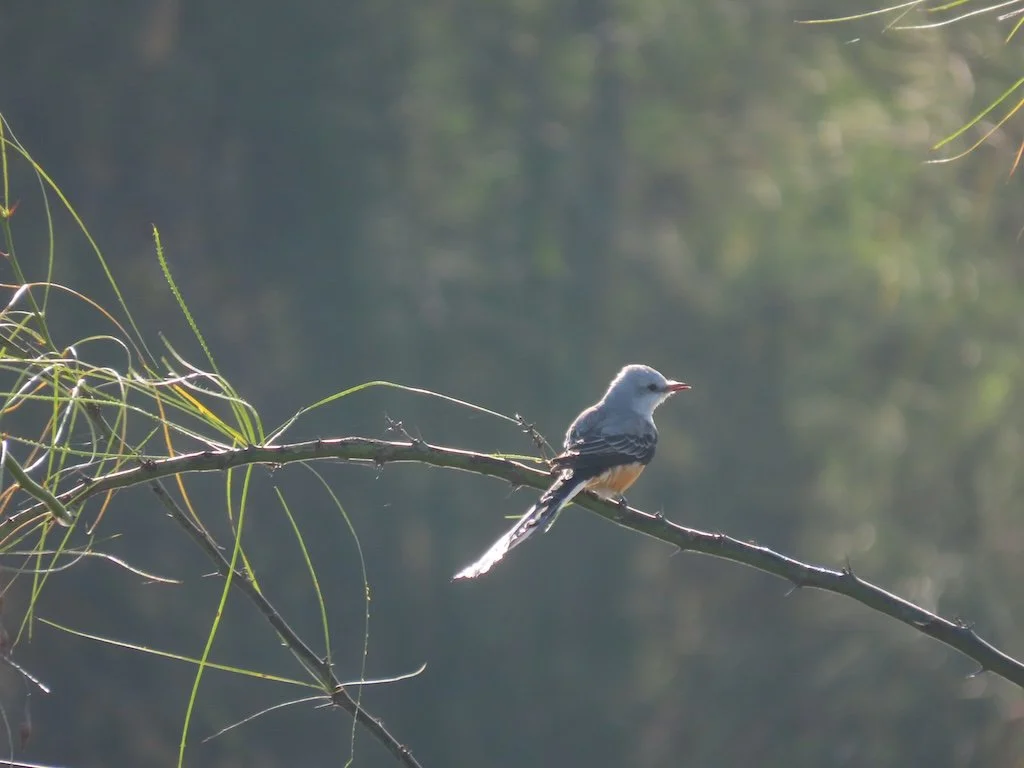
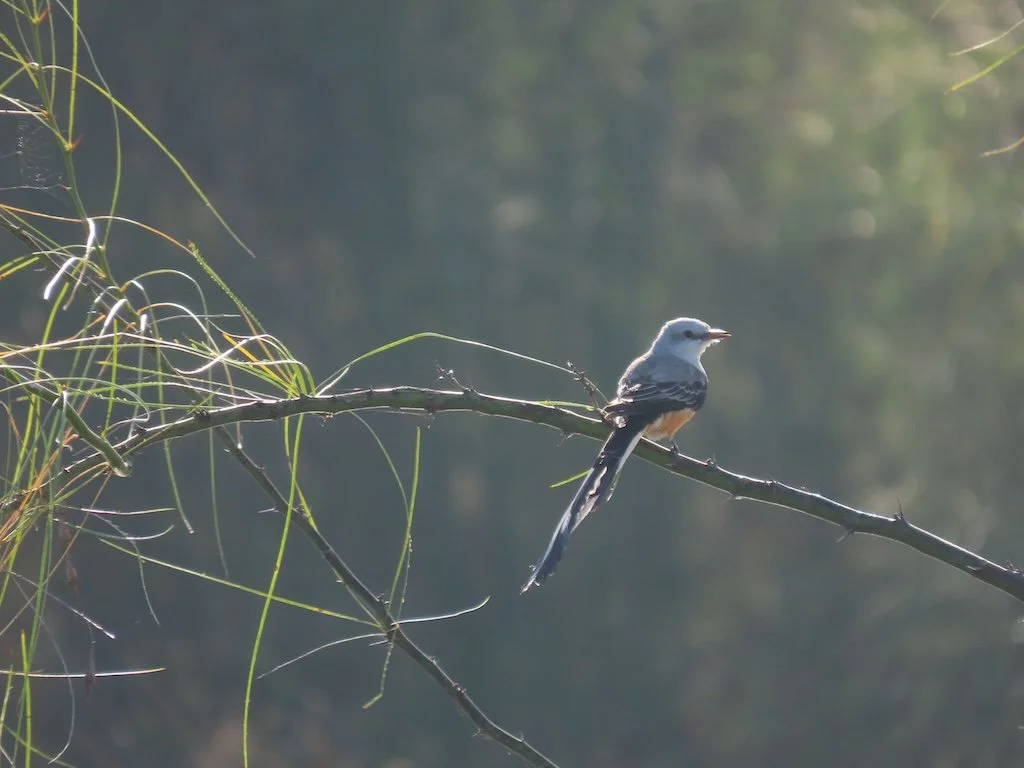
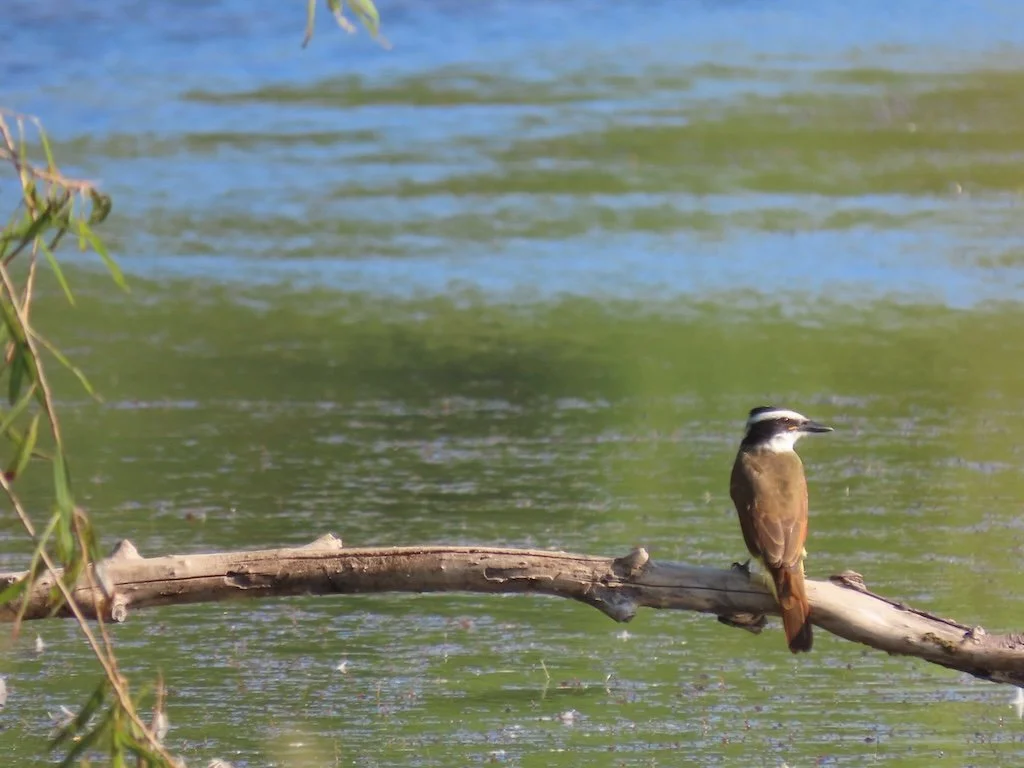
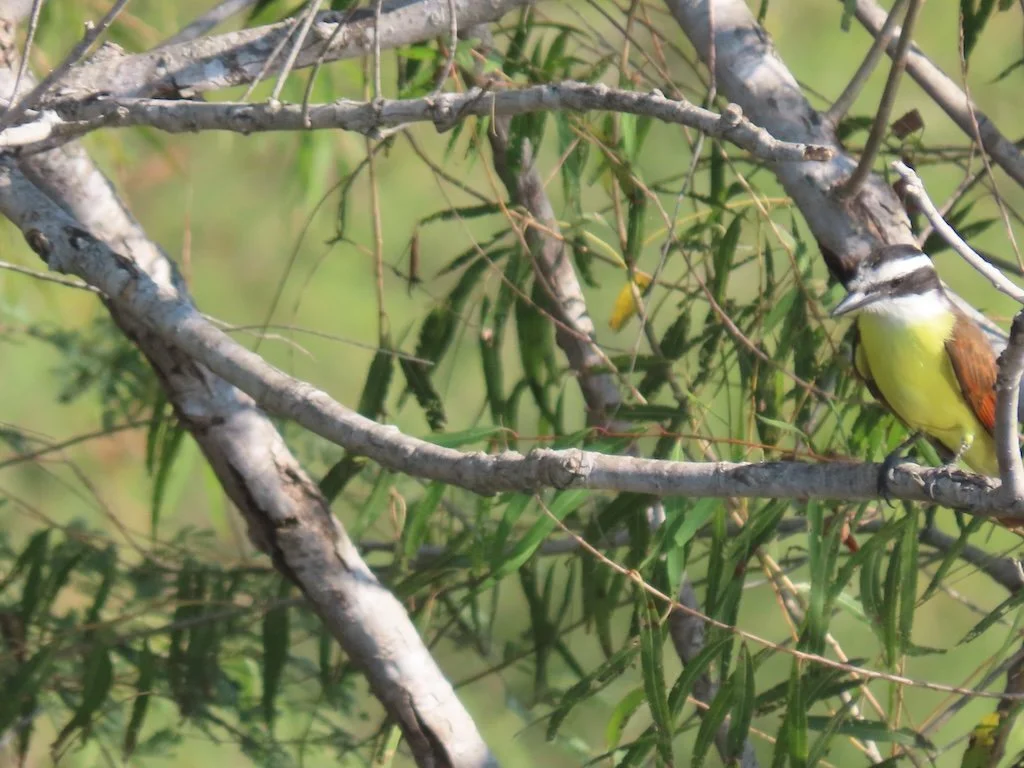
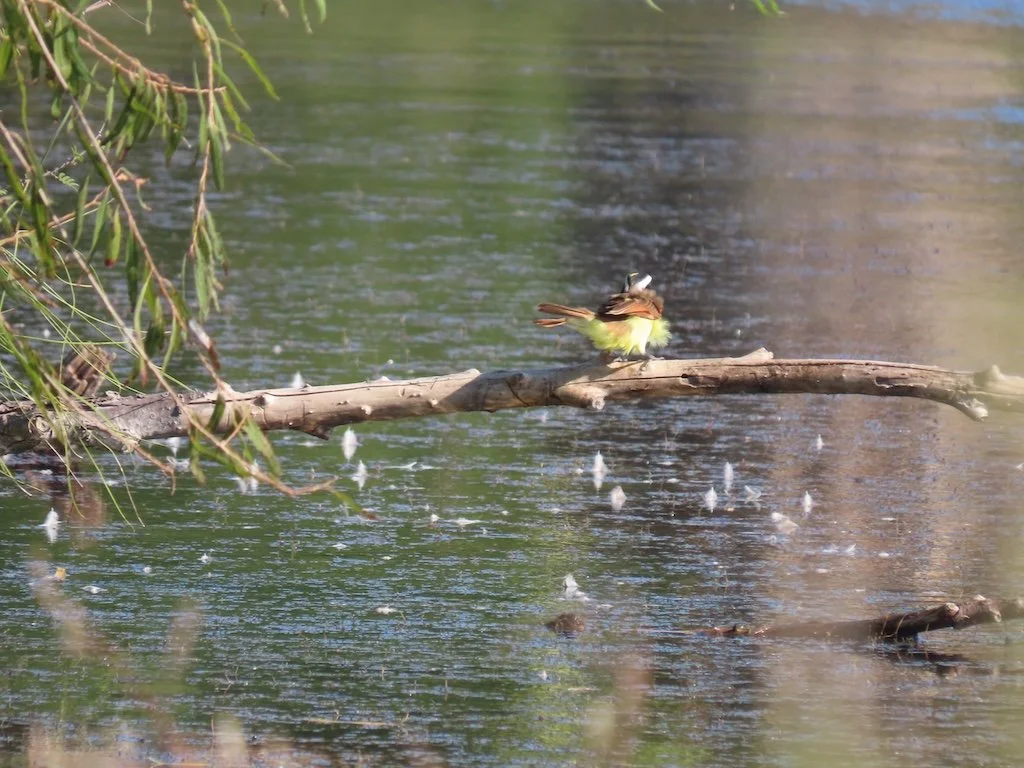
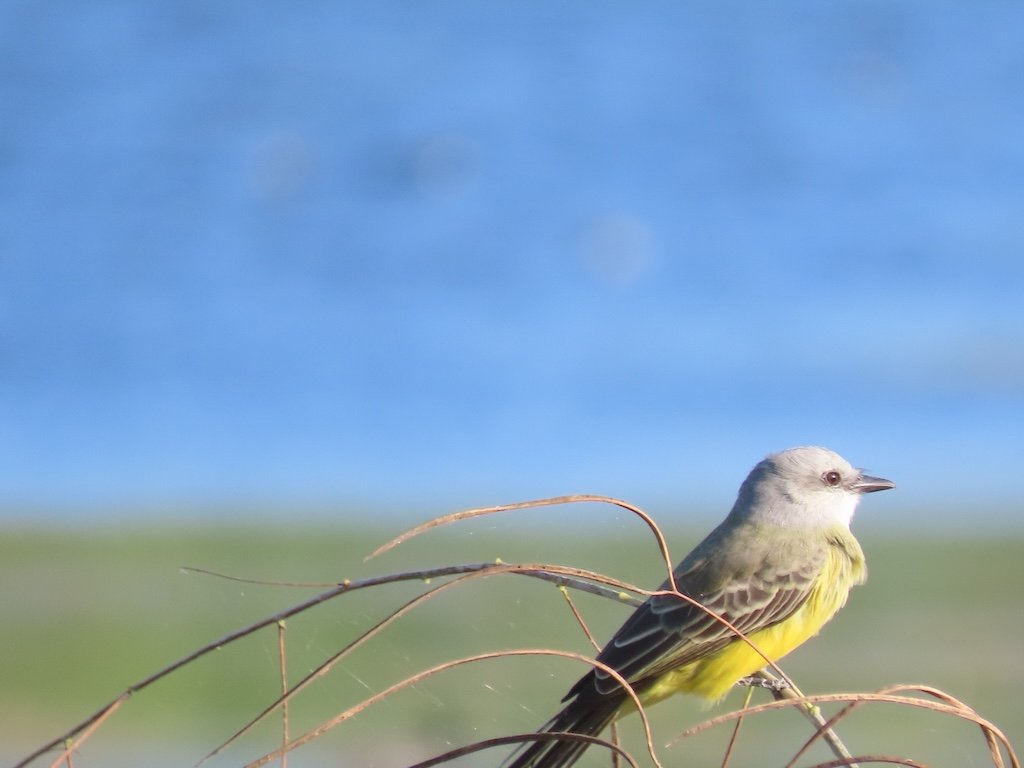
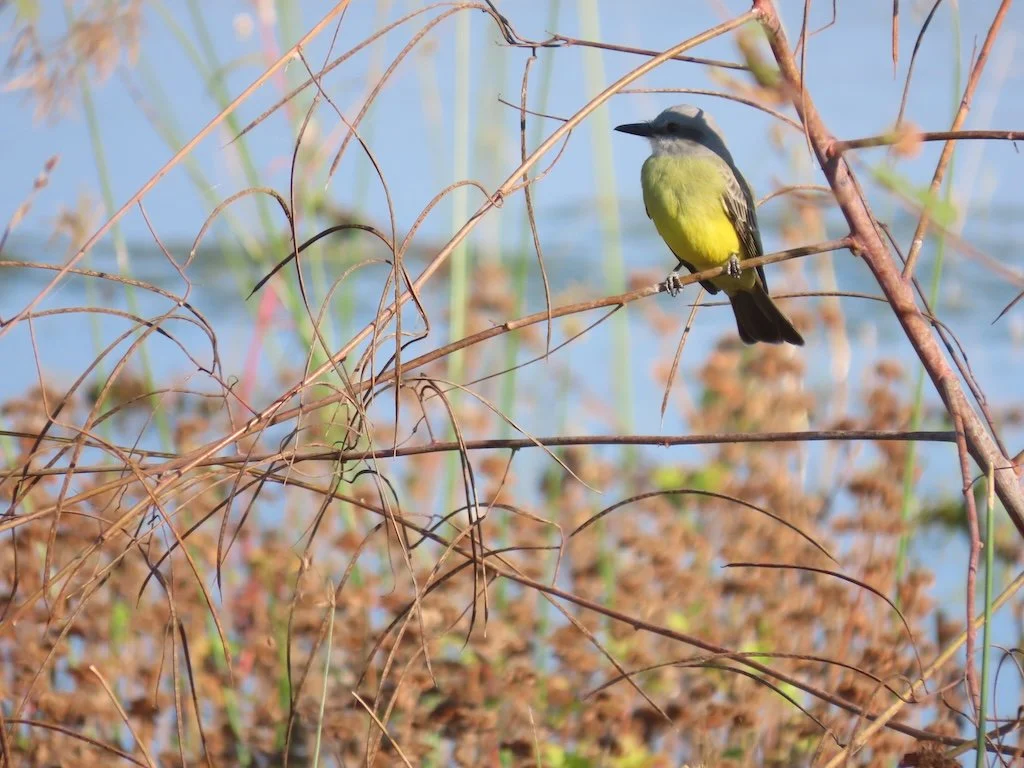
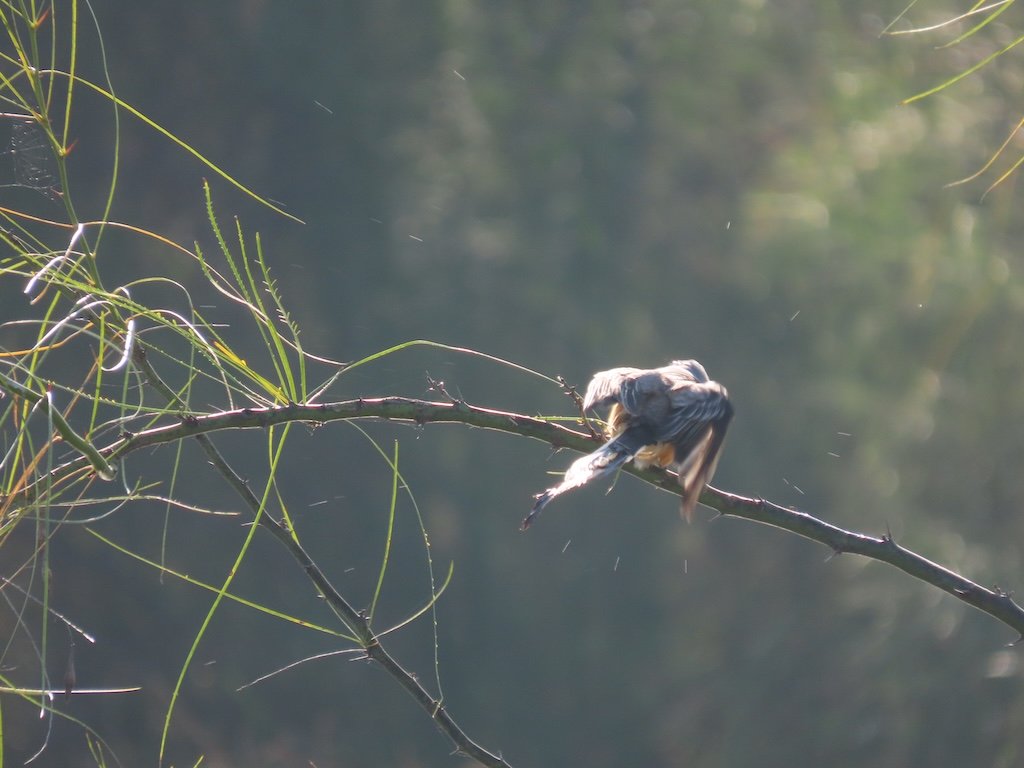
A preening Scissor-tailed Flycatcher and a preening Great Kiskadee
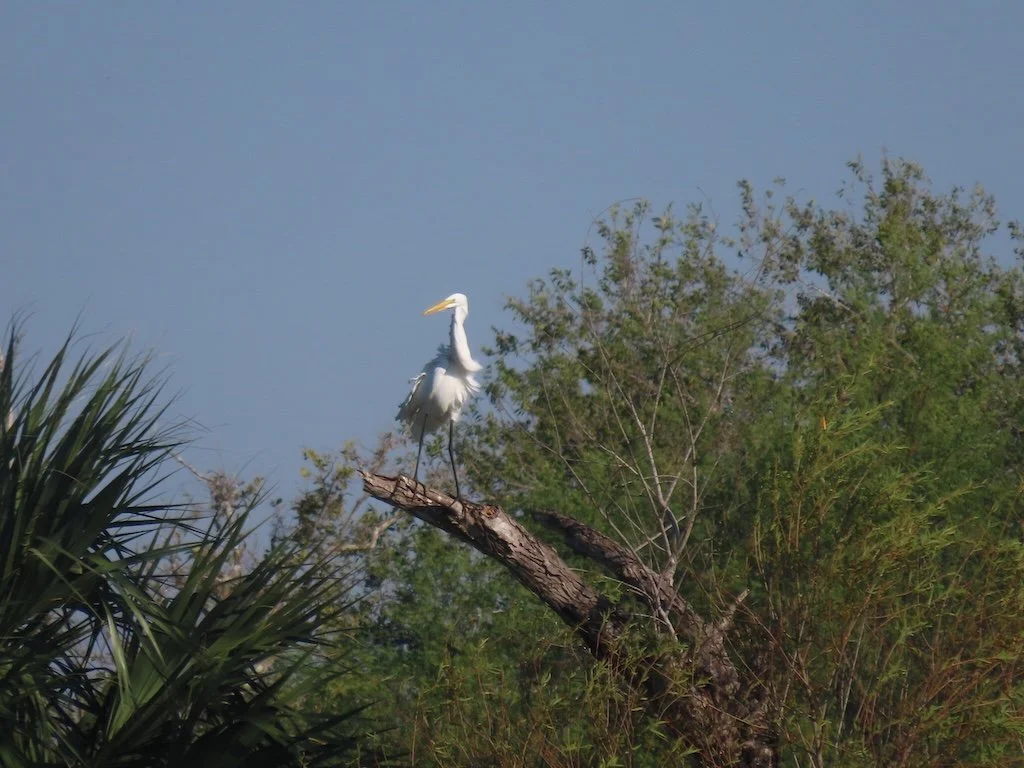
A Great Egret in the wind
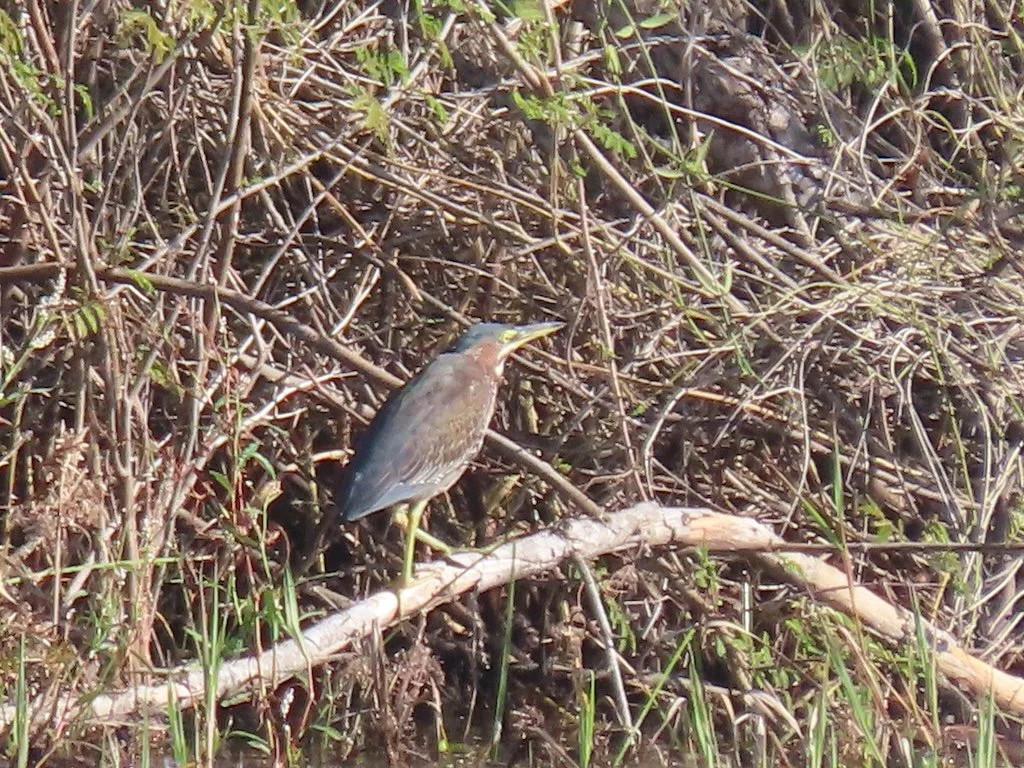
 A Green Heron – very hard to find among the plants
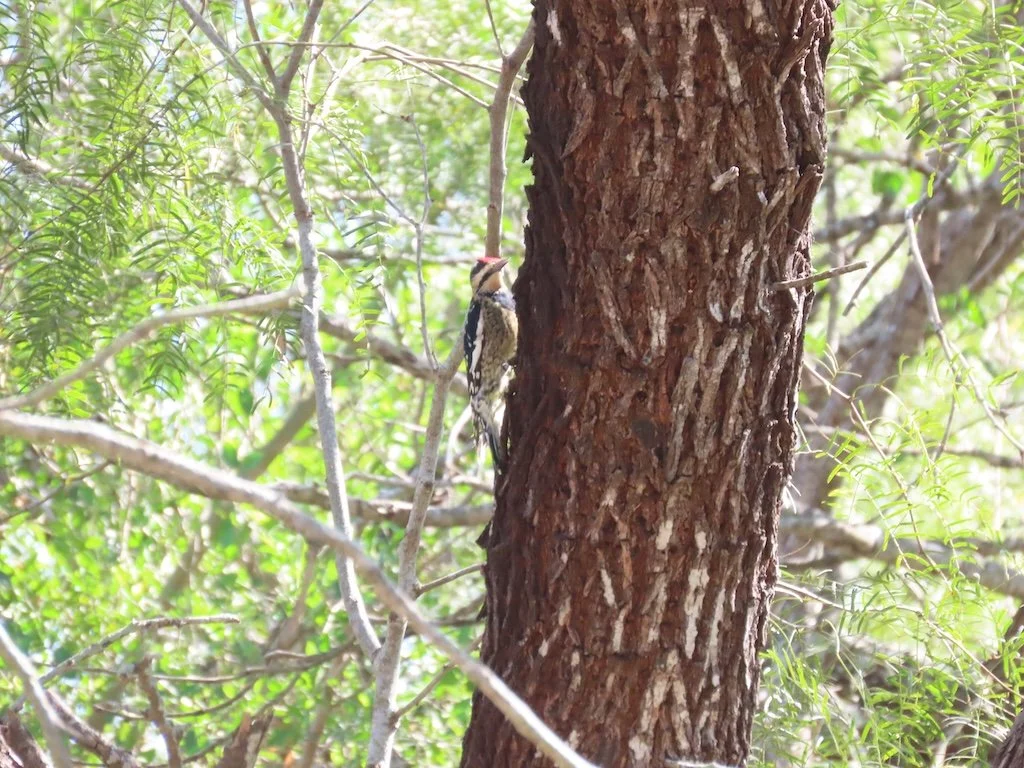
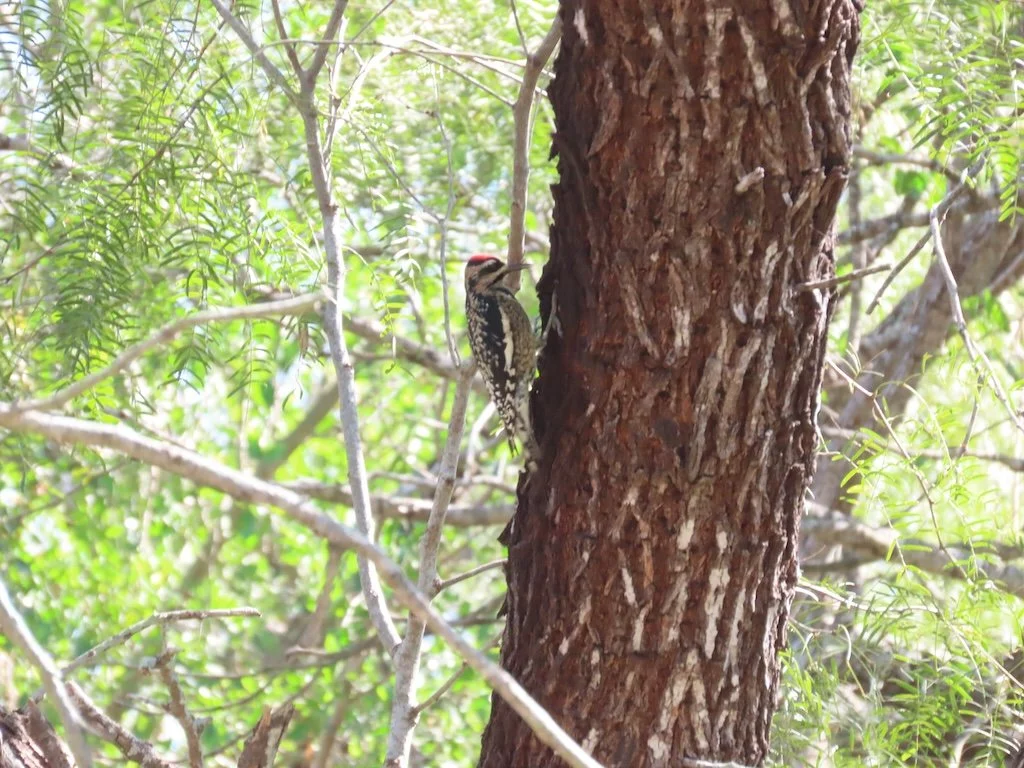
A Ladder-backed Woodpecker
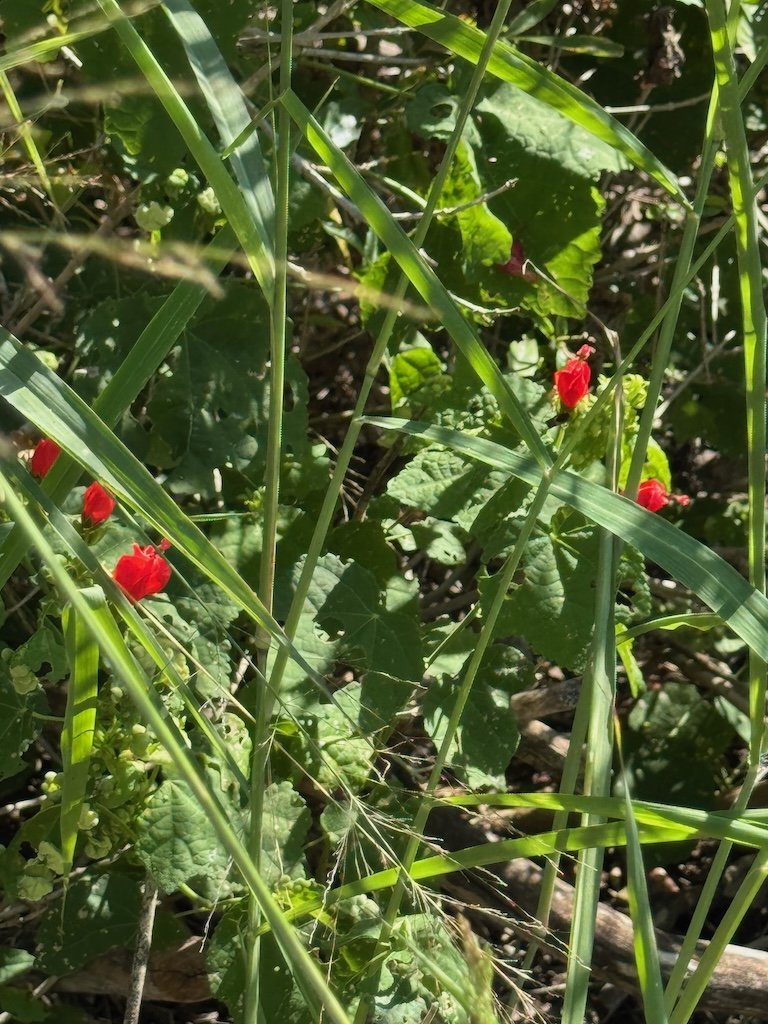
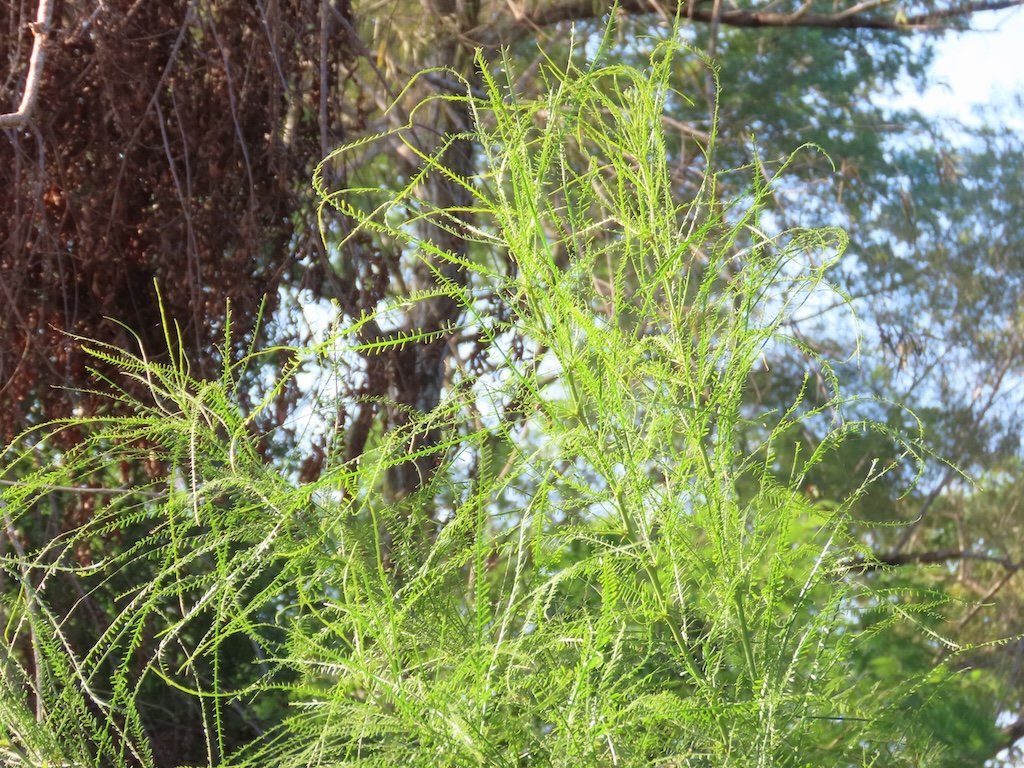
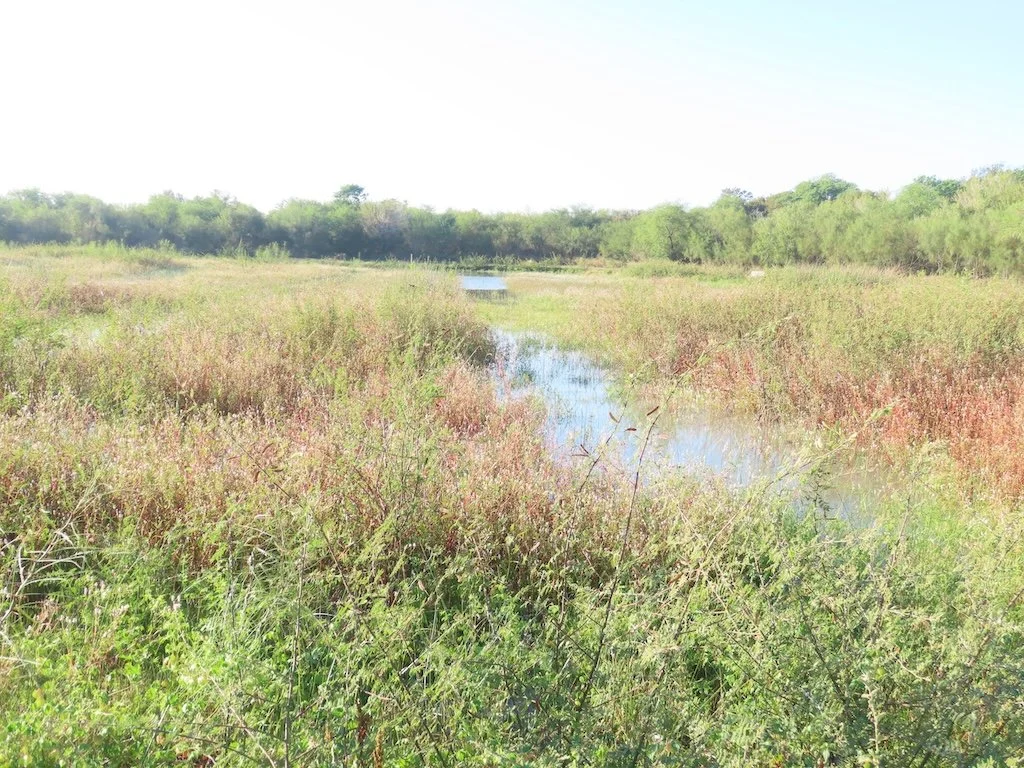
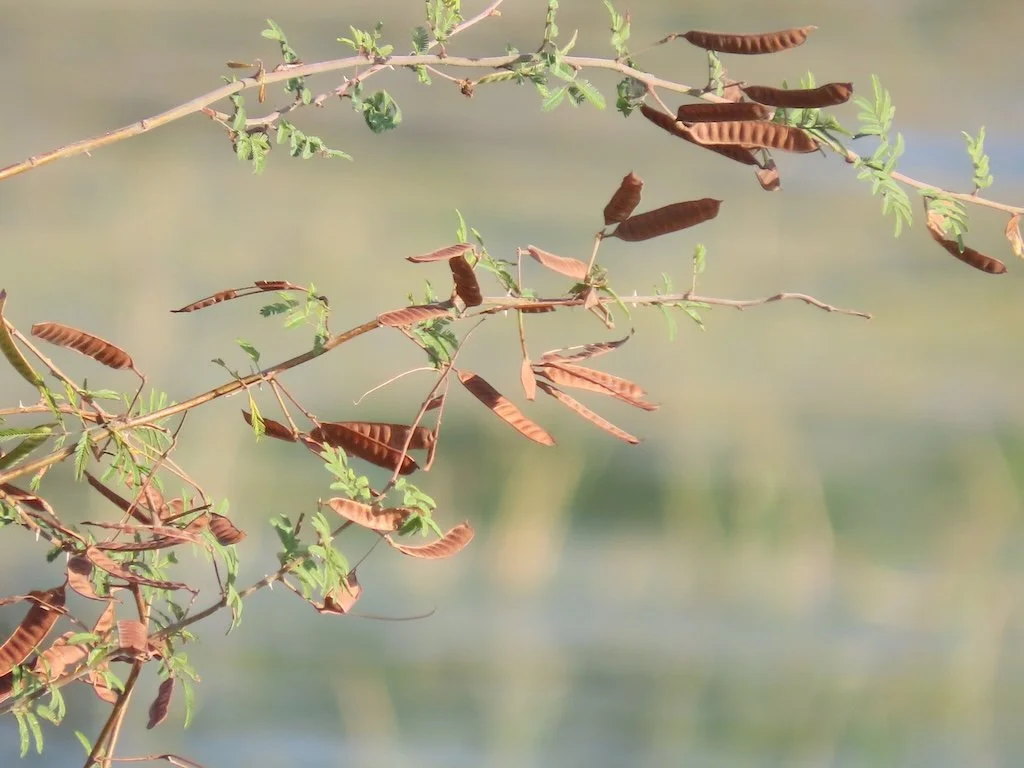
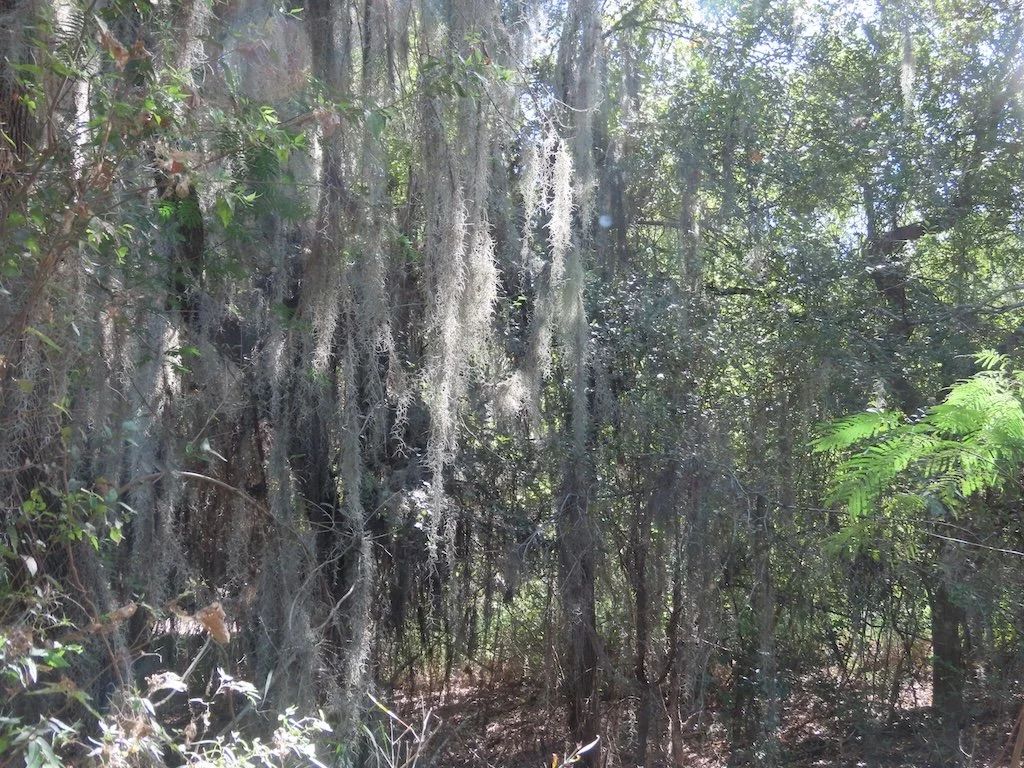
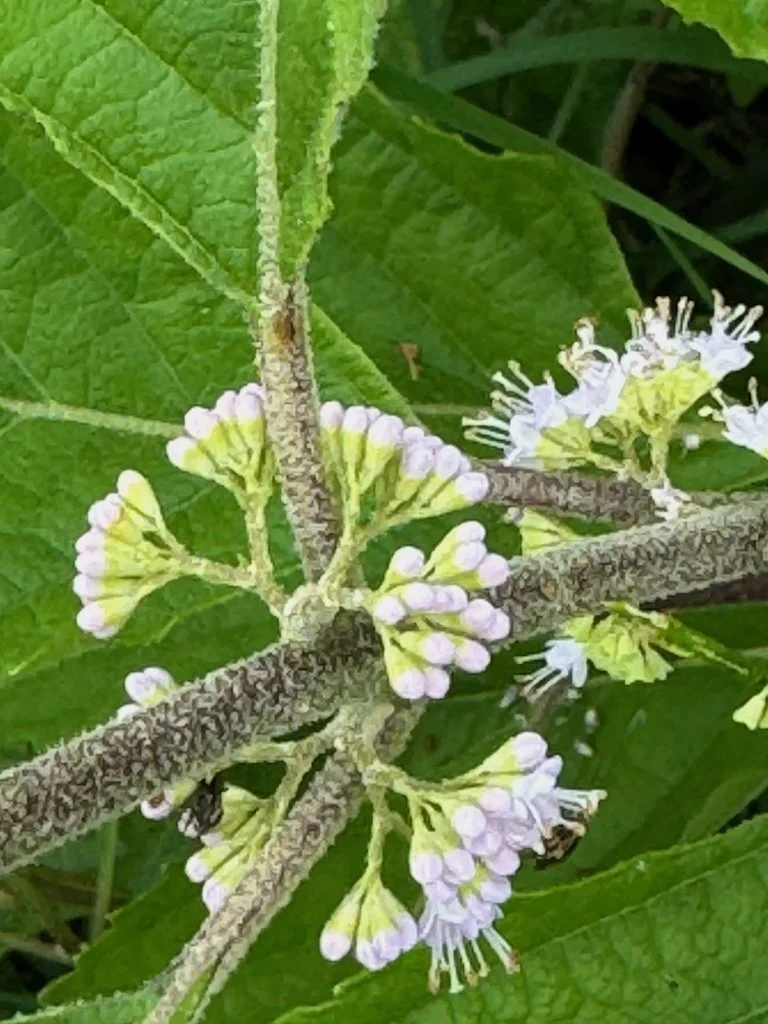
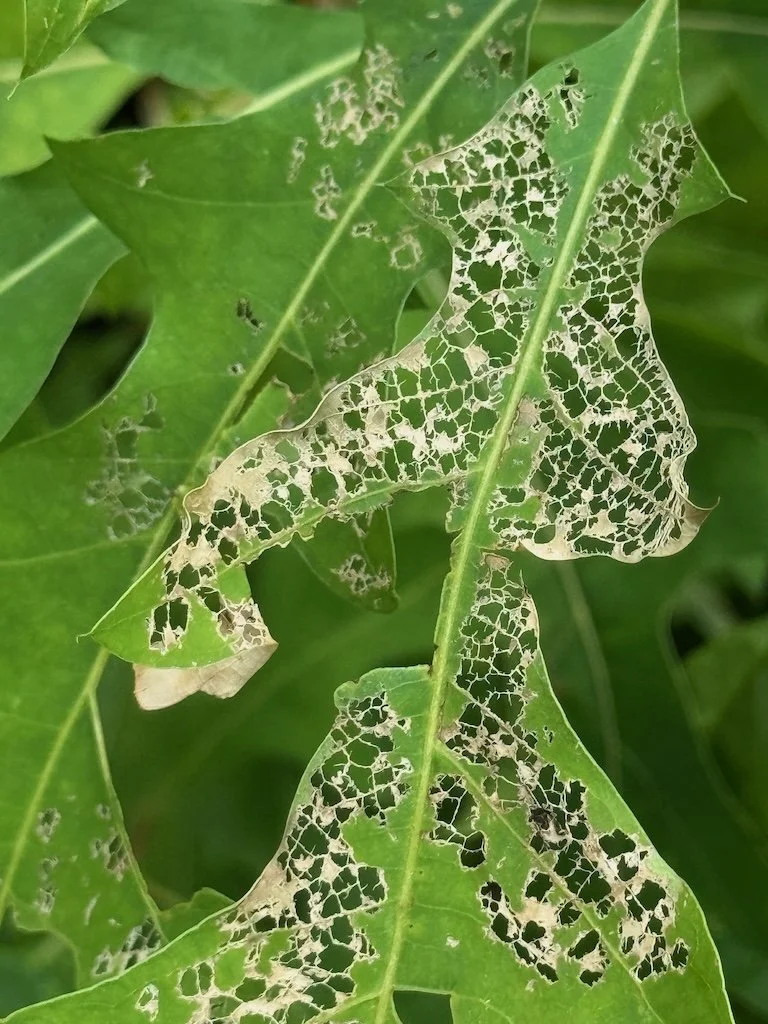
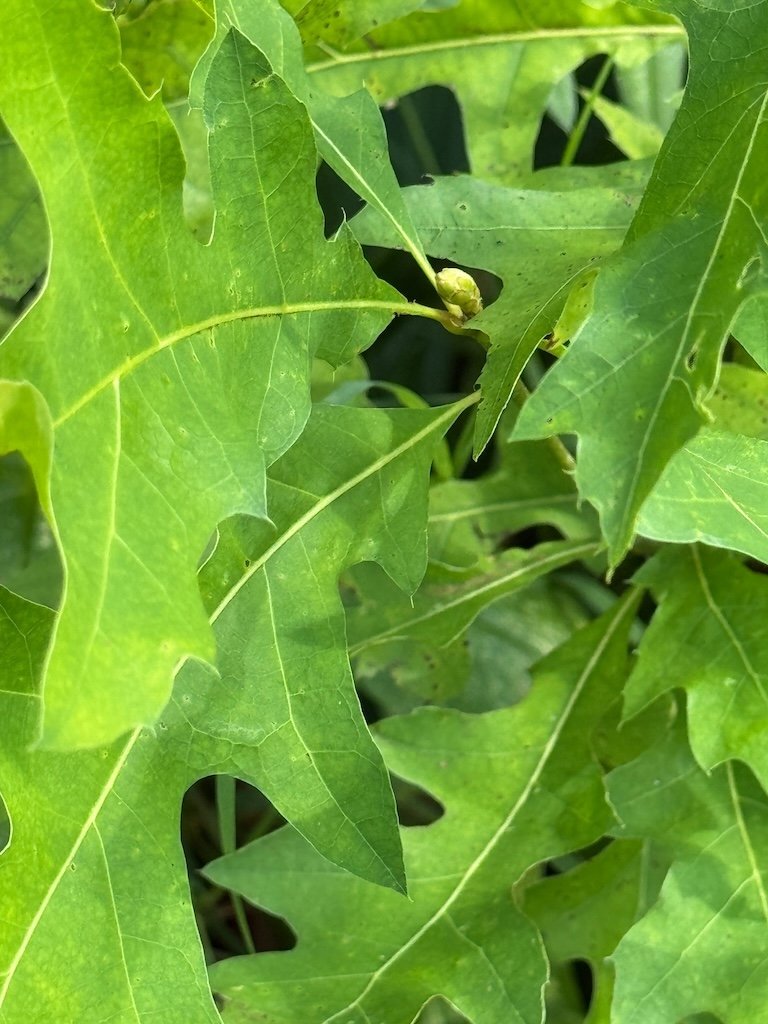
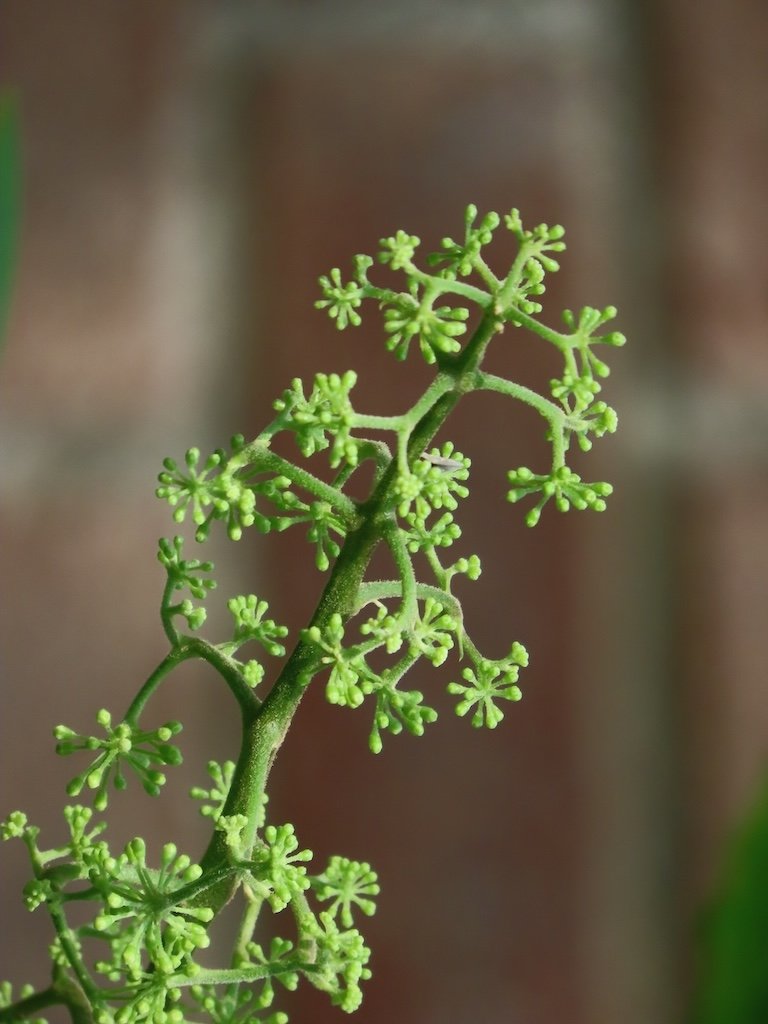
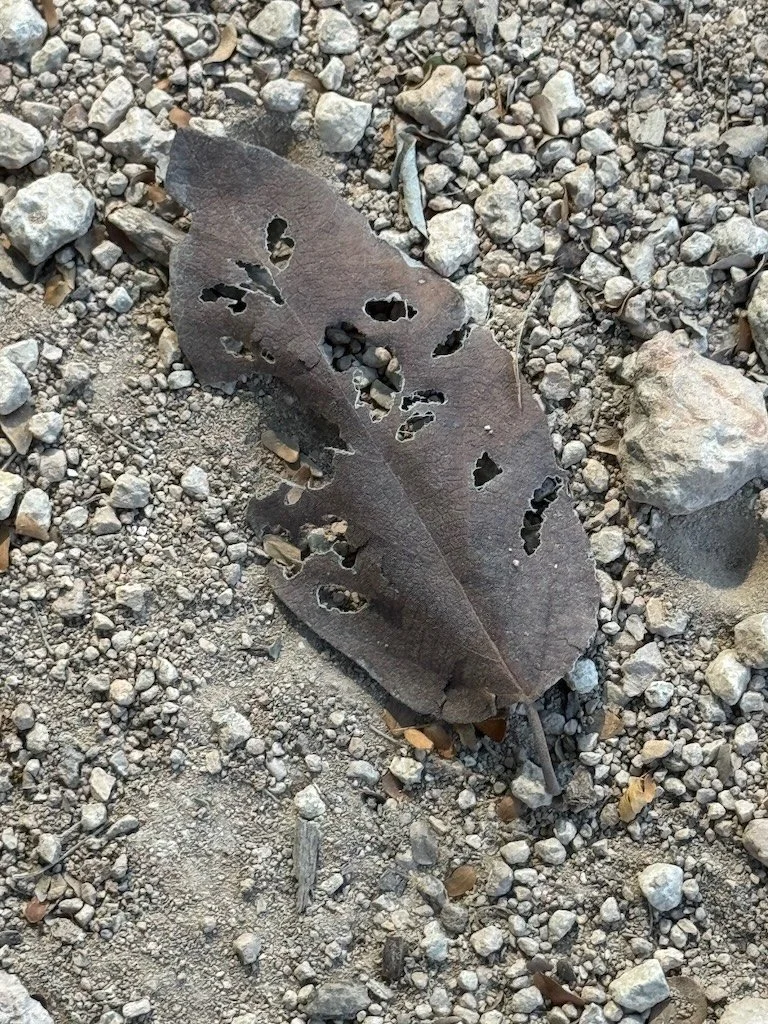
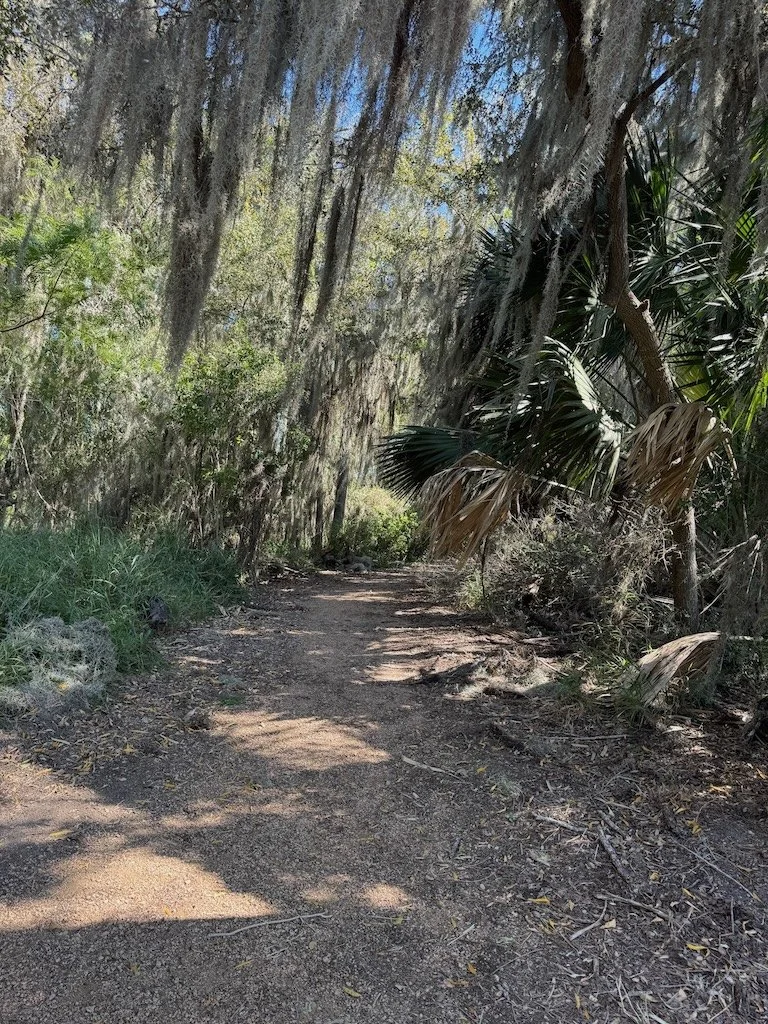
Of course there were lots of plants/landscapes to note as well. Somehow a leaf on the ground full of holes looked interesting to me as I rested midway through the hike. Turks cap grows wild at the refuge. There are a lot of legumes in the area…many with thorns! And there is enough moisture for Spanish moss to thrive.
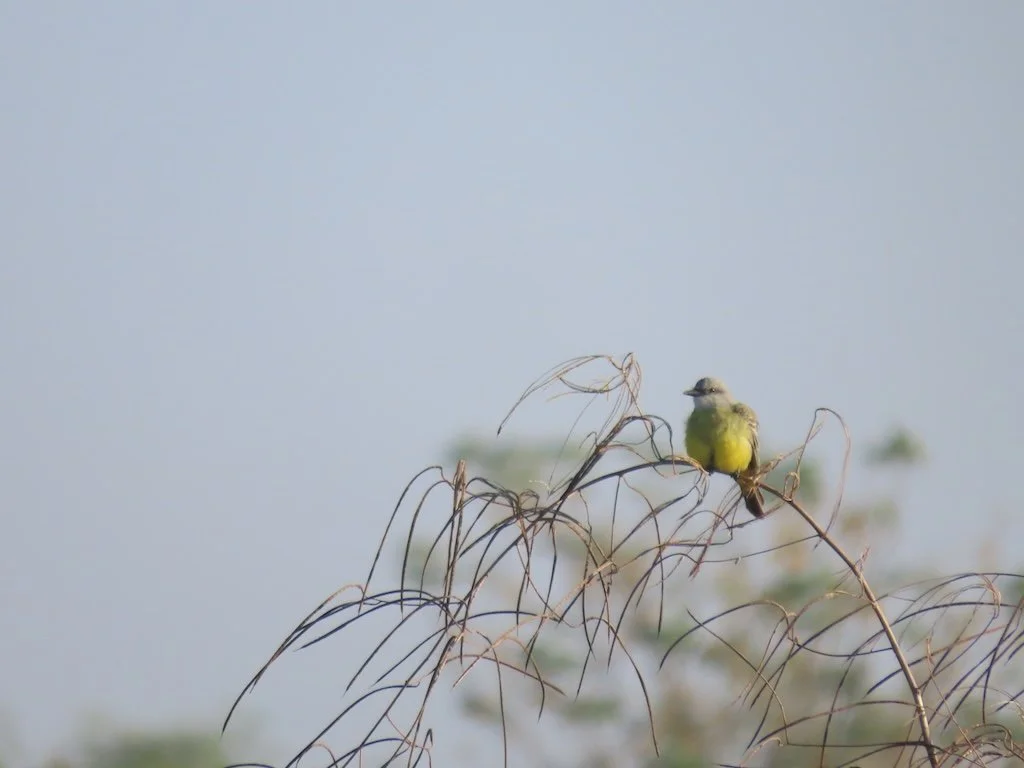
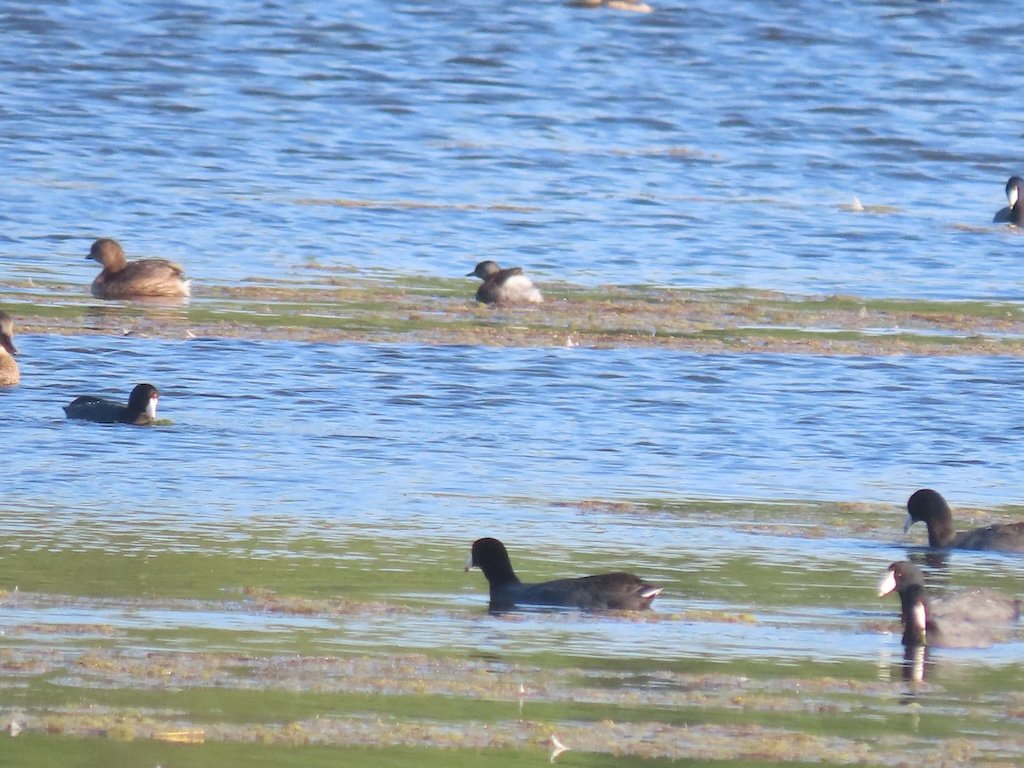
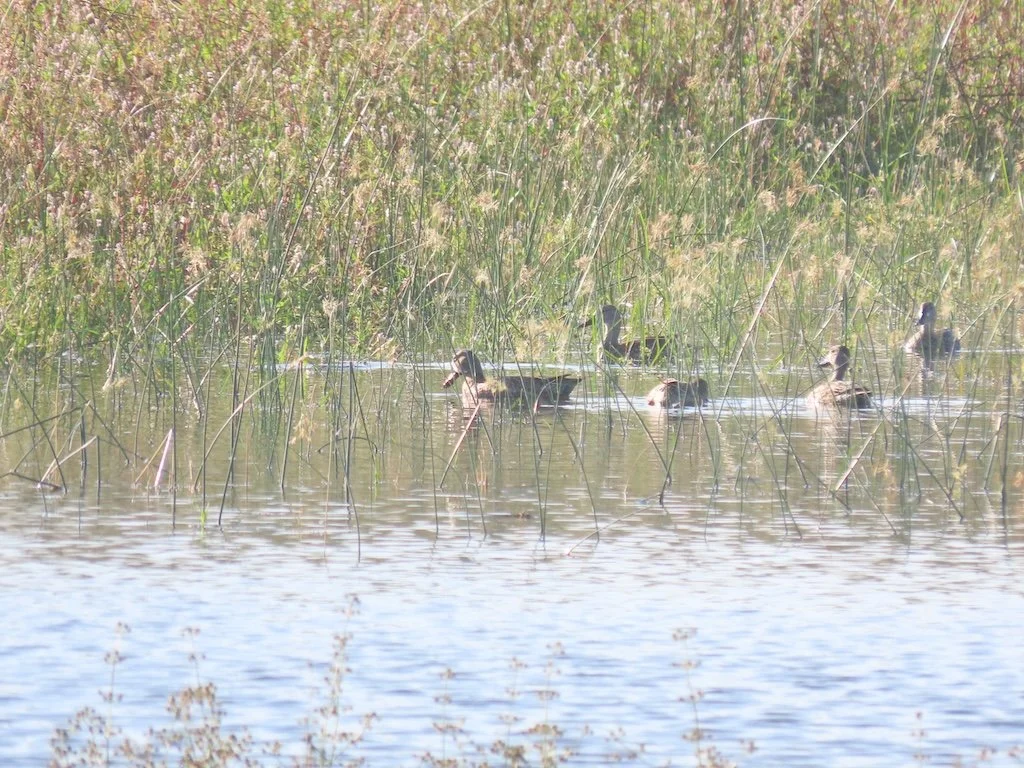
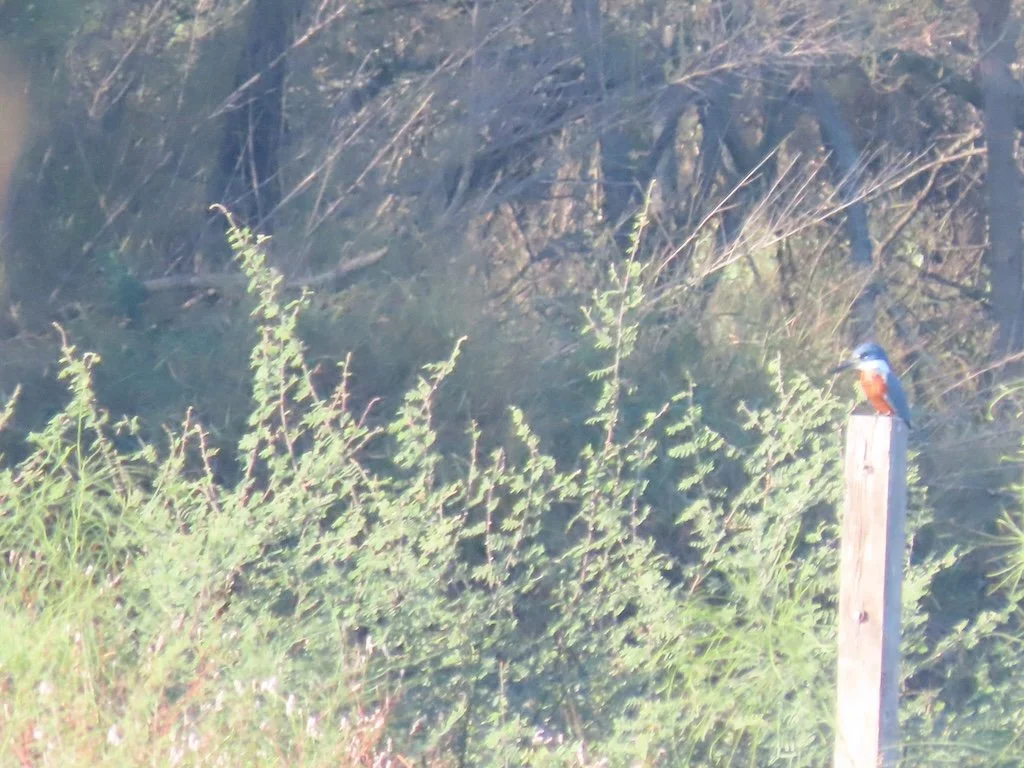
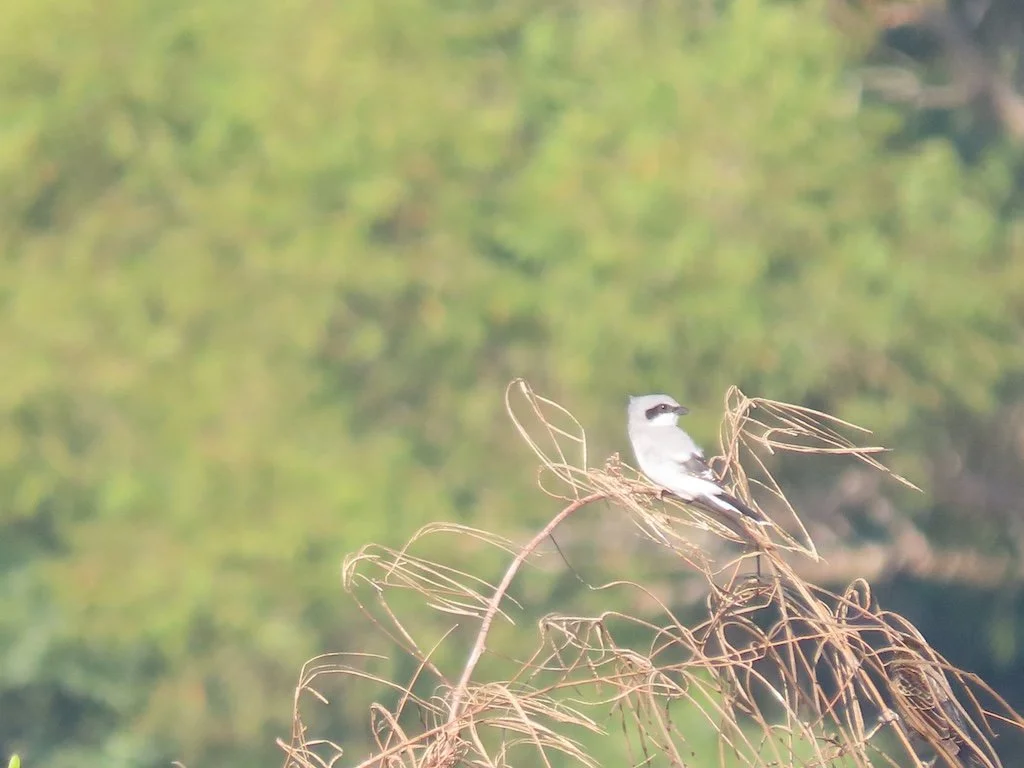
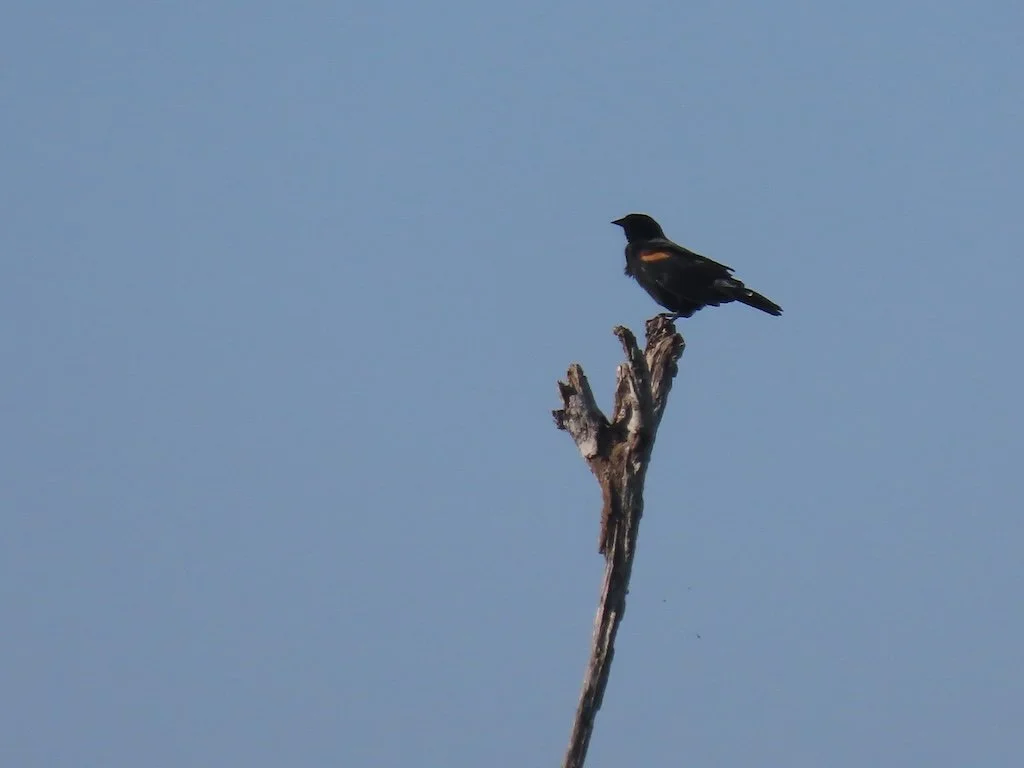
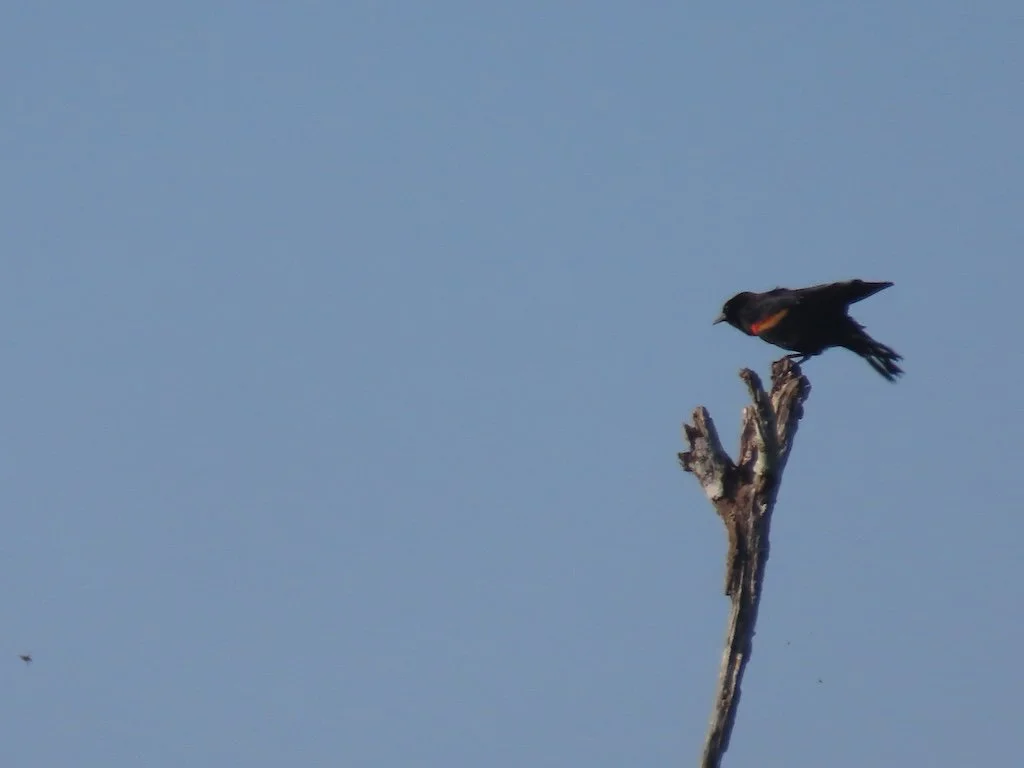
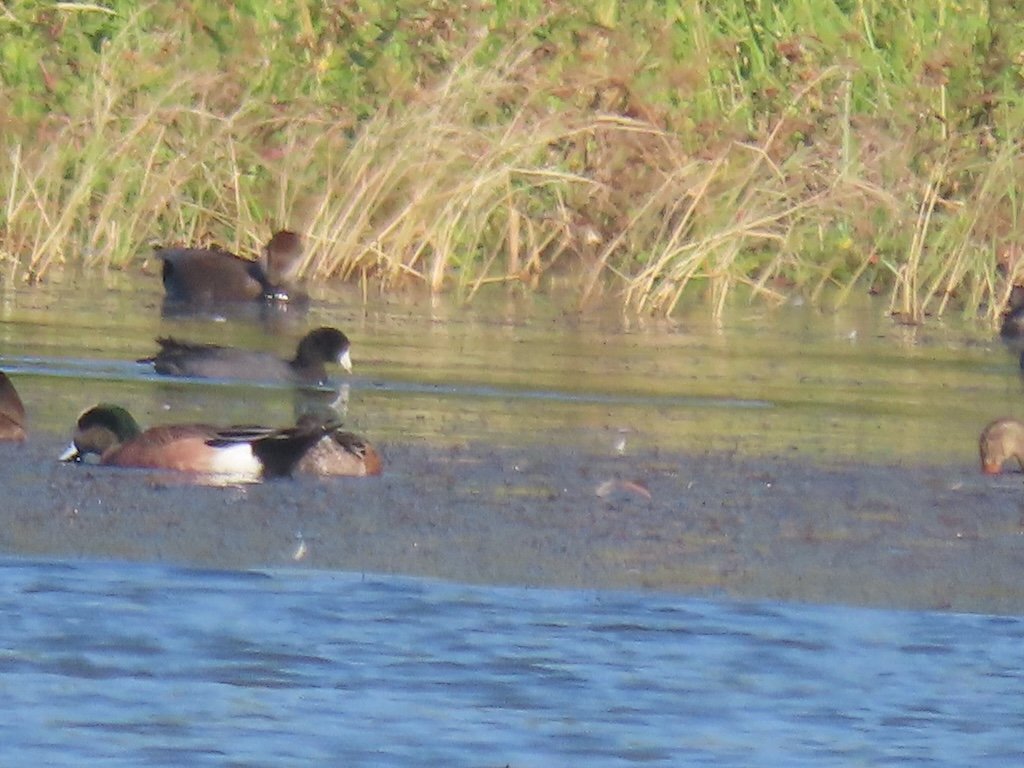
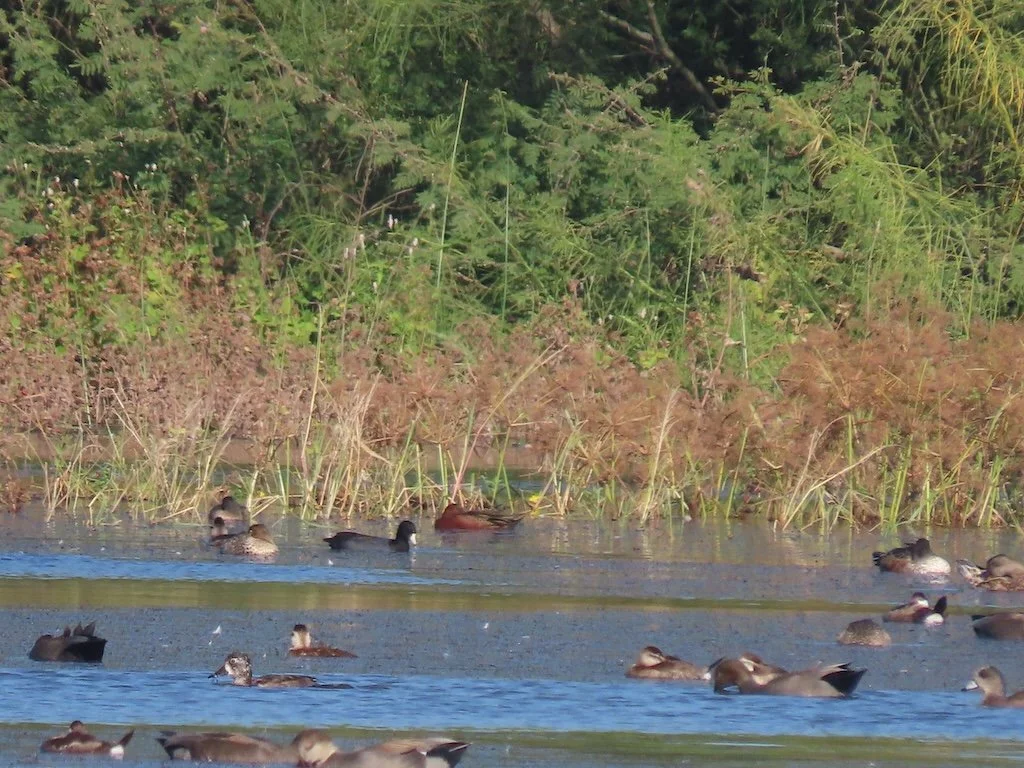
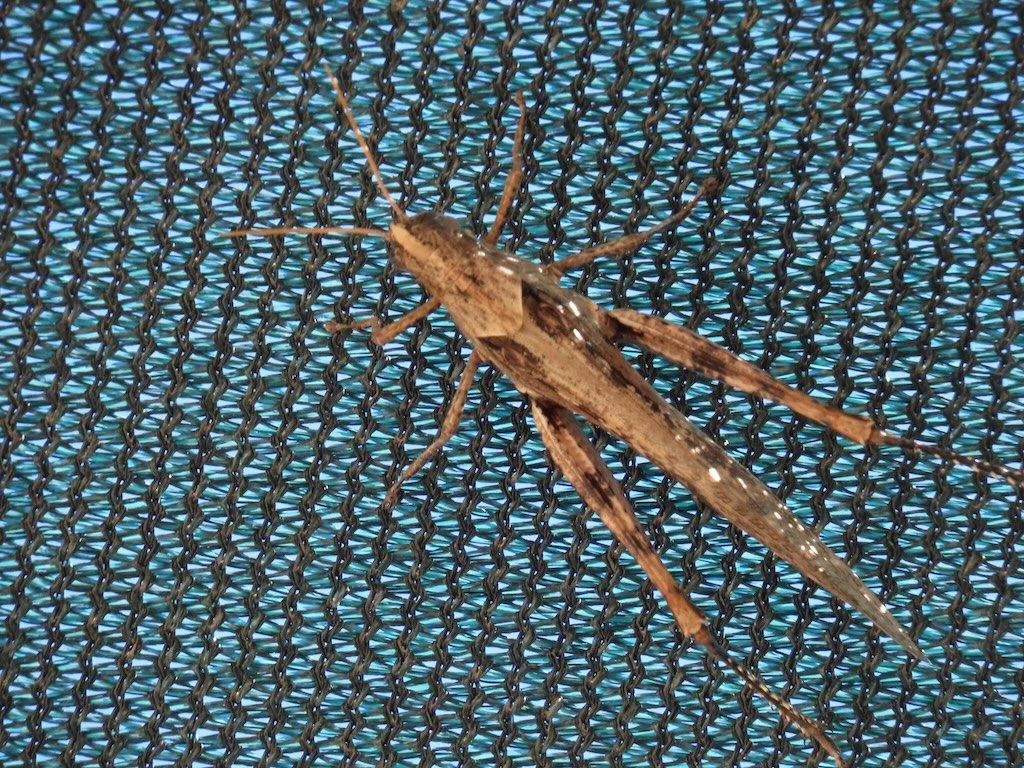
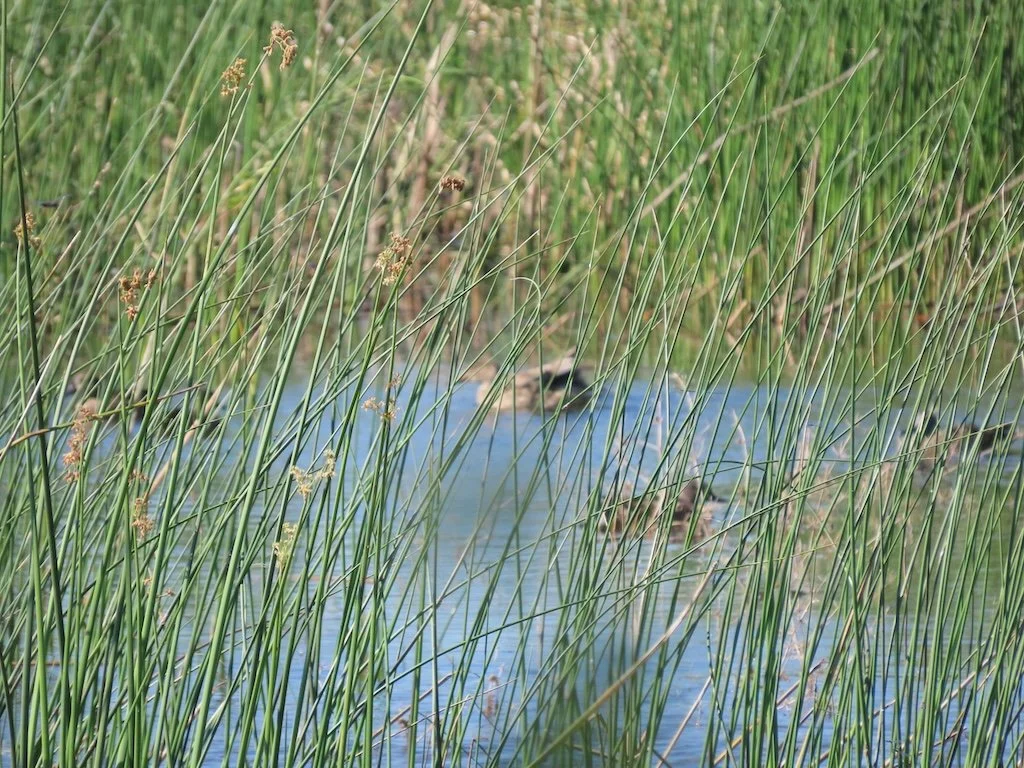
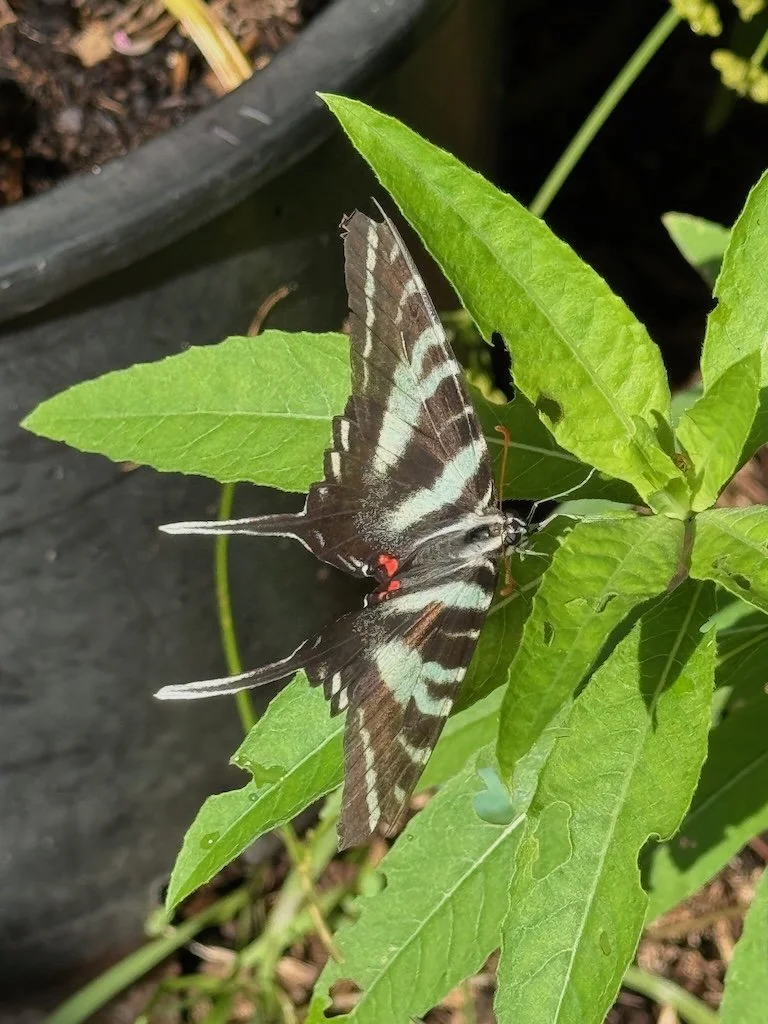
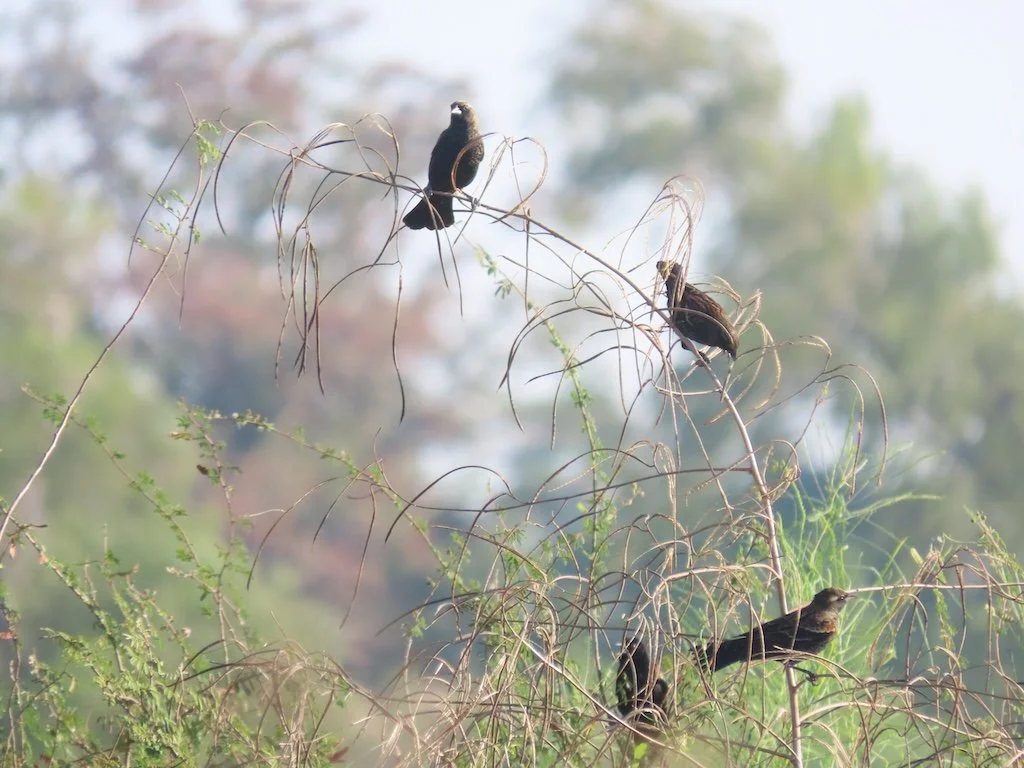
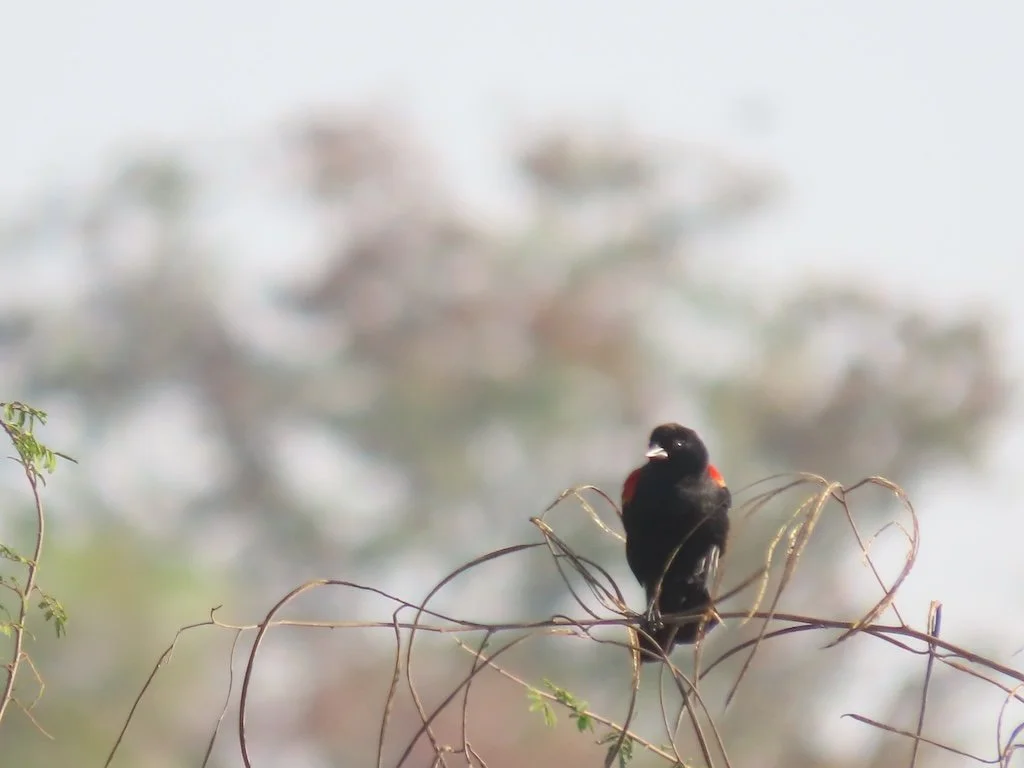
And now for the rest…mostly bird pictures that are mainly for identification…many of the waterbirds were almost out of the range of my camera or there was vegetation between me and the birds. The largest insect was on an awning near the tower.
I used the Deet spray on my lower legs but got bites (mosquito) through my leggings above my knees and on my arms through my sunblock shirt sleeves! Fortunately, they did not itch too much (after I put baking soda water on them); so far, I am not feeling any ill-effects; next time I will be more careful and spray myself more thoroughly.
Short Hike at Howard County Conservancy – 2

As we headed down the trail by the stone wall, we started noticing dragonflies! My husband had been talking about a trek to Kenilworth to photograph dragonflies on lotuses – was pleased to find so many of them at Mt Pleasant. I knew when we sampled the stream, that dragonfly larvae were generally found…so seeing the adults was validation that their life cycle is continuing.

I photographed 4 different kinds in about 15 minutes! When I got home – I identified each one from my photographs.

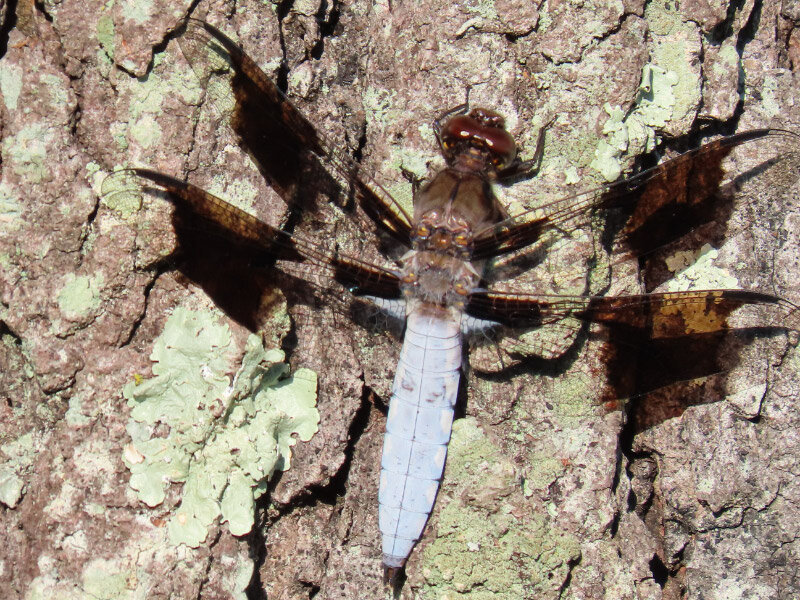
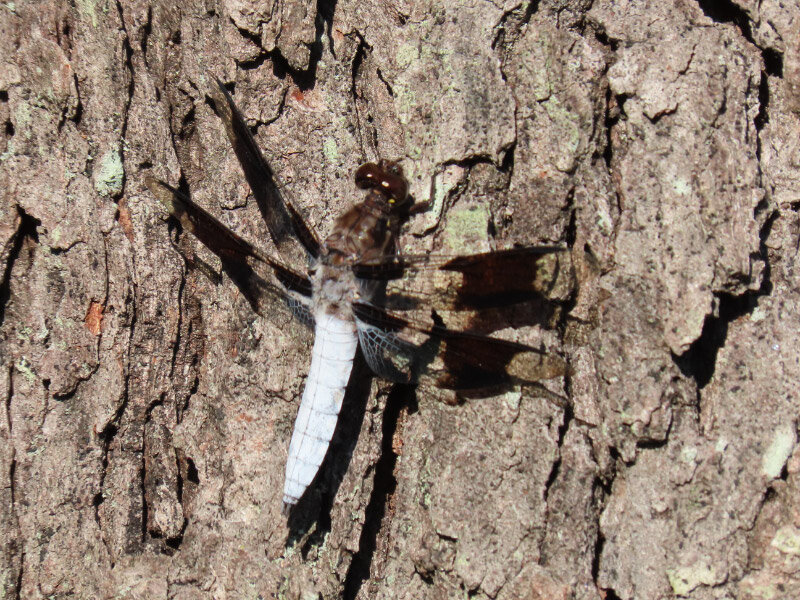
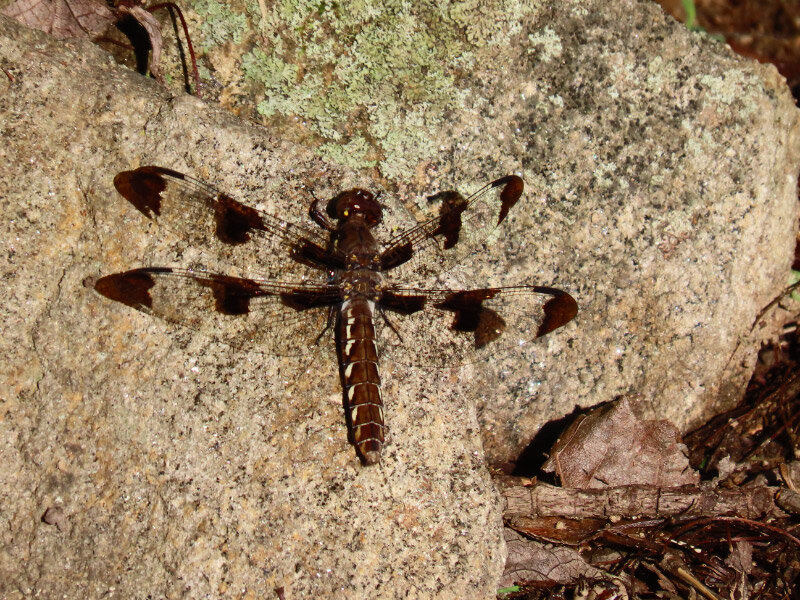
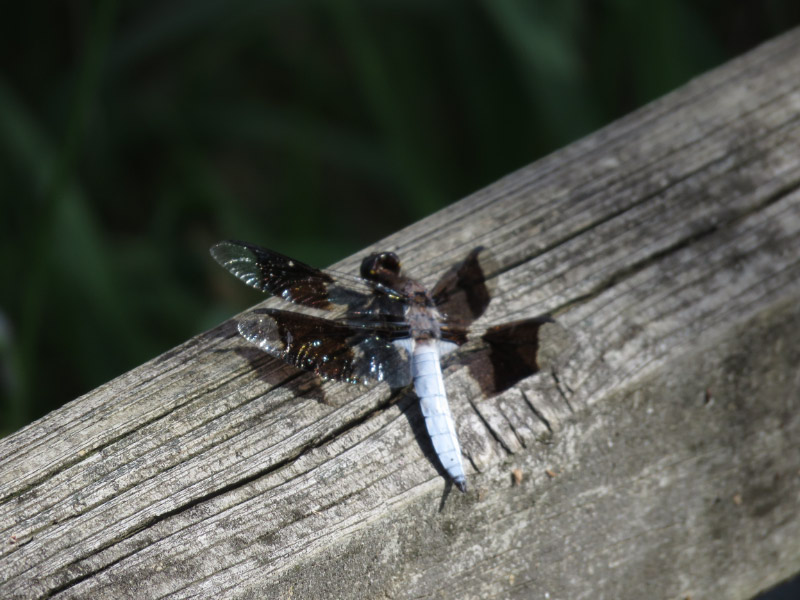
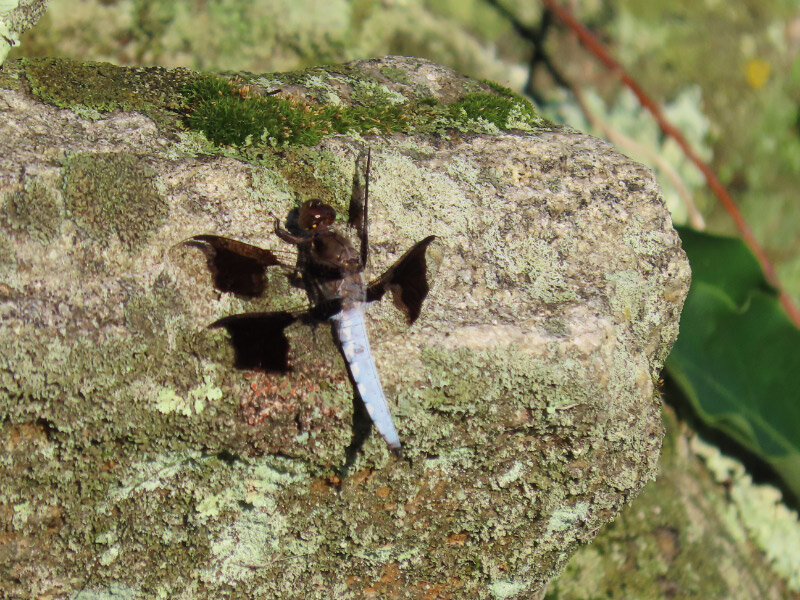
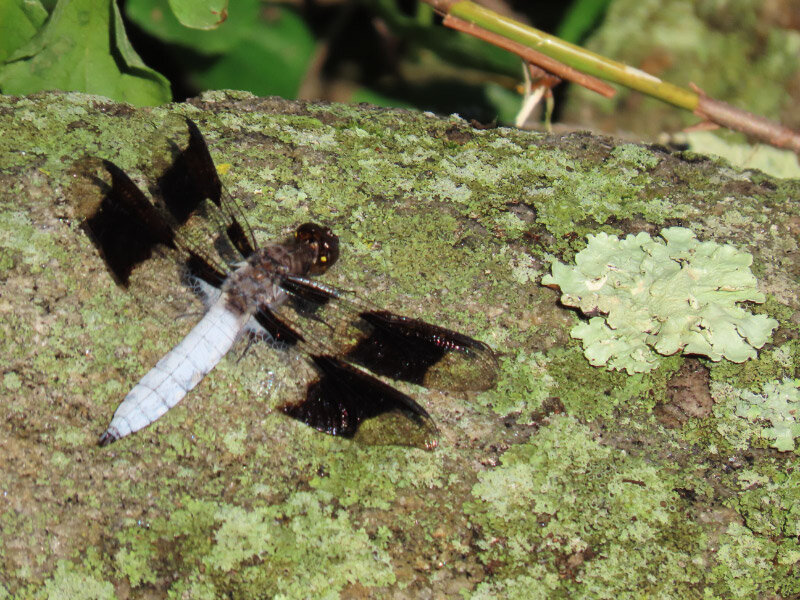
The Common Whitetail Skimmer was the first that I photographed. When I was identifying, I realized I had photographed males and a female!

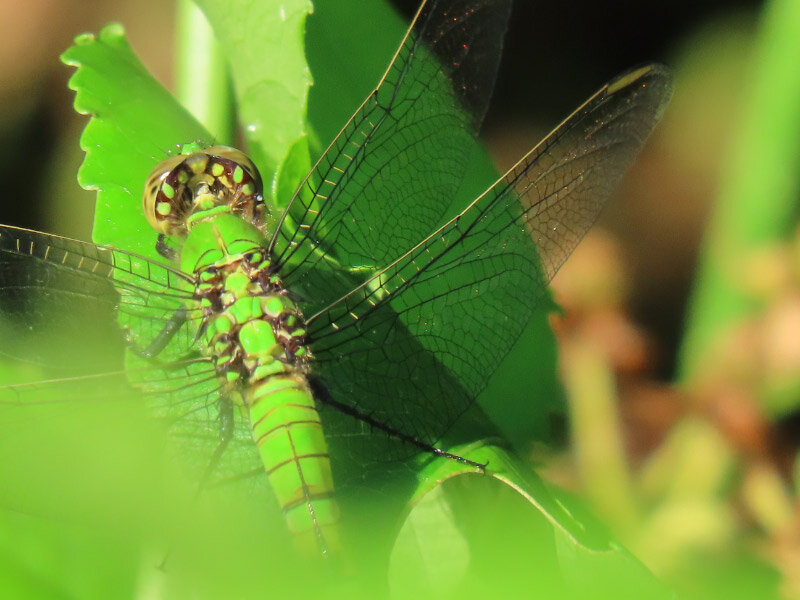
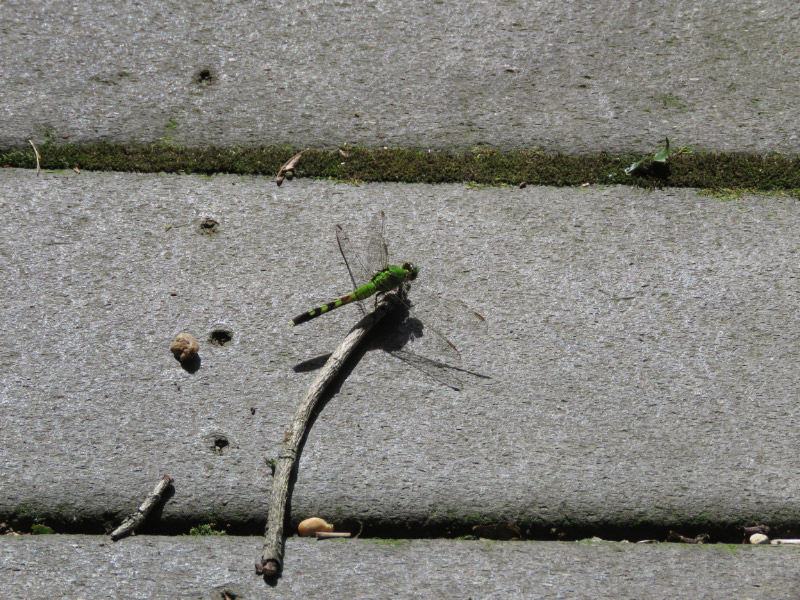
An Eastern Pondhawk was almost hidden in the vegetation.

The Ebony Jewelwings were very active making them more challenging to photograph. Their iridescence never seems as glorious on the captured images as it does when they move about.

Finally – I photographed a female Widow Skimmer (the males have a powdery blue abdomen…the female abdomen is yellow and black like in the picture).

Stay tuned for the second ‘wow’ sight coming in tomorrow’s post…

Some Insects at Brookside Gardens – September 2019

There are always plenty of plants to see during a walk at Brookside Gardens, but I’ve been looking for insects in a few of my short walks before starting my shift inside the butterfly exhibit. The weather has been pleasant…just warm enough for the insects to be active but not overly hot for a walk. I saw an Eastern Pondhawk dragonfly along the walk toward the arrivals area for the butterfly exhibit.  

2019 09 IMG_5311.jpg

A few feet away…about 30 seconds later…I saw a Hummingbird Moth Clearwing. What a great way to start the morning!

The next time I was at the gardens, I walked back to the same area. I photographed 2 different insects but they were not as showy as the dragonfly and hummingbird moth.

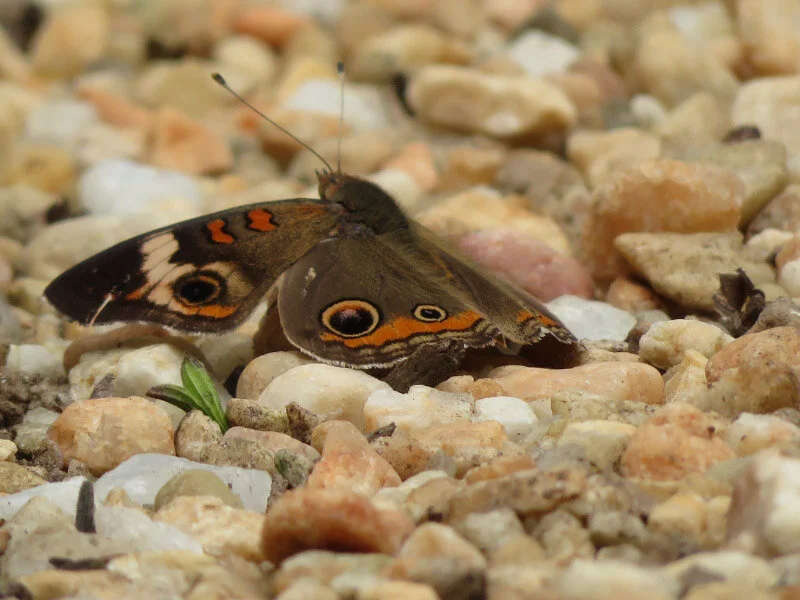
I headed up to the salvia garden to see if there were still any hummingbirds feeding on the plants there. I saw a couple of females but didn’t have the right camera to attempt to photograph them. I did see a Common Buckeye taking a break on a gravel path.

2019 09 IMG_5354.jpg

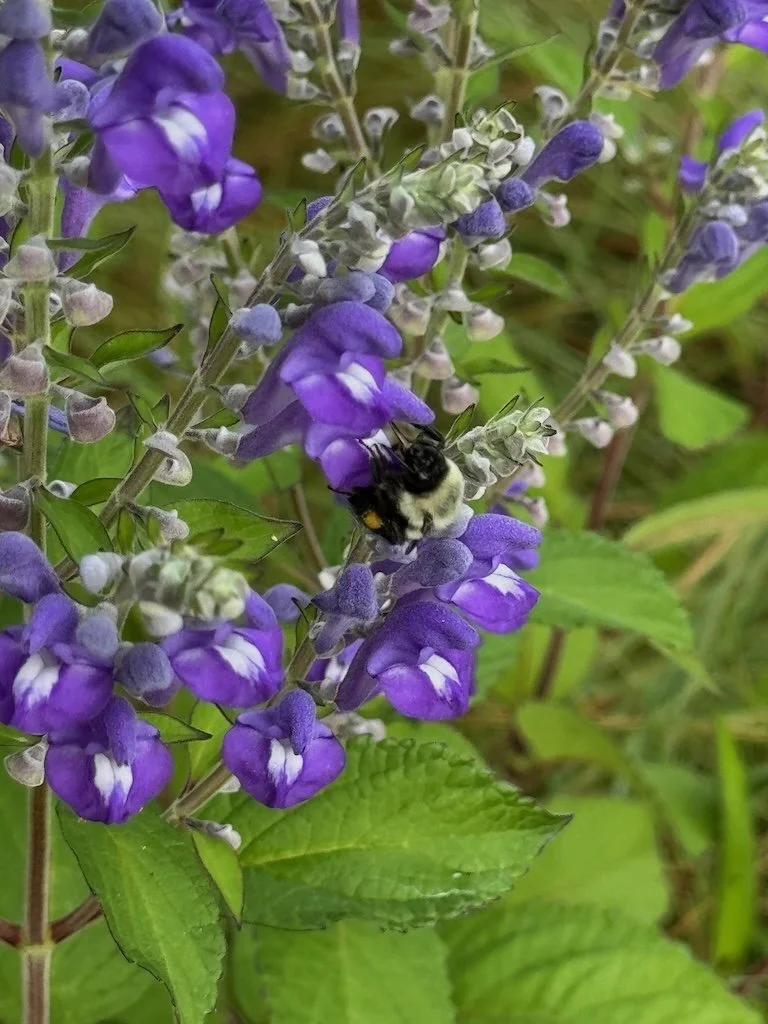
The salvia garden is very popular with bees of all kinds. There were large bees that were nectar robbing because they were too big to get into the flower (sometimes the stems bent a little with the weight of the bee as well). They had shiny abdomens so were probably carpenter bees.

Dragonflies at Kenilworth Aquatic Gardens

The lotuses and water lilies are blooming at Kenilworth Park and Aquatic Gardens from late June into July. The wetlands are attractive to dragonflies too; I saw 5 different kinds when I went on a late June weekend. I found a good reference to help me identify them from Maryland’s Department of Natural Resources.
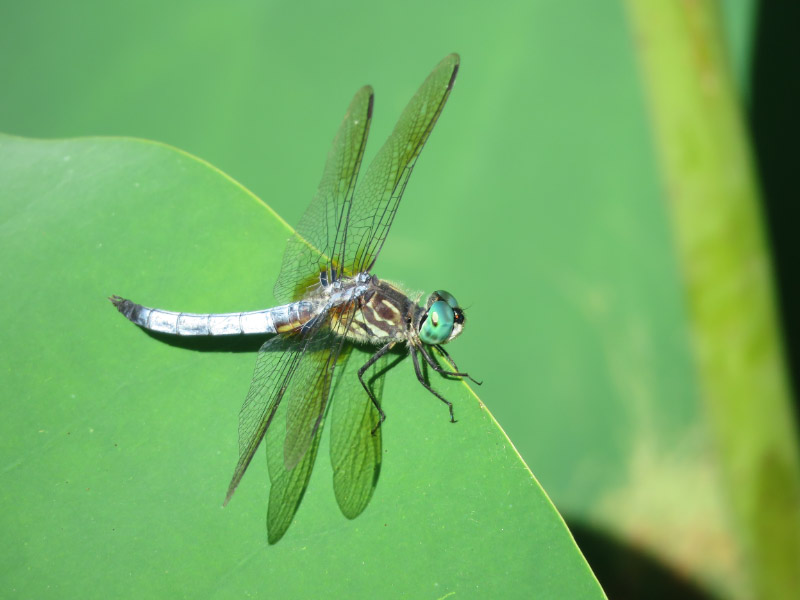
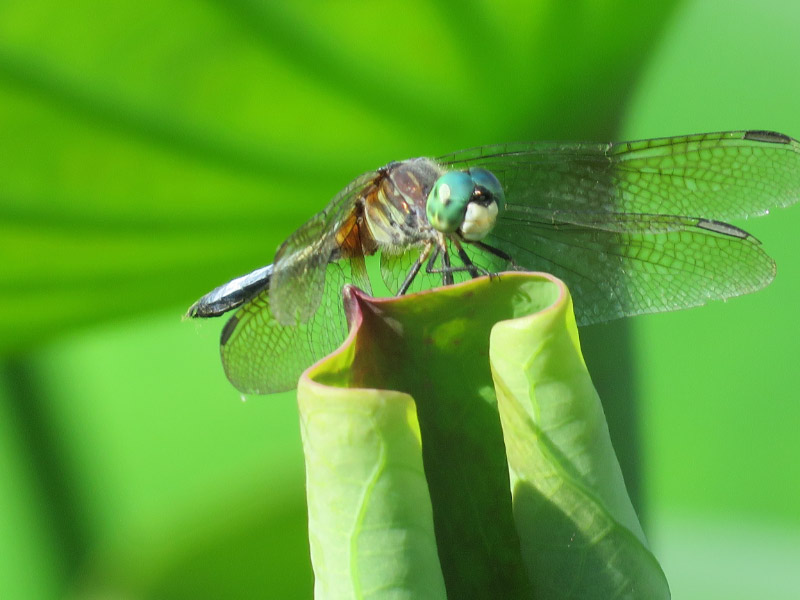
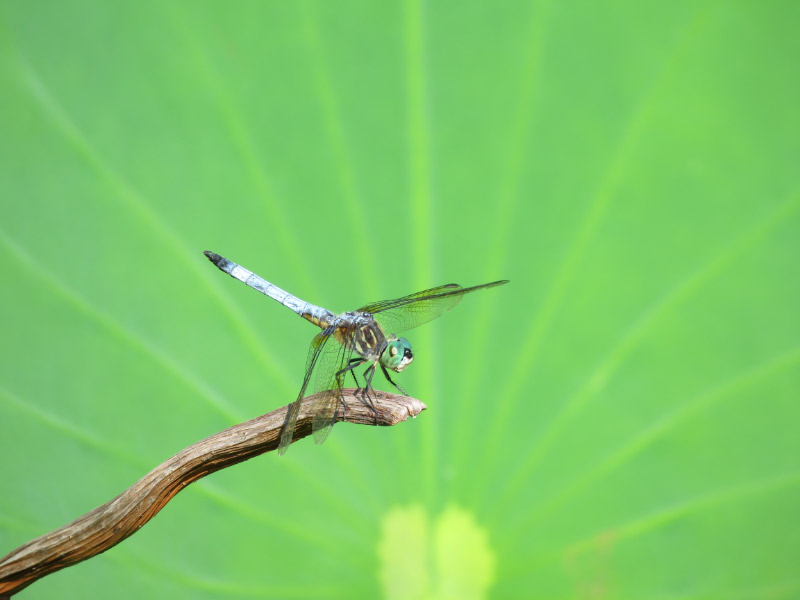
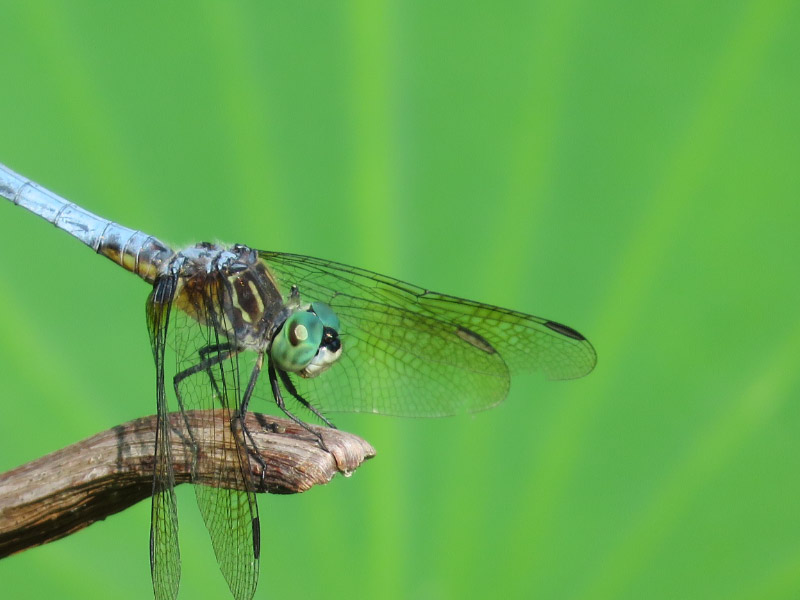
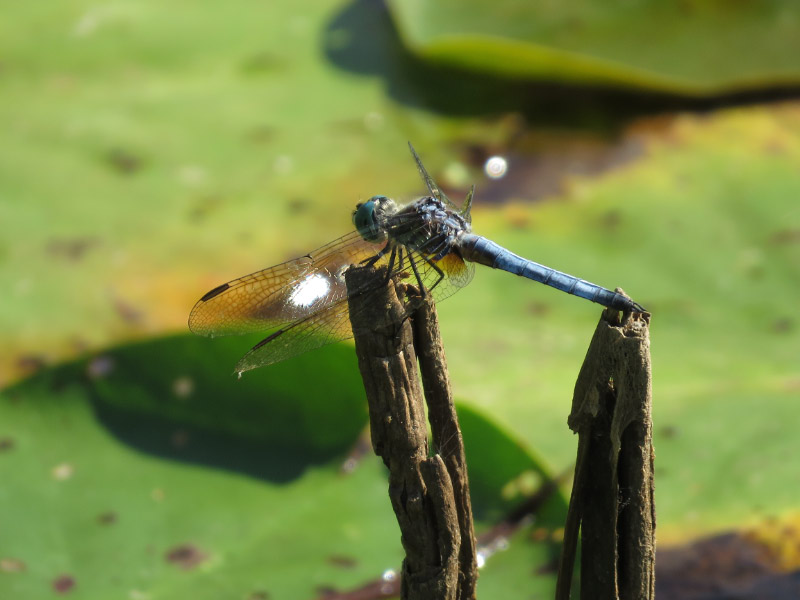
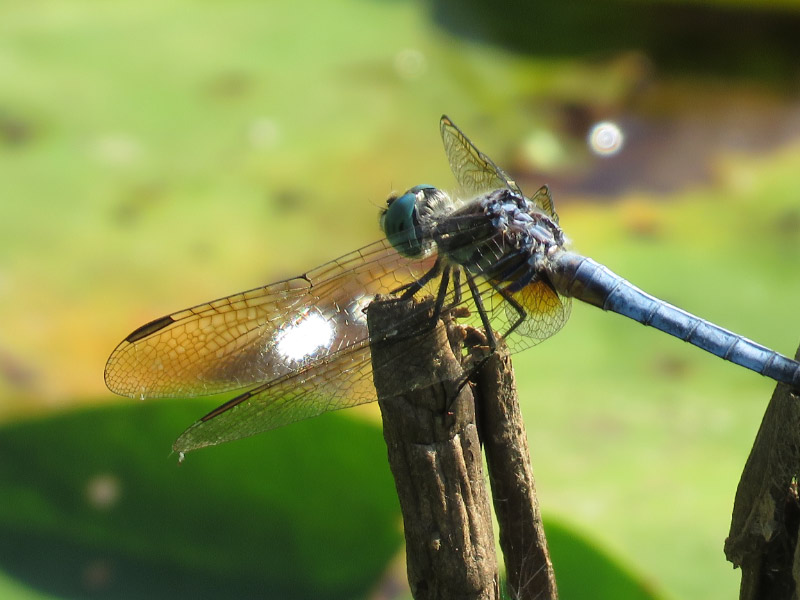
The first one we saw – and the most numerous – were the blue dashers. They like to perch on the vegetation in the lotus and water lily ponds.

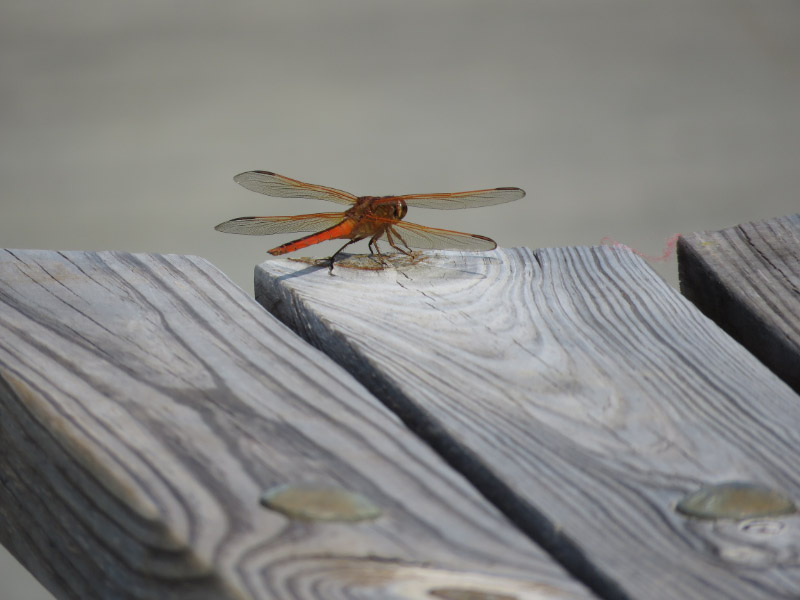
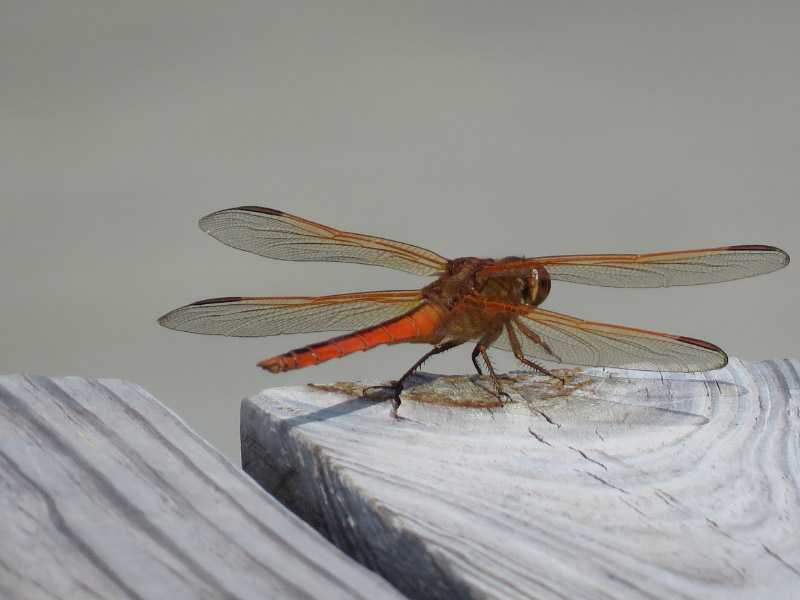
Along the boardwalk out into the Anacostia River wetlands, there were quiet a few autumn meadowhawks. They weren’t as good about staying put for a picture as the blue dashers.

Also on the boardwalk, there was a common whitetail with black bands on its wings.

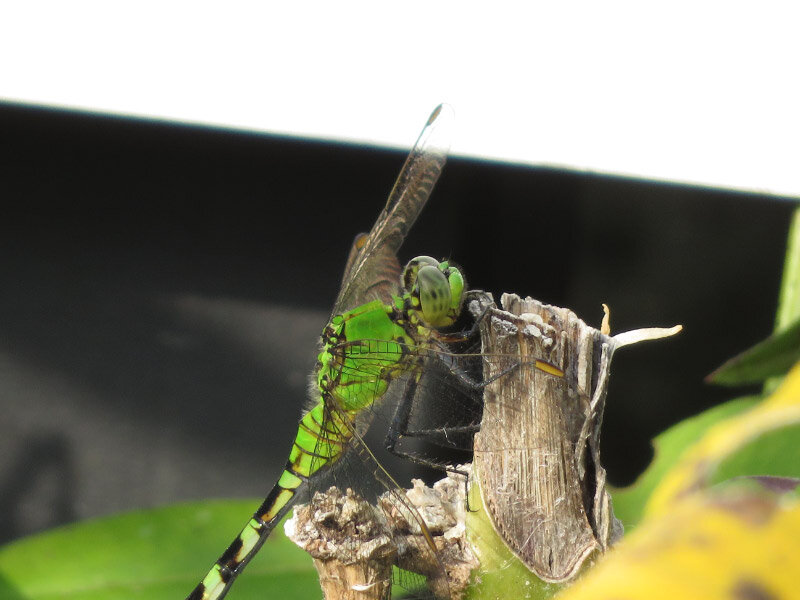
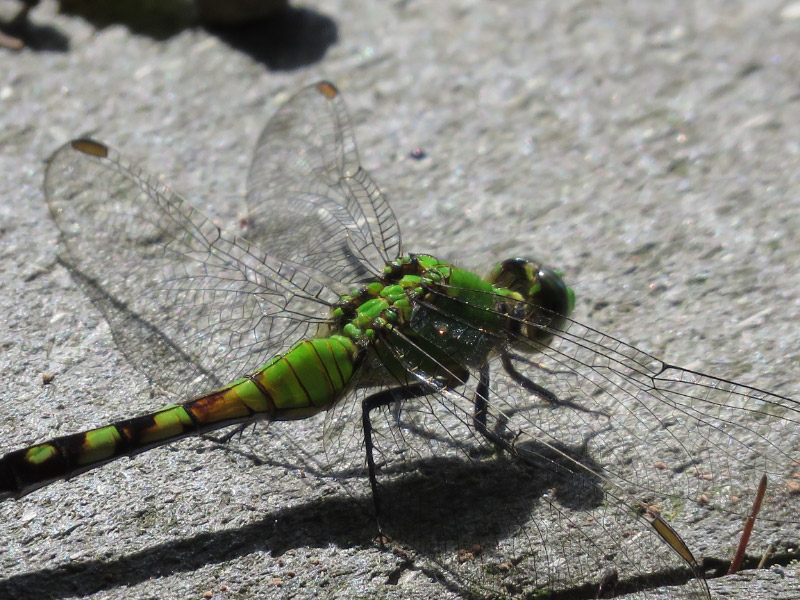
There was a green eastern pondhawk on a sunny spot of the boardwalk as we were walking back along the boardwalk.

It wasn’t until I got home as was looking at my pictures that I realized I had photographed another type of dragonfly among the lotuses: a common baskettail. It was a pleasant surprise!

2019 06 cb IMG_9284.jpg

Tomorrow I’ll post the other images from our walk around Kenilworth Gardens.