Plastics Crisis – Events in April

There seems to be a lot of plastic related activities on my calendar for April.

Beyond Plastics Ozarks will have a table at the Earth Day Music Fest in Springfield later in the month…lots of prep and logistics to work through between now and the event. Info sheets are the easy items …we are developing things to draw people to the table (maybe a plastic trash monster…maybe a big BYOB (standing for “Bring Your Own Bag”!) and then handing out reusable bags collected from various places or maybe having a ‘craft’ making a reusable bag from an old t-shirt).

There will also be a day with Stream Teams United at the state capitol to learn more of the legislative process and perhaps meet our state Representatives/Senators. I’ve never done anything like this before so it will be a learning experience. There are several plastic related bills that have been proposed in this session.

In early May we have an after school program for K-5 students at a smaller town school district northeast of Springfield. The educator that works with the Show-me Less Plastic project is helping with it. It should be a fun day for us and the students.

There is still a big challenge of getting more people actively engaged. There seem to be many people interested but we are yet not connecting with people that want to go beyond individual action at this point.

Gleanings of the Week Ending March 28, 2026

The items below were ‘the cream’ of the articles and websites I found this past week. Click on the light green text to look at the article.

3/23/2026 Washington Post What an oncologist wants you to know about environmental cancer risks - Given what we know about how microplastics can cause damage in the body, the increase in early onset colorectal cancer in the U.S. and the similarities in timing between the increase in cancer rates and the rapid increase in microplastics in the environment, many experts suspect that microplastics are a risk.

3/14/2026 BBC The strange deep-sea creatures that eat whales - Whales usually die far out to sea, scattered along their often vast migration paths. t first, the carcass may float as the gases inside make it swell up like a balloon. Then the whale sinks – through the sunlight, twilight and midnight zones – eventually reaching the darkness of the abyss, its final resting place. In death, the whale gives life, becoming an immense island of food.

3/16/2026 MSN Couples with infertility 'detox' from plastic to get pregnant in new Netflix doc. Does it work? - A new Netflix documentary called "The Plastic Detox" is a sobering look at all the ways that plastic harms our bodies and the planet — especially our reproductive health. Shanna Swan, Ph.D., a professor at Mount Sinai in New York City, is one of the prominent figures sounding the alarm on the effects of environmental pollutants on fertility. For the documentary, she worked with five couples who'd been struggling to get pregnant for years without a medical explanation. The goal? To reduce their exposure to plastics to see if they could conceive. In the end of the documentary, it's revealed three of the couples had gotten pregnant, and one was expecting again. The results were also published in a study in the journal Toxins on March 16.

3/20/2026 Yale Environment 360 In Mexican Forests, Monarch Butterflies Halt Their Decline - For the past quarter century, the future of monarch butterflies has looked dire, with these iconic American insects flitting toward extinction. Now, however, there is at least a small reason for hope: New data from WWF Mexico, a large conservation group, offers further evidence that the decline of eastern monarchs — the world’s largest population — has stopped, even as the insects face worsening threats across their range.

3/16/2026 Our World in Data Why cheap waste management is key to stopping plastic pollution – I was disappointed in this article. They completely miss the issue of food packaged and heated in plastic. Yes – that plastic packaging does not get loose in the environment but the microplastics (and chemicals) that leach into food gets into our bodies. And the leachate coming off lined landfills in countries with good waste management systems includes microplastics that the sewage treatment plants don’t take out before the liquid is released back into streams….and that will continue to happen for many years to come. And what happens when the liners of the landfills begin to break down and the leachate goes more directly into the environment. The answer in probably not cheap waste management…we need to be look at less waste – particularly less plastic waste.

2/17/2026 NASA Winds Whip Up Fires and Dust on the Southern Plains – This satellite image is from mid-February but I noticed smoke in the air as I drove on I-44 east of Tulsa last weekend! I don’t know if it was wildfires or controlled burns…but I was glad I had a portable air purifier in my car!

3/21/2026 I’m Plastic Free 9 Essential Ways to Reduce Plastic Waste on Your 2026 Travels – I would add a reusable bowl/plate for hotel breakfasts (along with cutlery…I take stainless steel cutlery since I have an extra set…and simply clean then to reuse…I have a tin that keeps them together).

3/18/2026 Smithsonian Magazine Cannibalistic Blue Crabs Are Eating Their Younger Peers in Part of the Chesapeake Bay - Young blue crabs find refuge from many predators in the mid-salinity waters of some spots along the Chesapeake Bay. But there, they face another threat: Getting eaten by their older peers.

3/16/2026 National Parks Traveler What It Takes to Clean a Yellowstone Hot Spring - Cleaning hot springs is hard work! Some remediations, like the Grand Prismatic Overlook trail spring, require shovels, strainers, and grabber tools. The cleaning of Solitary Geyser, however, required a hook with a 16-foot extendable handle to remove large objects within the interior parts of the pool and hand rakes to collect the hundreds of wood splinters that had been thrown into the splash basins around the pool margin.

3/13/2026 Science Daily Microplastics may be quietly damaging your brain and fueling Alzheimer’s and Parkinson’s - Researchers identified five key biological pathways that may allow microplastics to harm the brain. These include activating immune cells, increasing oxidative stress, disrupting the blood-brain barrier, interfering with mitochondria, and damaging neurons. The review also describes how microplastics might contribute to specific neurodegenerative diseases. In Alzheimer's disease, they may promote the buildup of beta-amyloid and tau proteins. In Parkinson's disease, they could encourage aggregation of α-Synuclein and harm dopaminergic neurons. Additional studies are needed to confirm a direct causal link. Even so, the researchers recommend practical steps to reduce everyday exposure. We need to change our habits and use less plastic. Steer clear of plastic containers and plastic cutting boards, don't use the dryer, choose natural fibers instead of synthetic ones and eat less processed and packaged foods.

Plastic Crisis – Altered Purchasing

One way to have less plastic in the environment in the large term is to alter purchasing habits. I am noticing that I’ve applied what I’m learning about plastics to make some changes over the past few months…and I hope others will be thinking along the same lines. Our purchases are a signal to retailers; it would be great if enough people changed some of their purchasing habits enough for the retailers to take note and make some changes of their own!

I find myself looking much more closely when I shop….and skewing toward a no-plastic or less plastic option. I provide some examples and my rationale below.

For example – when I was looking for tea, I realized that there was a tin with loose tea on the shelf and I bought it. I’m still going to finish off the tea bags I have (paper…but could have plastic filaments or glue) but will stop buying other kinds of tea unless they somehow start certifying that they are plastic free.

Another example was a summer house dress. I checked the fiber content, and it was 100% cotton. I would not have purchased it otherwise! Yes – I still have a lot of synthetic fabrics in my closet that I will continue wearing until they are worn out– but I am buying clothes made with natural fiber fabric going forward.

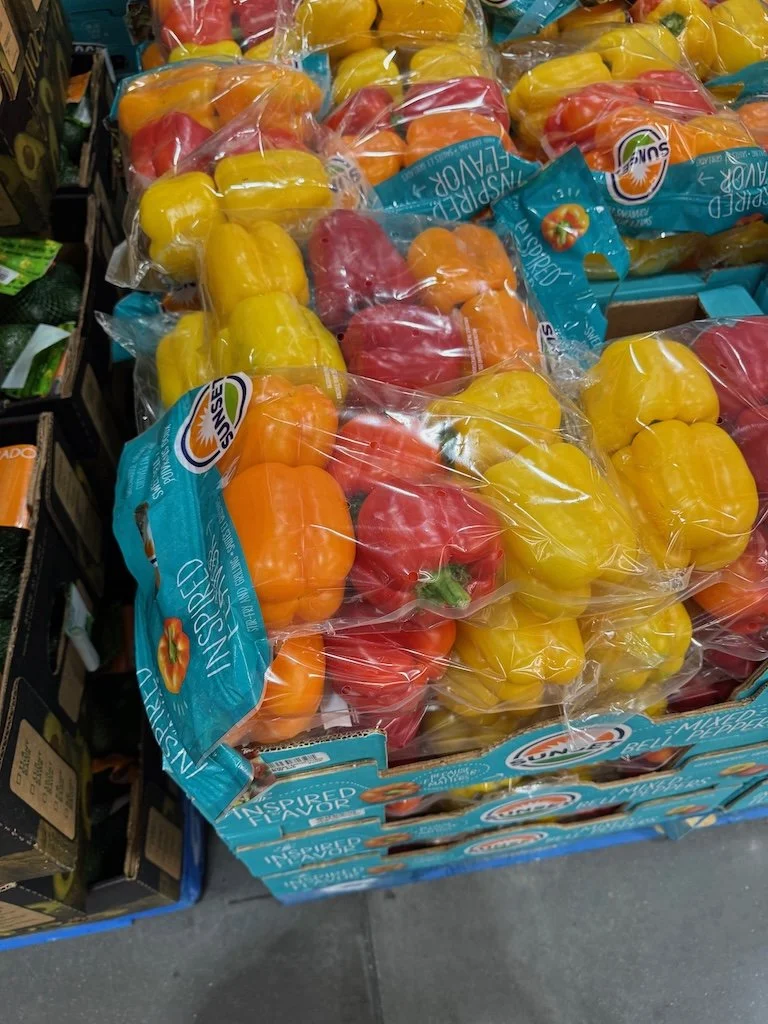
There is sometimes a conflict between less plastic packaging and organic vegetables. One example from where I shop is bell peppers. The organic bell peppers come in plastic packaging. The non-organic peppers are offered either bulk (i.e. no plastic packaging) or in plastic packaging. Bell peppers are one of Consumer Reports’ 6 Fruits and Vegetables Loaded with Pesticides so I am opting for the organic ones even though they are in plastic packaging. This is a case where pesticide concern is high enough to skew toward organic. The organic bell peppers packaged in plastic packaging have probably not been exposed to heat…and I can remove the packaging as soon as I get them home. I still don’t like the packaging…and would prefer an option at the store for organic peppers without any packaging.

Some plastic packaging is more toxic – like Styrofoam. I buy frozen chicken breasts rather than fresh. Yes - they are in a plastic bag…but I’ve eliminated the Styrofoam tray and plastic wrap. I have no waste with the frozen and the bag has obviously never been exposed to heat. I thaw the chicken as I need it – in a glass container.

I will not buy plastic wrap again. I’ll use foil or parchment paper or a container with a lid rather than plastic wrap!

These are just a few examples….there will be many more I am sure. It would be easier if more of what I buy was offered in a non-plastic package!

Gleanings of the Week Ending March 14, 2026

The items below were ‘the cream’ of the articles and websites I found this past week. Click on the light green text to look at the article.

2/25/2026 The Scientist Forever Chemicals May Accelerate Aging in Middle-Aged Men - The team detected the PFAS perfluorononanoic acid (PFNA) and perfluorooctanesulfonamide (PFOSA) in 95 percent of the participants. PFNA and PFOSA, both invented in the middle of the 20th century, are still used widely today in consumer products designed to be stain-, grease-, and water-repellent. To reduce risk, individuals can try to limit their consumption of packaged foods and avoid microwaving fast-food containers. Looking ahead, we are actively modeling how PFAS interacts with other common pollutants, as we need to understand the cumulative health risks of these chemical mixtures

3/1/2026 BBC Can ‘friction-maxxing’ fix your focus? - While modern technology can streamline day-to-day life, making everything from dating to food delivery more efficient, it may come at a cost: early data suggests that our attention span may be shortening, critical thinking capabilities weakening, emotional intelligence fading, and spatial memory getting worse as we offload human tasks to our devices. Analogue hobbies such as crafting, gardening or reading – which involve friction as opposed to scrolling or streaming – can act as "active meditation", calming the mind and reducing stress. One 2024 study of more than 7,000 adults living in England found that those who engaged in crafting or the creative arts were more likely to report significantly higher life satisfaction, a greater sense that life is worthwhile and increased happiness. 

2/24/2025 The New York Times Plastic, Plastic Everywhere - Peak oil may be on the horizon. But peak plastic is nowhere in sight. In a new book, “Plastic Inc.,” the journalist Beth Gardiner digs into an industry that mostly flies below the radar but has huge impacts on human health, environmental pollution and global warming.

3/5/2026 Yale 360 Species Slowdown: Is Nature’s Ability to Self-Repair Stalling? - When scientists recently analyzed hundreds of studies of ecosystems, they were surprised to see a marked slowing in the rate of species turnover. If new species don’t replace old ones, they say, ecosystems may have less flexibility to respond to habitat loss and climate change.

2/28/2026 KCTV A ban on mini liquor bottle sales in five Kansas City neighborhoods officially introduced - Mayor Quinton Lucas and Councilwoman Melissa Robinson officially introduced an ordinance Thursday that would ban the sale of certain single-serve alcohol products in five Kansas City neighborhoods - — areas the city said have documented public safety concerns and recurring quality-of-life complaints from residents.

3/5/2026 The Conversation Choosing to buy organic food depends more on trust than taste - Organic labels work only when the system behind them is trusted. This has important implications at a time when food prices are rising and trust in public institutions is under pressure in many countries.

2/2/2026 Washington Post Baggies, retainers and more: 5 microplastics questions, answered - If you only have the bandwidth for a few battles, heating food in plastic is the bigger front. Most experts agree that ultra-processed foods are likely the biggest source overall in our diets. Food that comes packaged in plastic is obvious, but there are exposures during industrial processing that we don’t see. That’s one more reason to lean toward whole foods when you can.

3/4/2026 National Parks Traveler Study Finds Bird Populations Are In Decline As Panel Considers Weakening Key Act - Bird populations are in decline, with billions fewer birds are flying through North America compared to a decade ago, according to a study published in February 2026. The researchers found that about half of the 261 species analyzed showed significant declines from 1987 to 2021, and a quarter showed accelerating declines. The study points out that the declines are primarily because of high-intensity agriculture and warming temperatures. The findings come as a congressional panel is holding a hearing to consider weakening the Migratory Bird Treaty Act. Extinction starts with declines like these, and birds are often the indicators that our environment is too toxic to support other life.

3/4/2026 Science Daily Millions with joint pain and osteoarthritis are missing the most powerful treatment - Despite affecting nearly 600 million people worldwide — and potentially a billion by 2050 — the most powerful treatment isn’t surgery or medication. It’s exercise.

2/26/2026 Canary Media Balcony solar is taking state legislatures by storm - Plug-in solar is already booming in Europe. As many as 4 million households in Germany have installed the systems, which people can order through Ikea. 28 states and D.C. are considering plug-in solar bills.

Plastic Crisis - Actions at the Community Level – February 2026

At the end of January, it seemed like my community level activities about plastics had started out at a bit faster than I anticipated….and I wondered if it would continue. February was a month of preparation for things that would happen in April and beyond; I didn’t anticipate that there would be plastic-related legislation to begin tracking too!  

There currently are two plastic-related bills filed in the Missouri House. Neither is on the House calendar but they both had ‘read second time’ action in February:

  • HB 3193 - Phases out the use of single-use plastic products at Missouri State Parks and Historic Sites

  • HB 3357 - Prohibits the sale of intravenous solution containers and intravenous tubing products intentionally made with DEHP

I will be following both; it will be my first experience with tracking something through the Missouri legislative process. Beyond Plastics Ozarks will have to decide how we want to include information about these in upcoming outreach activities.

Beyond Plastics Ozarks’ first tabling - outreach event will be in April – associated with an Earth Day music festival. I’ve requested copies of information sheets from Show-me Less Plastic and have ideas for additional handouts that are more locally focused. We’ll probably make a sign to advertise our ‘bring your own bag (BYOB)’ initiative that we’ll start at local farmer’s markets. I’m collecting rocks to keep handout pages secure on the table even if it is breezy.

I’ve been asked to do a presentation at the state conference for Master Gardeners on microplastics in June. I’ve gathered some presentation materials from others and will facilitate a brainstorming session that will develop some gardener specific ideas on reducing microplastics.

Having a plastics movie showing and lining up tabling at farmer’s markets is still on the Beyond Plastics Ozarks ‘to do’ list. It looks like the first 6 months of 2026 are going to be busy!

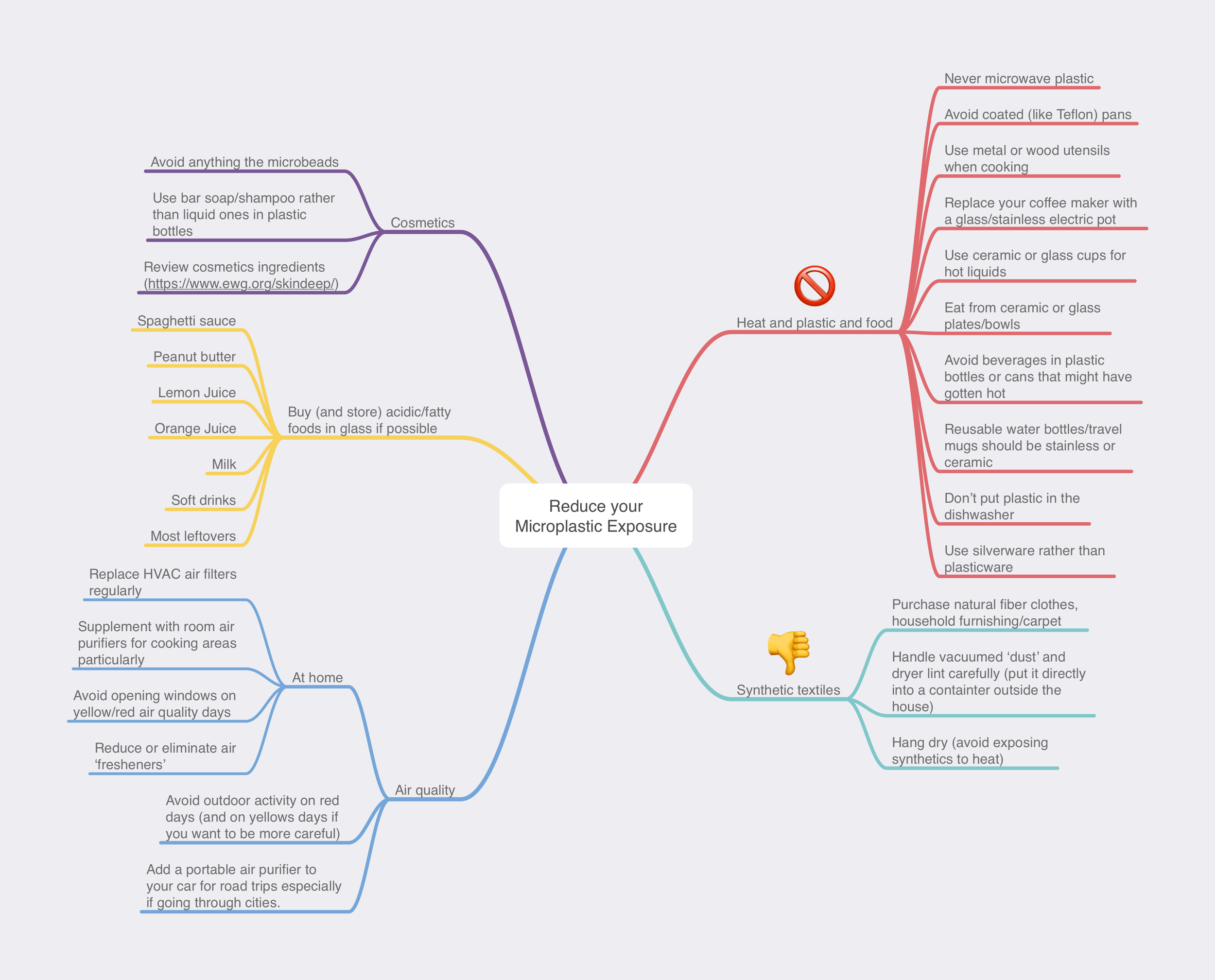
Plastic Crisis: Creating a ‘Reduce your Microplastic Exposure’ Mind Map

One of the first mind maps I worked on after purchasing the MindNode app was about reducing microplastic exposure. It was a good way to collect my thoughts and learn the tool. I am gearing up for spring and early summer tabling and talks on plastics – feeling the need to get organized and hone the way I deliver the message!

The mind map is still a work in progress – I still don’t have anything about household cleaners or water filtering (for drinking and maybe for shower). The things I feel are the biggest issues (heat/plastic/food and synthetic textiles) are there, but they may get more detail over time. I haven’t figured out where to put ditching the plastic cutting board. My goal is to create one page mind maps on various perspectives of the plastics issue and either use them directly as conversation starters or translate them into other forms for presentation.

It feels good to be creating mind maps again and I like MindNode. Years ago – during my career (over 15 years ago) – I created a lot of mind maps using MindManager but it is now too expensive for individuals (and overly complex for what I need)!

Plastics Crisis - Textiles

There seem to be plastics everywhere. I’ve come to realize that in my home, the largest source is probably textiles! The carpets that were in the house when we purchased it a few years ago are likely all synthetic fibers (although about 1/3 of the house is tile or vinyl (plastic)). When we vacuum the particles are gray and powdery…the plastic there is already very small.

And then there are clothes. We have some clothes that are cotton or cotton/polyester (plastic)…but some items are 100% synthetic (polyester, acrylic, nylon, spandex). I don’t dry more than half my clothes that are synthetic fibers, but there are enough that the lint from the dryer should probably be considered toxic (probably should put it in a covered trash can so microplastics will not waft from it); I hope washing machine technology will eventually filter their waste water but I’m not sure how to handle what a filter would collect safely).

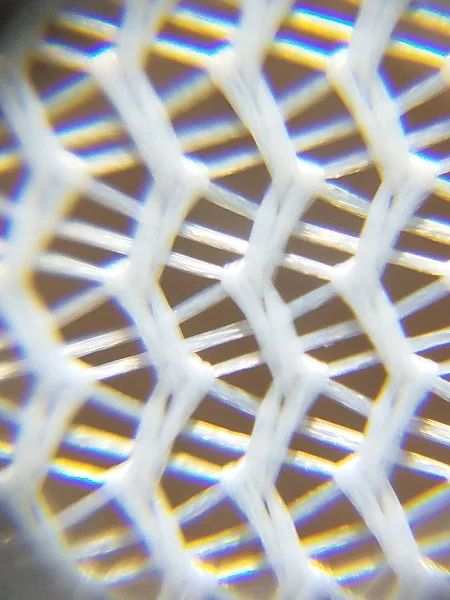
Back in March 2019 I posted some macro photography of textiles; I’ve copied it below with some commentary afterward.

I am finally experimenting with my 60x macro lens that I got for my phone. Textiles around the house were an easy project. The lens has a light and I found it handy. With this lens, I use the zoom on the phone to avoid clipping the image to take out the vignetting around the edges. I’d rather compose the image in the camera.

2019 01 IMG_1253.jpg
20190308_082610.jpg

I liked the simple weave and colors of the worn dishcloth.

20190314_114644.jpg

A crocheted hat had brilliant color but was not flat enough to focus well.

20190314_114655.jpg

The washcloth had more fuzzy fibers than I expected but

20190314_114829.jpg

Not nearly as many as the wool sock.

I got stuck on a tapestry jacket…had a challenge to choose just 3 to include in this post. The last one was from the inside of the jacket.

20190314_114948.jpg

The machine embroidery of a silk jacket looked very different than I anticipated.

20190314_115026.jpg

The weave of a light-weight jacket was more complex.

I realized that the patterns on t-shirts were painted – but hadn’t thought about what they would look like with the macro lens. The blobs of color stand out on the surface of the cotton knit.

20190314_115243.jpg

The most non-fuzzy fabric was microfiber underwear!

20190314_115315.jpg

The yarn in the bulky cardigan was almost too big to look interesting at this magnification.

20190314_115443.jpg

Machine-made borders look more orderly than the fabric sometimes (the black is thread).

20190314_115534.jpg

The eye detects tiny holes in the fabric of the bag for delicate fabrics to go in the washer; with macro lens, it looks like a Zentangle.

After I got back to my office, I looked at two mouse pads with the macro lens. One is a woven surface…the other looks like a paint.

--

The macro photographs make it easy to see how easily fibers escape from our clothes and carpets.

Right now I am thinking that at home the 1st priority is to not have any plastic around heat (mostly in the kitchen) and the 2nd is reducing synthetic textiles!

Gleanings of the Week Ending February 14, 2026

The items below were ‘the cream’ of the articles and websites I found this past week. Click on the light green text to look at the article.

12/18/2025 Ozark Public Television Wild Ozarks: A Legacy of Conservation – Very well done. I am recommending it to be part of the core training for the next group of Springfield Plateau Missouri Master Naturalists!

2026 Million Marker Test Kit – I’m going to do as much as I can to reduce microplastics…then do this test….probably next summer. It is advertised as the only mail-in test for BPA, BPS, BPF, phthalates, parabens, and oxybenzone.

2/3/2026 Yale 360 China to See Solar Capacity Outstrip Coal Capacity This Year - By the end of 2026, wind and solar will account for nearly half of China’s power capacity. Including hydro and nuclear power, clean energy will amount to nearly two-thirds of total power capacity, while coal will amount to a third. Competing with cheap solar and wind, a large share of coal plants are now operating at a loss.

2/1/2026 Cool Green Science Catching Sharks for Science - On Long Beach Island, volunteer anglers help researchers uncover the hidden journeys of sharks in threatened salt marsh ecosystems.

2/3/2026 Science Daily Even remote Pacific fish are full of microplastics - Even in some of the most isolated corners of the Pacific, plastic pollution has quietly worked its way into the food web. A large analysis of fish caught around Fiji, Tonga, Tuvalu, and Vanuatu found that roughly one in three contained microplastics, with Fiji standing out for especially high contamination. Reef and bottom-dwelling fish were most affected, linking exposure to where fish live and how they feed.

2/1/2026 National Parks Traveler New York Art Teacher Earns 30 National Park Resident Artist Spots In 10 Years – Artist-in-residence at National Park Service sites. Many of the programs are funded by nonprofits, grants, or donations made directly to the Park Service. Categories are broad and include writers, painters, photographers, musicians, dancers, sculptors, and animators. 

1/30/2026 My Modern Met Society of Photographers 2025 Contest Announces Its Astounding Winners – Chosen from over 6,000 photographs submitted!

1/29/2026 BBC From bad omen to national treasure: The rare bone-swallower stork saved by a female army - Known locally as the hargila (or "bone-swallower") for its scavenging ways, greater adjutant storks are unique birds. Roughly 5ft (1.5m) tall, they aren't only imposing but also play a vital role in maintaining the health of a wetland ecosystem. As scavengers that consume and clean up carcasses, they prevent the spread of disease and break down decaying organic matter, recycling essential nutrients back into the soil. They were feared, reviled and in some communities, hunted for their meat which was once widely used in folk medicine as a cure for leprosy or antidote to poison.

1/28/2026 Archaeology Magazine Study tracks wild potato across the Southwest - People carried a small, wild potato known as the Four Corners potato (Solanum jamesii), across the southwestern United States some 10,000 years ago.

1/27/2026 Super Age Wellness Is Finally Admitting It Got the Last Decade Wrong – The article lists 10 trends from the 2026 Global Wellness Report. One of the 10 is “Microplastics are at threat to healthspan.”

Plastics Crisis – Donating Plastic and Valentine’s Plans

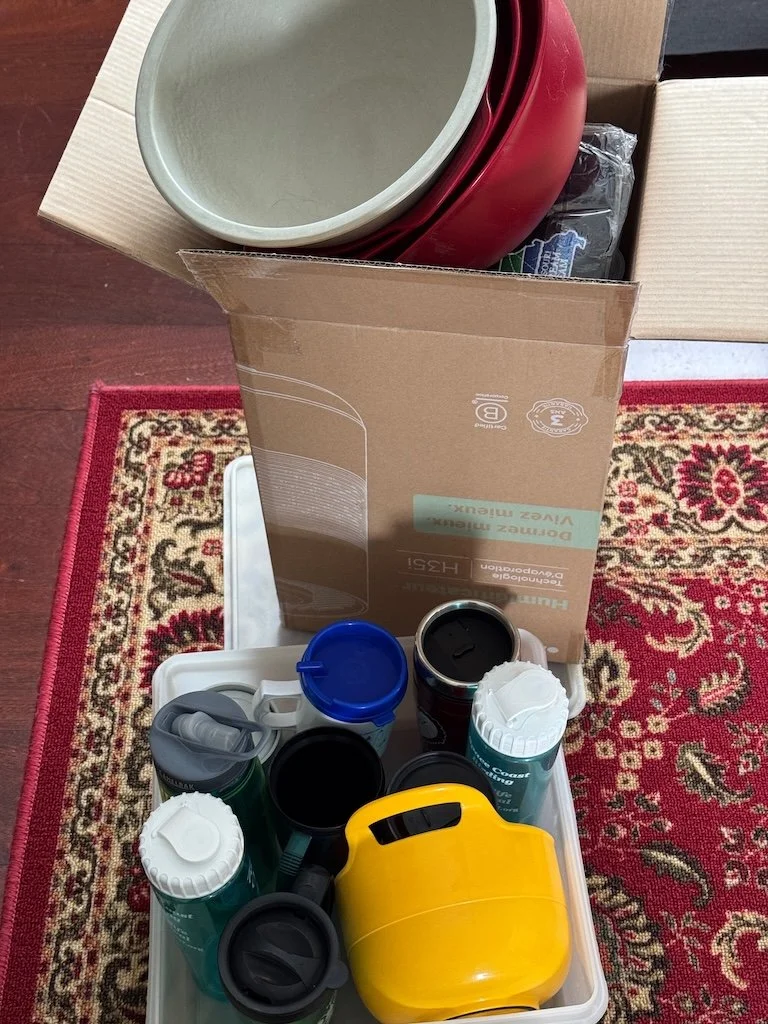
I’ve gathered plastic from my kitchen and am donating it to Goodwill. The large plastic bin full of old water bottles/travel mugs and the yellow bowl is a Tupperware cake container that I’ve had for almost my whole married life (i.e. over 50 years)!

I’ve gathered plastic from my kitchen and am donating it to Goodwill. The large plastic bin full of old water bottles/travel mugs and the yellow bowl is a Tupperware cake container that I’ve had for almost my whole married life (i.e. over 50 years)!

It’s better to donate the supposedly reusable plastic rather than sending it to the landfill although it will likely be used in someone else’s kitchen; I feel guilty about enabling that. I also added a coffee maker (minus the carafe) since I replaced it with a glass and stainless electric tea kettle. I will never have this kind of plastic to donate again.

Switching from donating plastic to Valentine’s Day plans…

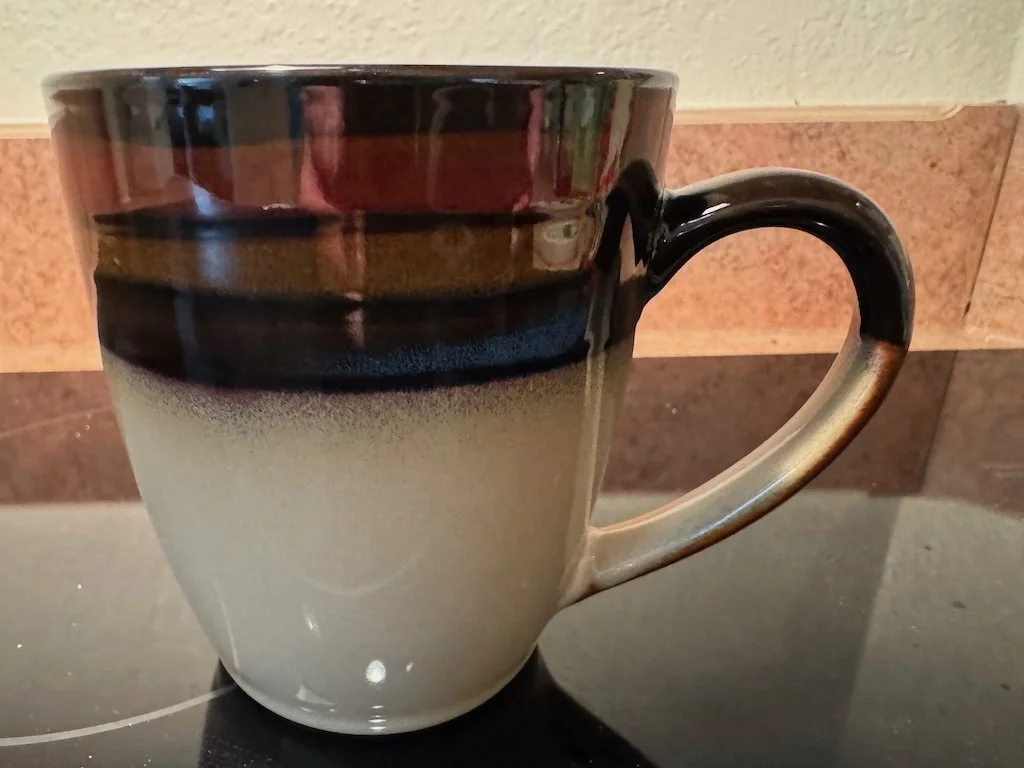
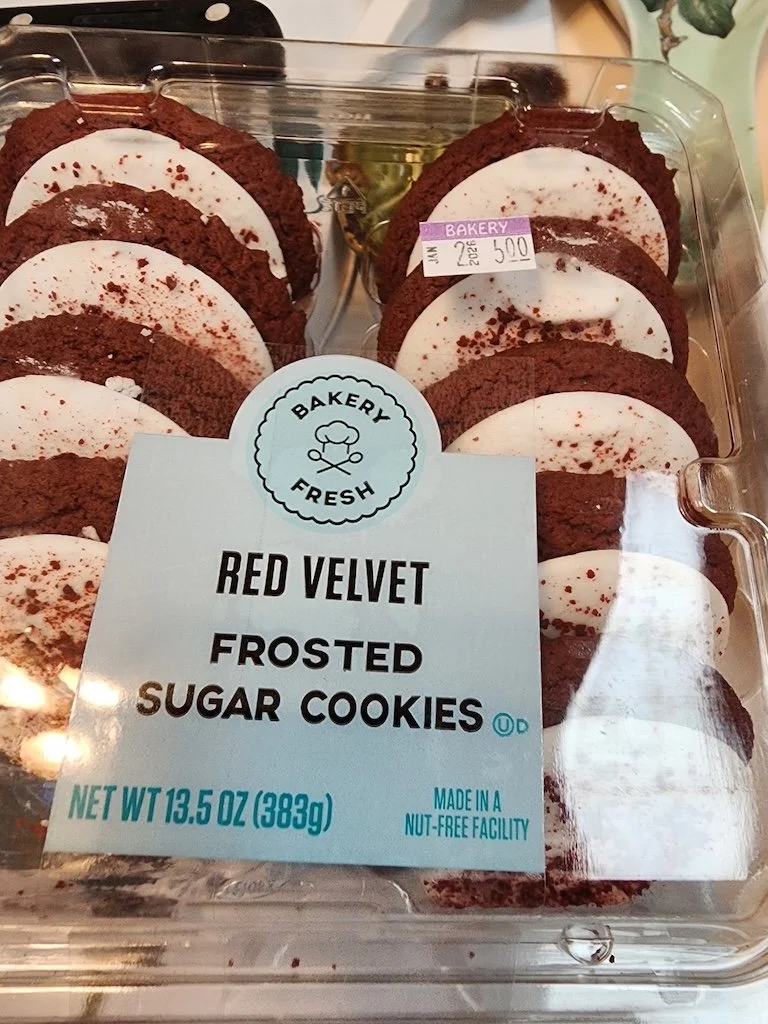
Our Valentine’s Day celebration does not involve as much plastic as some other holidays since we don’t decorate (no balloons or glitter). There are a few gift ceramic mugs that were added in past years; we are past the need to buy a valentine’s gift; the only chocolate I like is my usual ethically sourced dark chocolate packaged in foil and heavy paper – and I don’t wait for a holiday to enjoy it. If the weather is good, we might do a winter walk around the Botanical Garden. I might check the thrift store for a dressy item for the day…and the rest of winter…when I make the donation to Goodwill. We might go out to eat – not to fast food and we probably won’t have leftovers (no plastic utensils or take out boxes); or maybe we’ll just go out for a special dessert. Looking back at the 2/14 celebrations in the past few years – the biggest single use plastic of the day might be clamshell packaging for a piece of red velvet cake – and I’ll do without that this year.

Plastics Crisis – Action at the Community Level – January 2026

The weekly Plastics Crisis posts are dominated by what I am doing as an individual to reduce my plastics exposure – but I am also acting at a community level as well; my plan is to post at least once a month to document those actions. Looking back at January, there was a bigger variety than I anticipated at the beginning of the month.

Beyond Plastics Ozarks is ramping up! We added a few additional members, and I hosted my first zoom meeting for the group. I experimented with annotating the Zoom generated summary rather than writing up my own notes; it seems to work reasonably well but I will still take plenty of notes during the meeting!

I was part of a meeting with a Springfield Councilmember organized by the Show-me less plastic project.

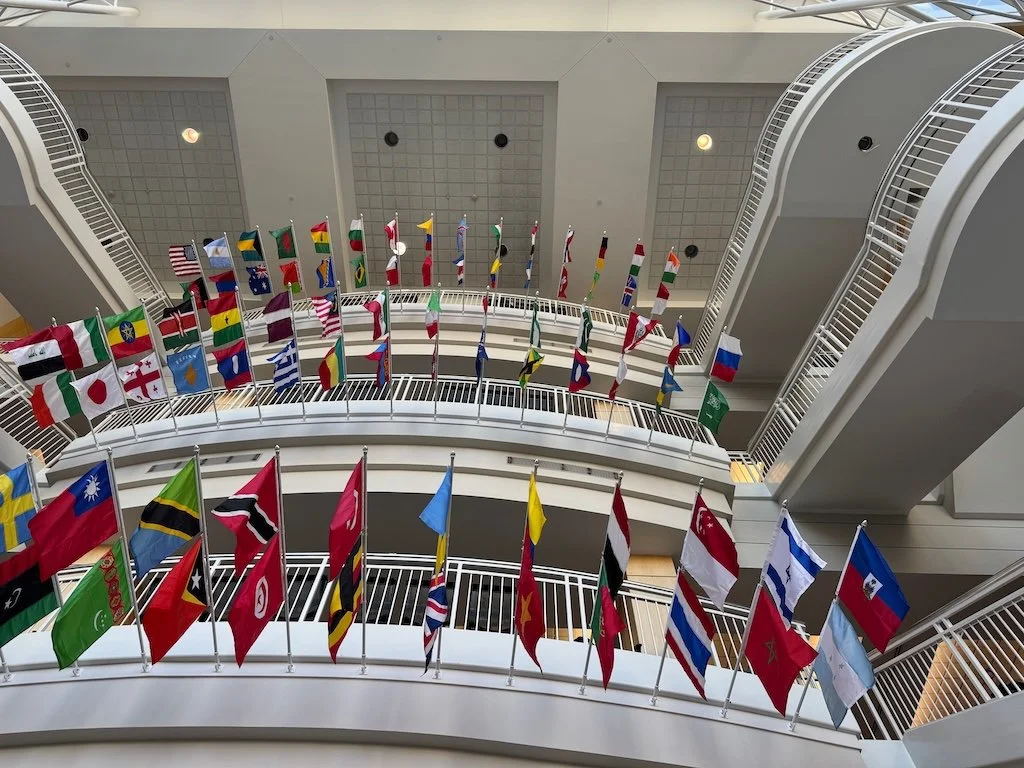
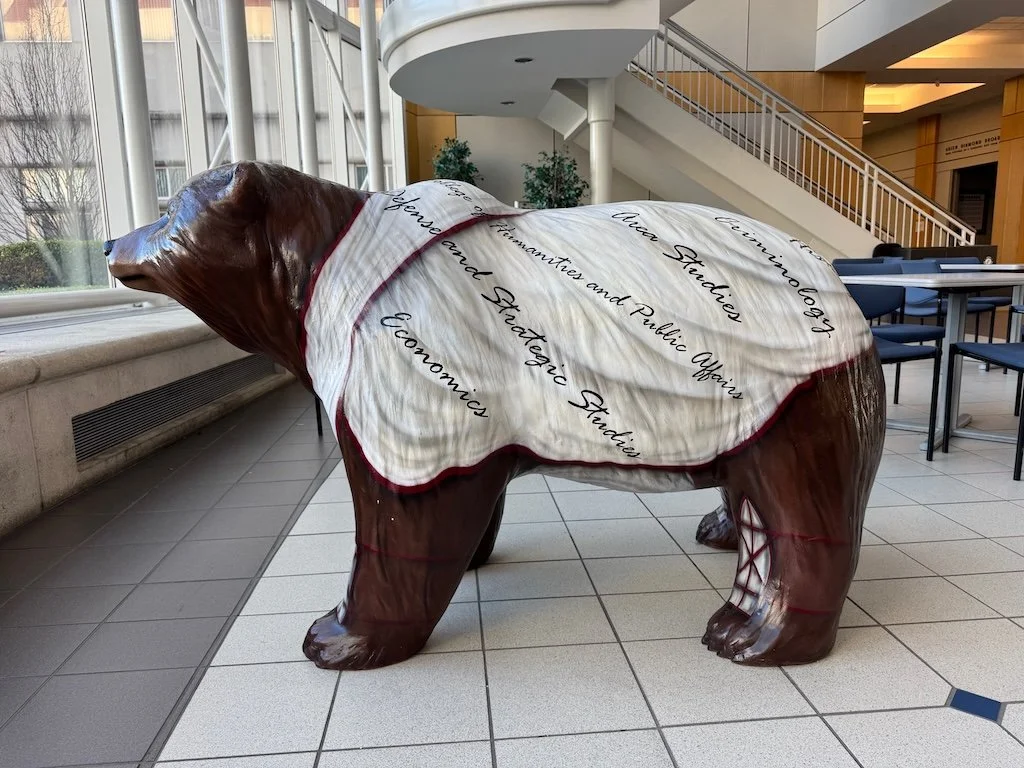
I  recorded a segment of the KSMU Growing the Ozarks podcast about Microplastics in the Environment. It was an adventure for me – going to the recording studio on the Missouri State University campus (taking some pictures as I waited in the foyer) and getting the recording acceptable on the first try thanks to my experienced interviewer.

During my travel to Lewisville TX, I noticed a lot of plastic at the hotel’s breakfast service…and used the survey from the hotel afterward to indicate my concern about Styrofoam plates and plastic utensils with hot food. I had stayed at the same brand/chain in St. Joseph MO and they had used ceramic plates and stainless utensils. The General Manager of the hotel responded: “We truly appreciate your suggestions about reducing single-use plastics and will share them with our leadership team for consideration.” I stay at the same hotel every month when I visit my dad so I will know if they make changes.

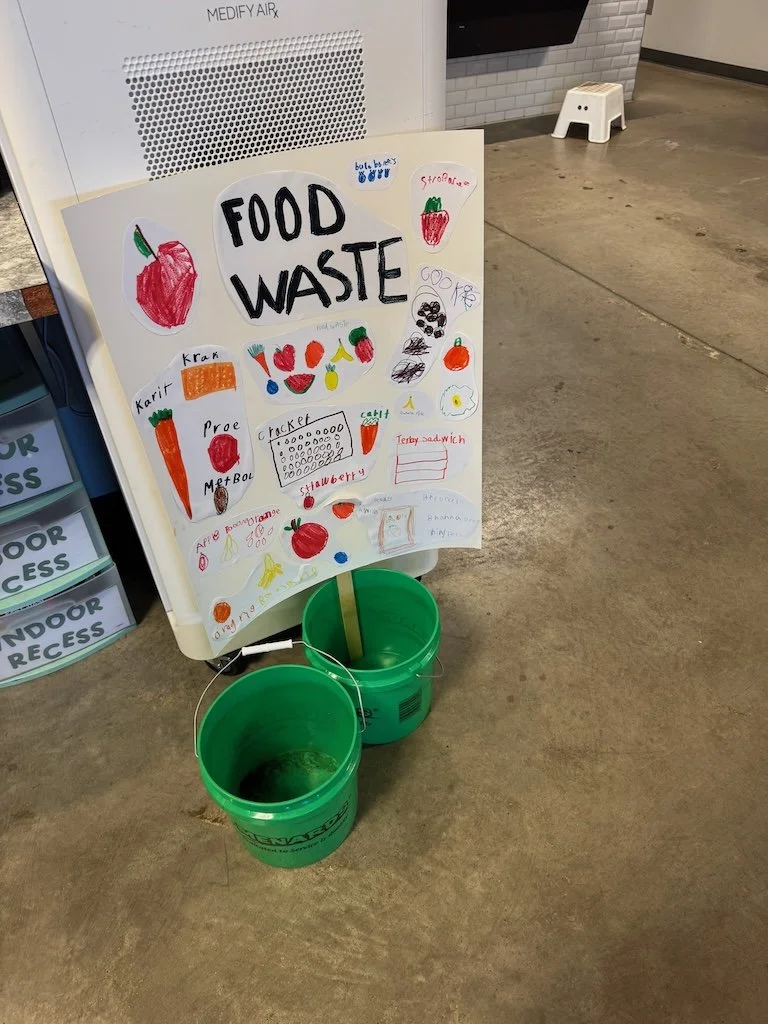
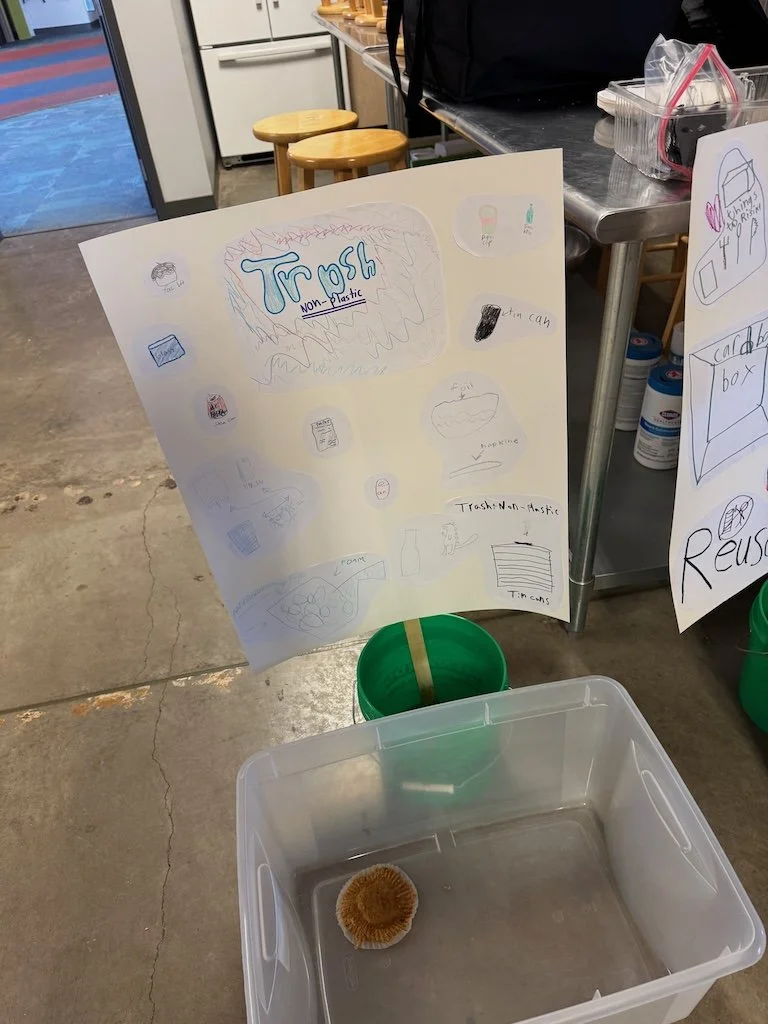
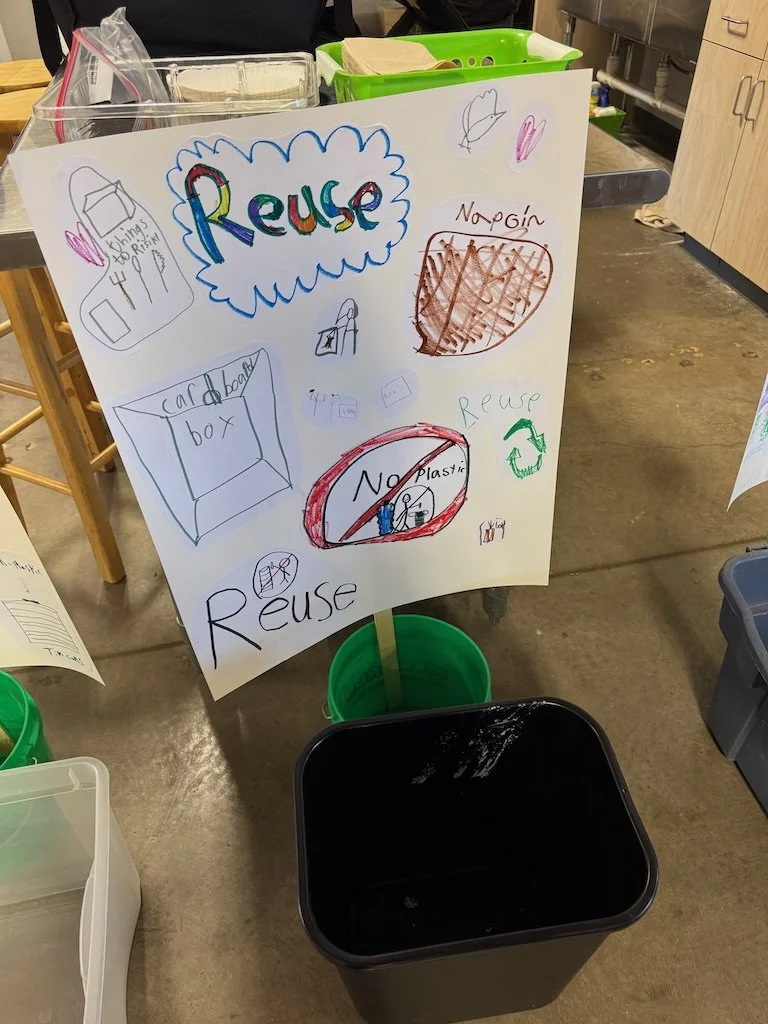
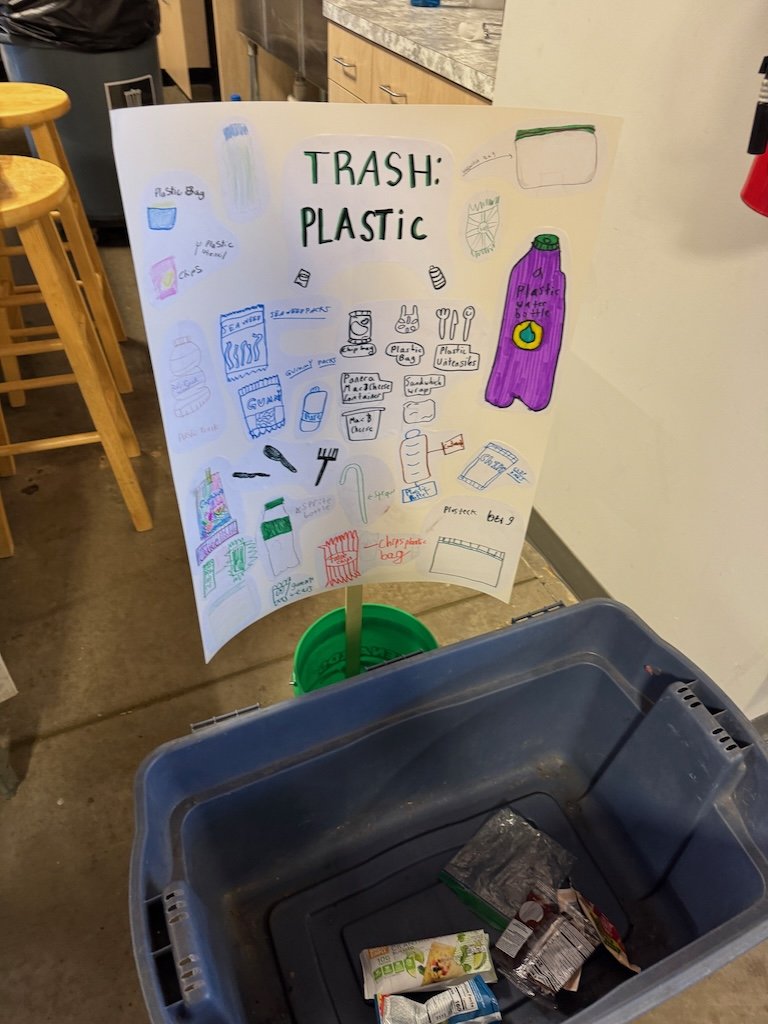
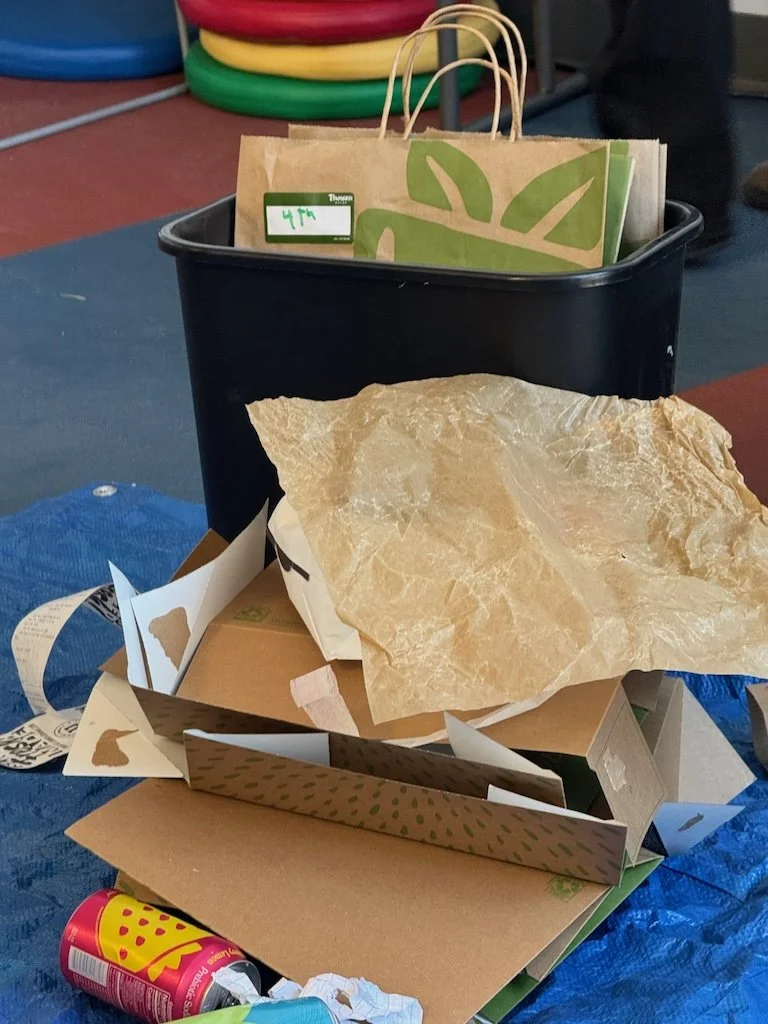
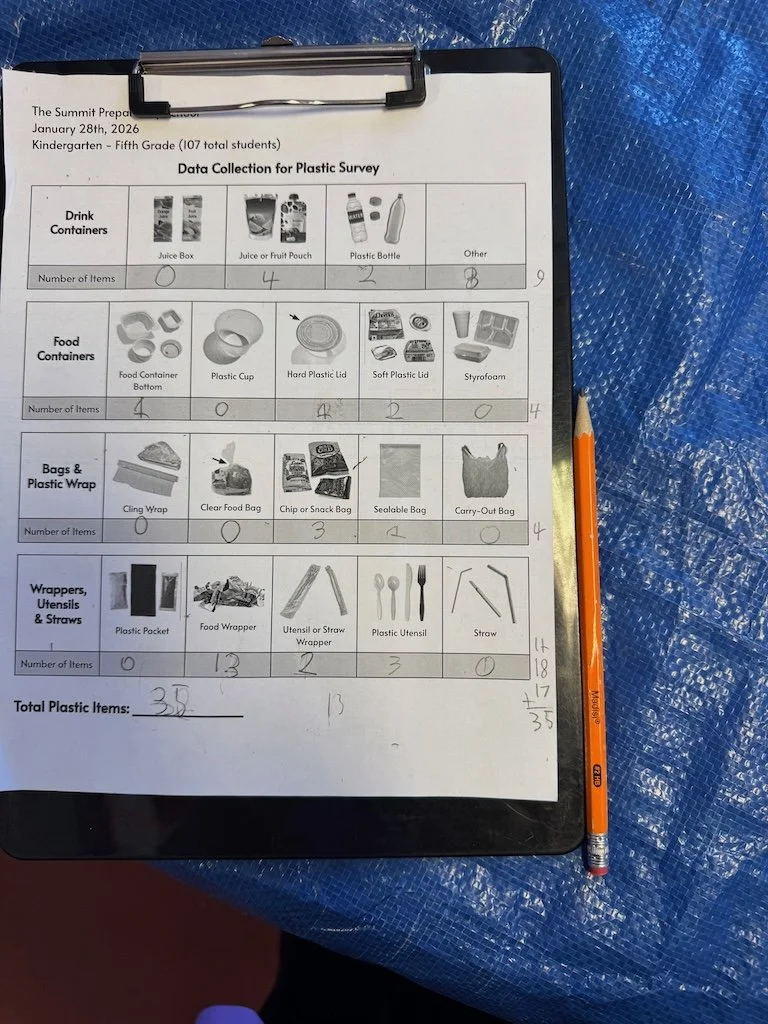
I helped with a lunch trash audit at a private school in Springfield organized by the Show-me less plastic project. The teacher was a fellow Missouri Master Naturalist and had done a great job preparing for the event – having the elementary students make posters for the initial sorting: food waste, non-plastic trash, reuse, and plastic trash. After their lunch the students put their trash in the correct bin.

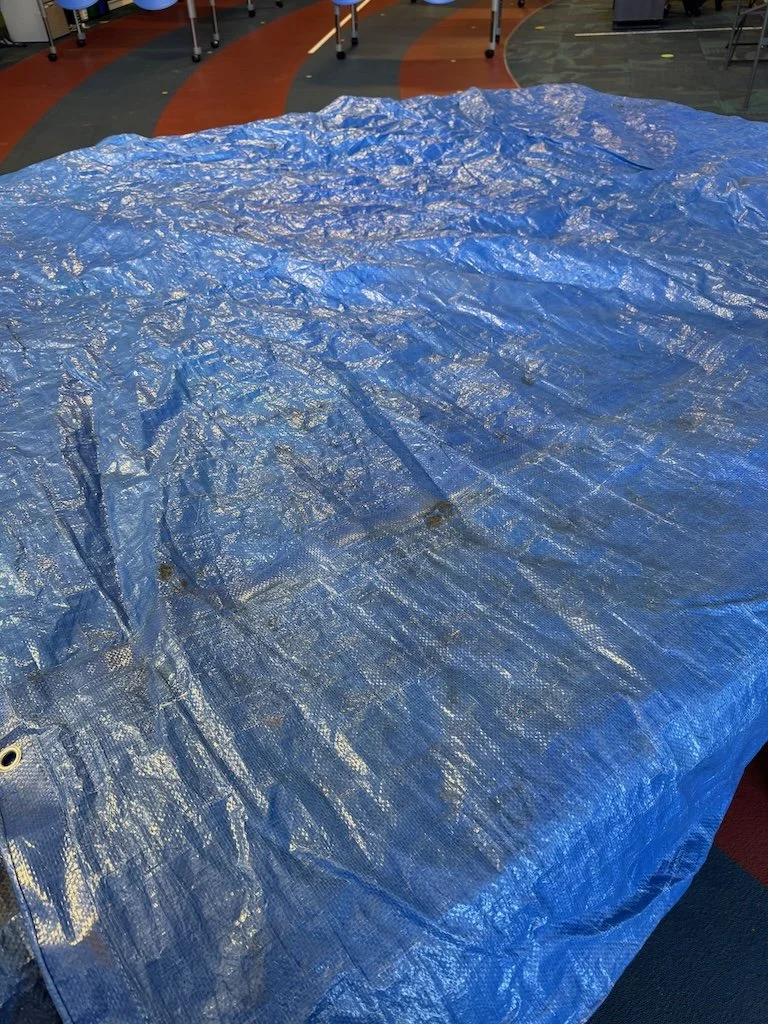
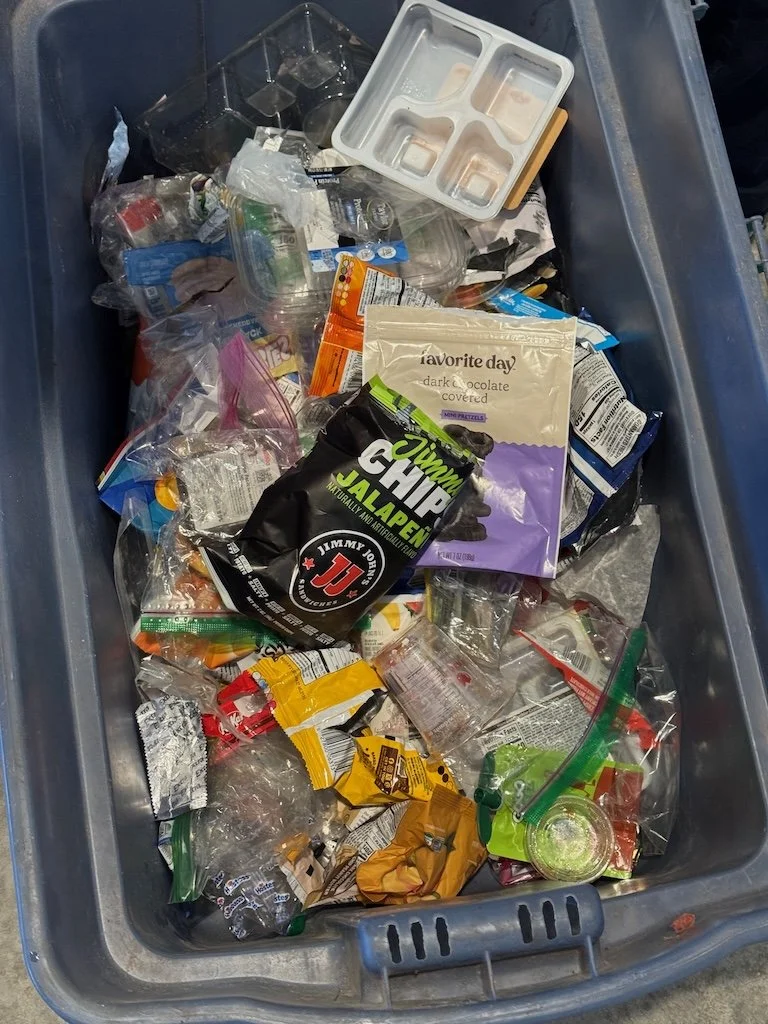
We (the adults) moved to a classroom with tarps over tables and on the floor which would be used for sorting by students over 3 class periods. The third and fourth graders divided into 4 groups and used the tarp covered table for the non-plastic  and plastic trash respectively while the second graders used the floor tarp to sort reuse/recycle.

The sorting of the plastic trash was the most thorough – with a worksheet for each group to categorize pieces of trash as they counted. Some of it was quite small!  

The next action the school is considering is to do a plastic free lunch!

In looking back at January, I am wondering if there will be as much every month or whether January unusual. This type of volunteering has components that are new to me; my strategy is to let it develop rather than try too hard to determine its direction!

Gleanings of the Week Ending January 31, 2026

The items below were ‘the cream’ of the articles and websites I found this past week. Click on the light green text to look at the article.

12/5/2025 The Scientist The Ice is Alive: Uncovering the Vanishing World of Glacial Microbes - The ice teems with an invisible and thriving biosphere, lush with bacteria, fungi, and viruses. Scientists have estimated that the glaciers and ice sheets around the globe could contain as many as 1029 cells. The most dynamic … is the surface, where windblown dust mixes with microorganisms to form a dark, granular sediment known as cryoconite. Because this aggregate is darker than the surrounding white ice, it absorbs more solar radiation, melting the ice beneath it. This melting creates water-filled depressions called cryoconite holes that pockmark vast areas of the ice sheet. Cryoconite holes are far from simple puddles; they are oases of life in a polar desert.

2023 NASA History Office NACA to NASA to Now – A book about the history of NASA available free online from the NASA website.

1/14/2026 The Conversation Native pollinators need more support than honeybees in Australia – here’s why - Since the 1990s, the global decline of pollinators due to human activities, climate change and diseases has been a serious concern, especially in Europe and North America. The honeybee is so good at invading and proliferating in Australian landscapes, we now have some of the highest reported densities of feral honeybees in the world. Despite the global pollinator decline, honeybees haven’t disappeared anywhere in the world, even in countries with far fewer resources than Australia. Nor has any plant species gone extinct from a lack of honeybees. In contrast, there is overseas evidence of plant population declines due to the presence of honeybees and lack of native pollinators.

1/13/2026 Yale Environment 360 Photos Capture the Breathtaking Scale of China’s Wind and Solar Buildout - Last year China installed more than half of all wind and solar added globally. In May alone, it added enough renewable energy to power Poland, installing solar panels at a rate of roughly 100 every second.

1/12/2026 Compound Interest What are rubber ducks made from? - Scientists discovered polyvinyl chloride, or PVC for short, accidentally in the 1800s on more than one occasion. A hard and brittle plastic, PVC had little commercial use until it was mixed with softening plasticizers to make a much more moldable material. The modern rubber duck is not made from rubber, but from plasticized PVC colored with a bright yellow pigment.

1/13/2026 Clean Technica EPA Cooks the Books on Industrial Pollution Costs – They (EPA) will henceforth consider only the economic cost of the regulations to corporations, and if they are deemed to be too burdensome, those regulations will be softened in order to avoid undue economic harm to the polluters. This includes fine particulates (2.5 microns or less) that include microplastics and fossil fuel combustion products….contributing to many negative health outcomes.

1/13/2026 UPI U.S. greenhouse gas emissions growing faster than economy - For the first time in three years annual U.S. greenhouse gas emissions increased, climbing by 2.4% in 2025 as federal policy shifted back to fossil fuels. For the first time in three years annual U.S. greenhouse gas emissions increased, climbing by 2.4% in 2025 as federal policy shifted back to fossil fuels.

1/11/2026 Science Daily A room full of flu patients and no one got sick - n a striking real-world experiment, flu patients spent days indoors with healthy volunteers, but the virus never spread. Researchers found that limited coughing and well-mixed indoor air kept virus levels low, even with close contact. Age may have helped too, since middle-aged adults are less likely to catch the flu than younger people. The results highlight ventilation, air movement, and masks as key defenses against infection.

1/15/2026 BBC Rare images of Europe's 'ghost cat' - After several decades, this mysterious little beast is returning to our forests.

1/14/2026 NASA Earth Observatory Fires on the Rise in the Far North - In the far north, wildfires are breaking old patterns. Satellite data show that wildland fires once scattered across the Arctic are now surging in numbers—particularly in northern Eurasia—and many are burning more intensely than before. n the 2000s, fires north of 60 degrees latitude appeared across both North America and Eurasia, but starting in the early 2010s, their numbers skyrocketed, most dramatically in Eurasia. Even the icy island of Greenland entered a new fire regime during this period, experiencing more large fires, though still too few to be visible on these maps. Researchers attribute these trends to rising temperatures, which have made northern landscapes more flammable, along with a poleward expansion of lightning—the primary ignition source for these fires.

Plastics Crisis – Travel and Plastics

I thought about plastics as I made my monthly drive from Missouri down to Lewisville TX and back. It might have been the noticeable plastic trash along the road – perhaps there was more of it because of recent winds.

The other reason I was thinking about it more was the breakfast set up. The same hotel chain we had stayed in when we went to St. Joseph MO late last month had used ceramic plates and stainless utensils – so it felt like a step backwards to have foam plates and plasticware. Both places had Keurig coffee makers in the room and plastic single used glasses. When I got the request for feedback to the hotel – I filled in several responses about the plastic in their hotel and pointed out that the bottle of water ‘gift’ is not as appreciated any more.
I have started carrying a ceramic mug in my suitcase…to make tea – avoid the Keurig completely and the cups they provide. I also carry a small water filtration pitcher to replenish my reusable water bottle and to make tea.

My eyes were itchy the whole time I was in Lewisville; when I checked, the air quality was yellow…and the hotel HVAC filter did not seem to help. The dominate pollutant type causing the ‘yellow’ level was PM2.5 which includes microplastics and products of fossil fuel combustion. I am considering whether I should travel with an air purifier like I did on road trips after COVID – when vaccines were still quite new.

The drive home was very windy with a front coming through (bringing ice and snow for the weekend) and there were several places where plastics were blowing in the wind. Not long after I got to I44 and was less than 2 hours from home, there was grass fire along the shoulder that seemed to go for at least ¼ mile…and the smoke was blowing across the road.  Another hit to air quality!

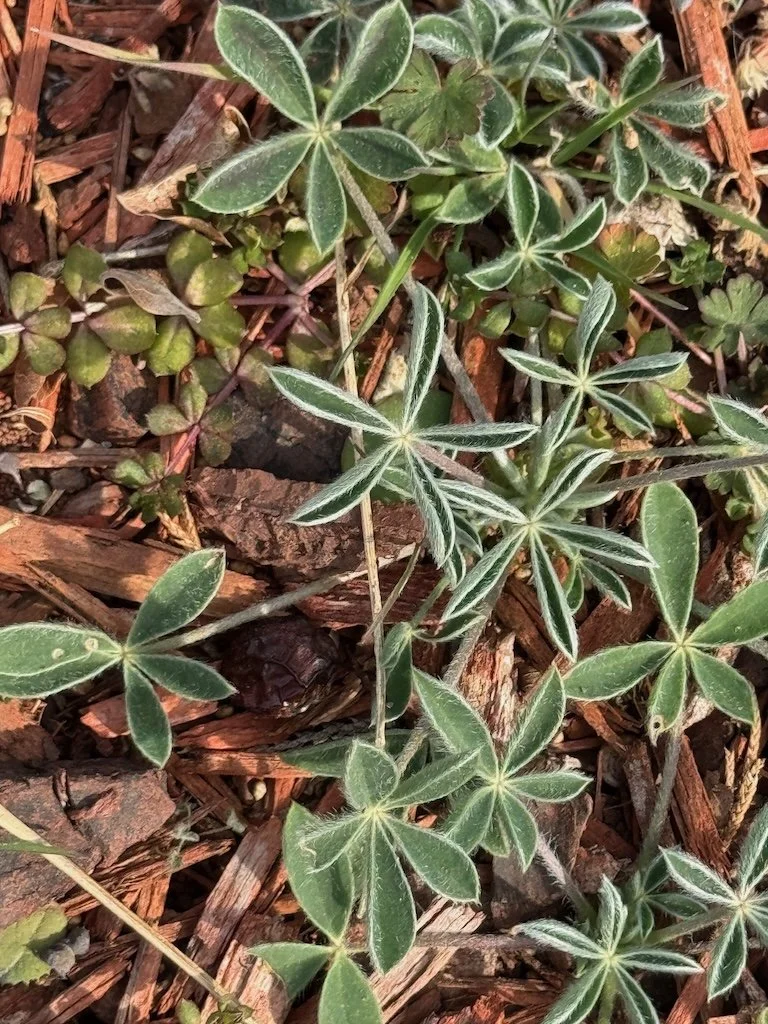
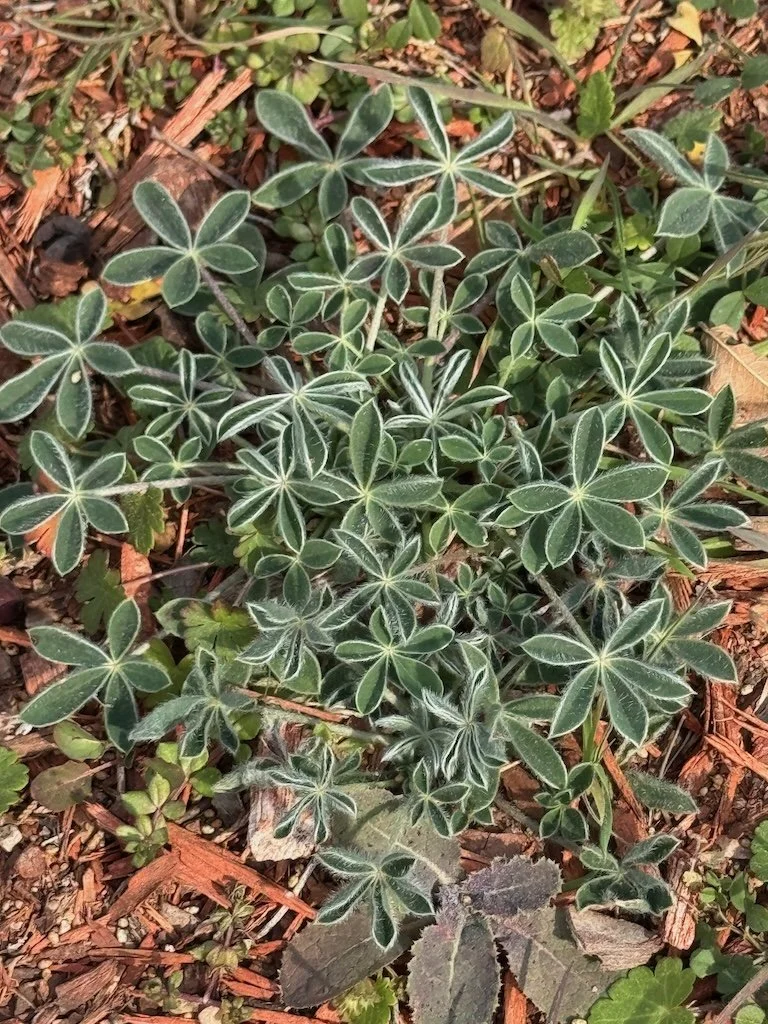
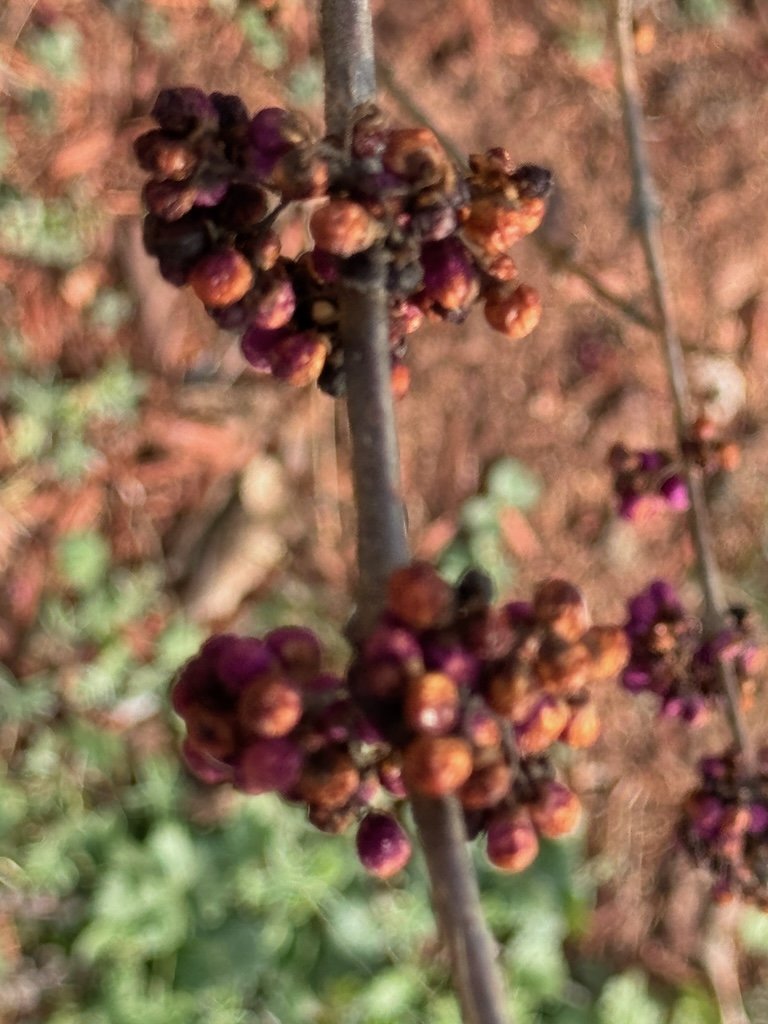
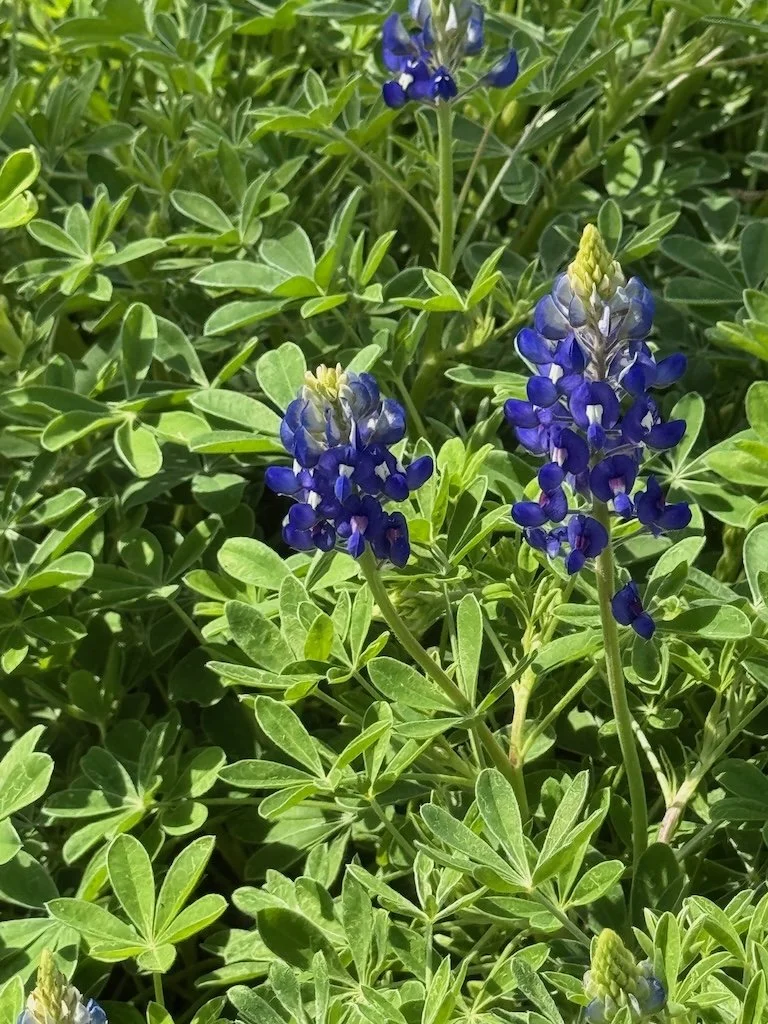
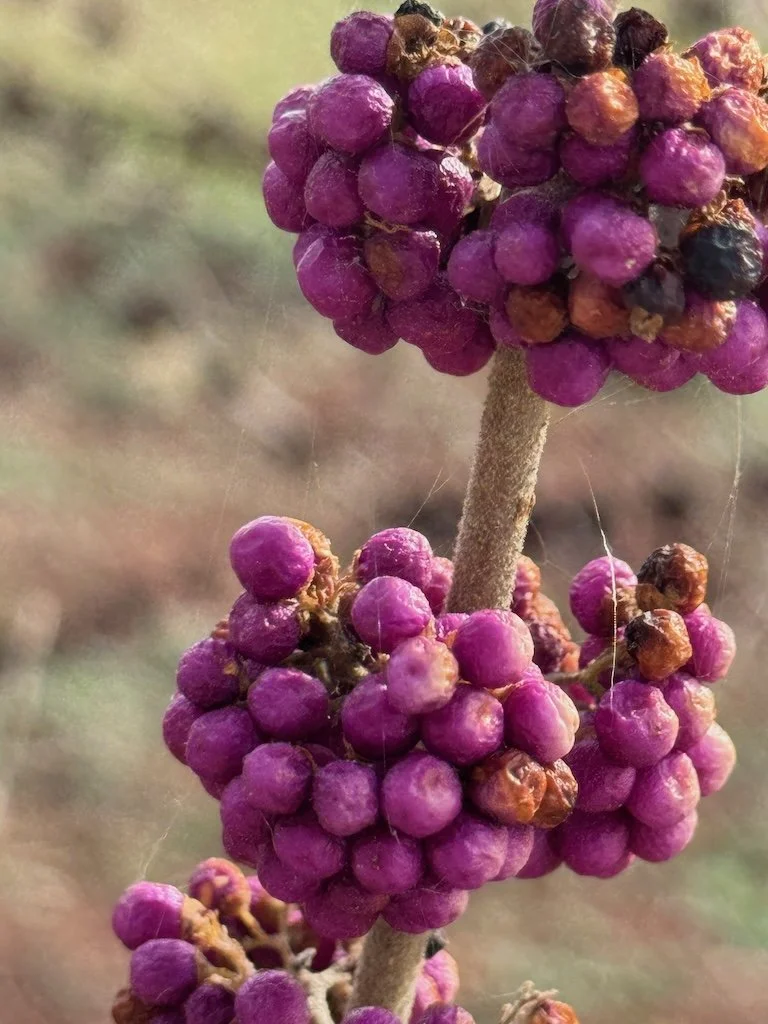
There was a bit of nature at the Texas Welcome Center where I stopped on the way down that I’ll use as a positive ending for this post even though it has nothing to do with plastics or air quality: the bluebonnet plants are above ground and the beautyberry still has a bit of color!

Gleanings of the Week Ending January 24, 2026

The items below were ‘the cream’ of the articles and websites I found this past week. Click on the light green text to look at the article.

1/3/2026 The Scientist Polio Vaccine History: The Shot That Saved Millions - On April 12, 1955, when the Salk polio vaccine was declared “safe and effective,” church bells rang out, kids were let out of school, and headlines around the world celebrated the victory over polio. When asked whether he was going to patent the vaccine, Salk told journalist Edward R. Murrow it belonged to the people and would be like “patenting the sun.”

1/8/2026 Smithsonian Magazine Hundreds of Flowering Species Bloomed Across Britain and Ireland Last Winter - Citizen scientists in the British Isles documented more than 300 native plant species blooming in early 2025, a phenomenon likely caused by climate change. While it’s lovely to see so many wildflowers in bloom … it’s also a sad reflection of the way our climate is changing and the knock-on effects this might have for all the wildlife—bees and other pollinators, butterflies and all the larger creatures further up the food chain—that depend on plants. If flowering times are increasingly out of sync with insect hatching times, the consequences could be very serious.
1/8/206 People in Brazil are living past 110 and scientists want to know why – Brazil’s highly diverse population harbors millions of genetic variants missing from standard datasets, including rare changes linked to immune strength and cellular maintenance. Brazilian supercentenarians often remain mentally sharp, survive serious infections, and come from families where multiple members live past 100. Together, they reveal aging not as inevitable decline, but as a form of biological resilience.

1/7/2026 The Conversation Surprising number of foods contain microplastics. Here’s how to reduce the amount you consume - While eliminating plastics entirely from our diets may be impossible, making these swaps should help to reduce your exposure.

1/6/2026 Nature Defossilize our chemical world - Achieving net zero means eliminating fossil fuels, not carbon — the chemical element has a crucial part to play in powering the modern world. Defossilization means finding sustainable ways to make carbon-based chemicals. Alternative sources of carbon include the atmosphere and plants, as well as carbon in existing biological or industrial waste, such as used plastics or agricultural residue. In some cases, these chemicals will eventually return carbon dioxide to the atmosphere through burning or biodegradation. In principle, this will occur as part of a circular process, rather than one that has added greenhouse gases.

1/5/2026 Planetizen The Child Population in These Cities is Dropping Fast - The proportion of young children in western U.S. metros is falling faster than in other parts of the country. Lower birth rates can sometimes ease immediate pressure on housing and schools but also lead to challenges in supporting economic growth and elder care, as the ratio of working adults to retirees declines.

1/4/2026 Washington Post What we learned about microplastics in 2025 - For many scientists, 2025 was the year of microplastics. It’s only in the past year or so that we have begun to understand that the tiny plastics — including some that are impossible to see with the naked eye — are in our bodies and food as well.

1/9/2026 Science Alert Study Finds Microplastics Are Widespread in Popular Seafoods - In the Pacific Northwest – a region of North America renowned for its seafood – researchers have found particles from our waste and pollution swimming in the edible tissue of just about every fish and shellfish they collected.

12/18/2025 Yale Environment 360 After Ruining a Treasured Water Resource, Iran Is Drying Up - Iran is looking to relocate the nation’s capital because of severe water shortages that make Tehran unsustainable. Experts say the crisis was caused by years of ill-conceived dam projects and overpumping that destroyed a centuries-old system for tapping underground reserves. 

1/8/2026 BBC The animals saved in Greece's ancient accidental 'arks' - Shielded from development and agriculture, many archaeological sites have now become inadvertent safe harbors for plants and animals. In Italy, rare orchids flower around an Etruscan necropolis. In the ancient Greek religious centre of Delphi, researchers found what they believe is a new species of snail – just 2mm (0.08in) long – suspected to live only in that area. In recent years, two new species of lizard were identified in Machu Picchu that may have once had a wider range and today enjoy the relatively undisturbed conditions of the ancient sanctuary. To better understand the connection between historical sites and nature, in 2022 the Greek government launched the Biodiversity in Archaeological Sites research project. Over two years, 49 specialists in all kinds of plants and animals surveyed 20 archaeological sites that spanned Greek history. 

Plastics Crisis – The Personal Economics of Less Plastics

I’ve been making changes over the past months to reduce plastic around my house enough that I am now thinking about the benefits we are observing.

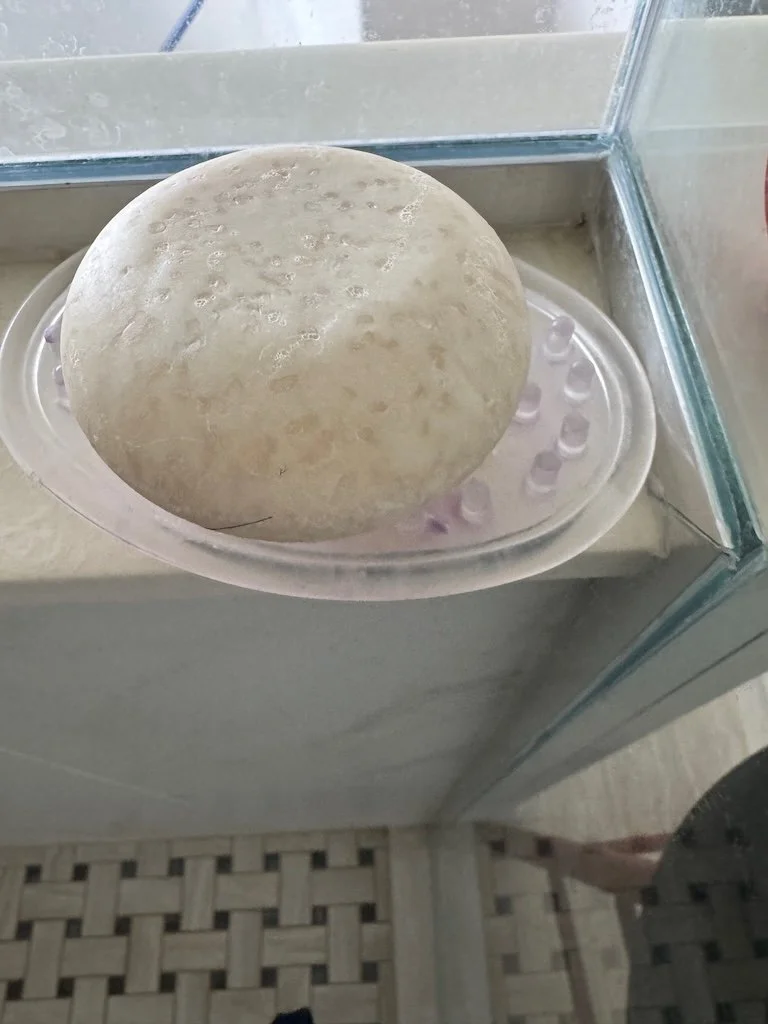
Our transition to bar soaps for showers and hand-washing costs less than the myriad of plastic bottled products…and both my husband and I have noticed skin improvements (less itching, less dry skin).

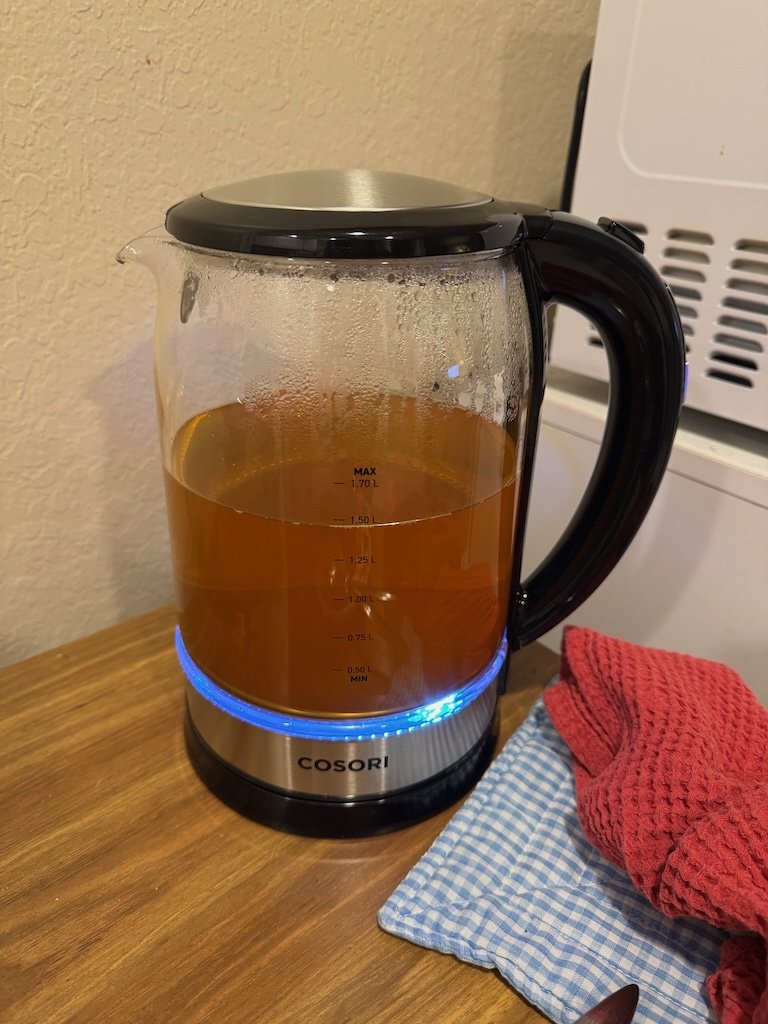
My electric tea kettle (only glass or stainless surfaces touching the water) is better than I imaged it would be – much better for making tea than the old coffee maker (that had a lot of plastic parts). I discovered that our water has enough minerals that the tea kettle developed scale quickly; putting a little lemon juice in the water (i.e. acid) solved the problem. I am using tea bags that are supposedly free of plastic glue but am considering cutting them open and using the tea leaves only. The tea makes it easier for me to cut back on soft drinks too! From a cost standpoint it is about the same as buying a new coffee maker.

I replaced all my plastic leftover and storage containers for food with glass (even though they have plastic lids….I don’t overfill the containers so that food never touches the plastic). The food is preserved as well as before and I find myself also using the containers for some items I previously put in Ziplocs (i.e. plastic) – like cranberries I am freezing and carrots I am taking with me for snacks on road trips. When I can’t buy a veggie except in a plastic bag (like carrots), I am starting to put them in a glass container when I get home from the store with the idea that the longer the carrots are in the plastic bag, the more microplastics they have on/in them. I also like that the glass dries better in my dishwasher!

The Rorra water filter is working well for us. We use it for drinking and cooking and the water fountain for the cats. There is no reason for us to buy bottled water any more. Of course – the Rorra and replacement filters cost something, but we are comfortable with our water at this point.

We replaced the type of humidifier we had with ones that use evaporation rather than creating a mist. This winter our house has about the same humidity level but without the white dust (and microplastics) the mist humidifiers created. Our air purifiers rarely go into ‘high’ mode now whereas last year they did any time we had them on near a humidifier.

Even though I have cut back on soft drinks, I still drink them occasionally….but they are in cans rather than plastic bottles. We have very few plastic bottles in our recycle. We have stopped putting some plastics in recycle even though our curbside service accepts them since we are aware that the materials rarely get recycled; even the milk and soft drink bottles/jugs (which are the most frequently recycled plastics) often end up in landfills…so it is good that we simply buy less in those containers these days.

I have stopped buying salad dressing since it is almost always in a plastic bottle. I am making my own. My favorite right now is a lemon ginger vinaigrette! It costs less and I make only what I need at the time.

I am going to start buying olive oil in glass rather than plastic as soon as I use up what I have. It will be more expensive, but I use it slowly, so I don’t need to buy a large container. I might have to buy it somewhere other than my usual grocery store just as I do my lemon juice(in a glass bottle).

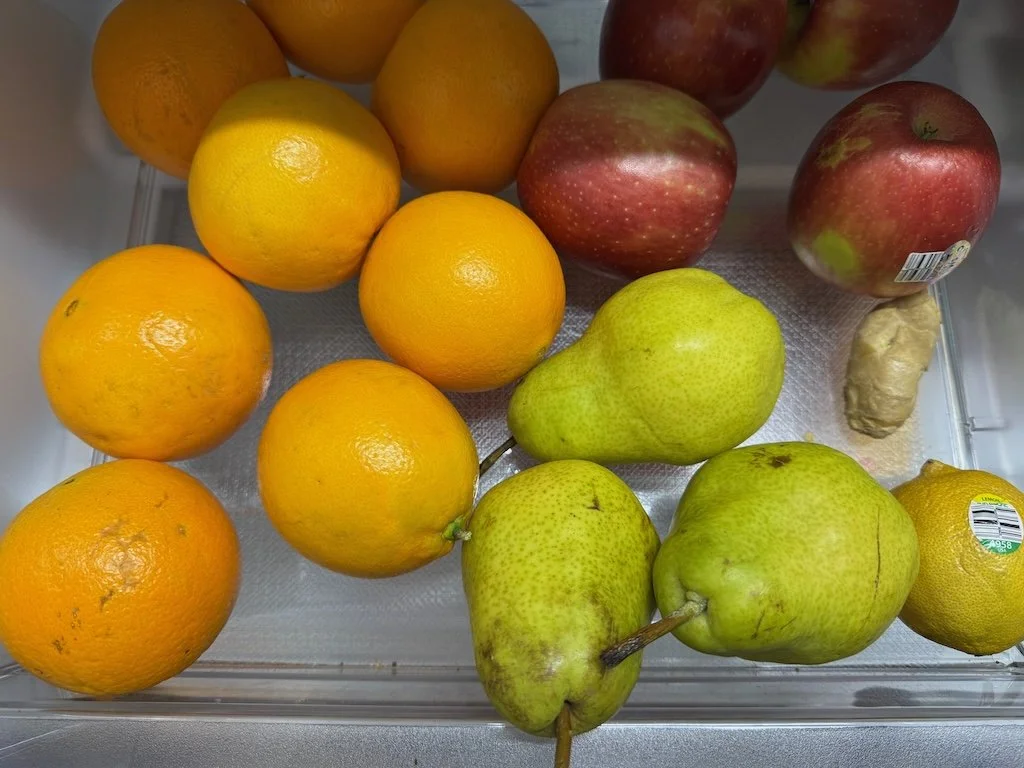
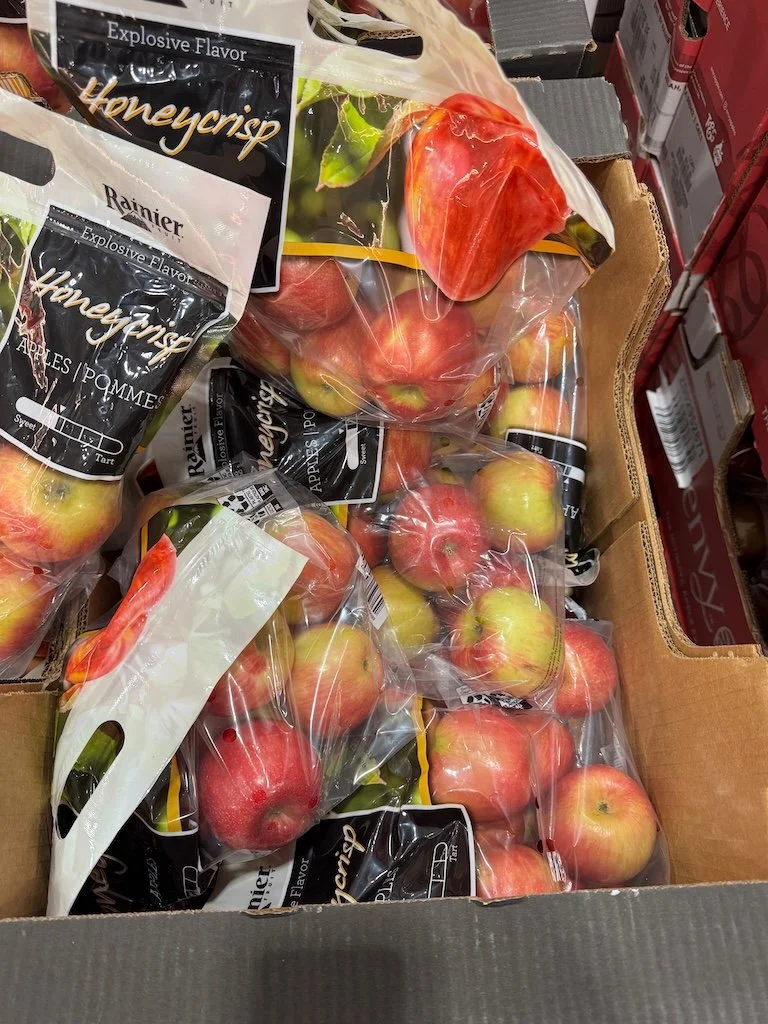
I am buying fruits and veggies that are not packaged when I can - which means that I don’t buy arugula like before. I skew toward cabbage and squash and peppers and cucumbers and broccoli. In the summer I’ll eat violet leaves from my yard! The apples and pears and lemons I buy are not packaged; I do buy organic oranges in a mesh bag because that is the only way they come (and I give my daughter half of them). I take them out of the packaging as soon as I get them home.

In summary – I’ve made some investments (Rorra, glass containers, tea kettle, humidifier, a ladle to replace a plastic one) that are working well for us. They were not too expensive, and they will last a long time. On a week-to-week basis – costs have probably gone down buy a little – no plastic water bottles of water, body wash, or hand soap…and less soft drinks overall.

Plastics Crisis – Healthy Food in Unhealthy Packaging

Plastic dominates packing in the grocery stores – even in the produce section.

 In the store where I shop, more than half the produce items are in plastic – either clamshell (more rigid plastic) or flexible bags. Neither type of plastic is recycled effectively. It’s impossible to buy leafy greens or grapes or carrots or mushrooms, or celery or blueberries…the list goes on and on…in the store where I usually shop without the plastic! Usually there are potatoes, squash, broccoli, cabbage, kale, bell peppers, cucumbers, apples, pears, lemons, and oranges from bins where I can use my own bags or keep them unbagged…but none of them are the organic versions. I am beginning to wonder whether organic is worth it with all the plastic around those foods (and maybe used during production to control weeds). Right now, I am skewing toward the food with the least packaging (or no packaging). If I do buy something in plastic packaging, I take it out of that packaging as soon as I get it home!

I’ve started buying eggs in a pulp paper carton (even though they are more expensive) rather than the Styrofoam cartons; not sure why the producers are using Styrofoam since it isn’t a healthy material and does not protect the eggs from breakage very well either.

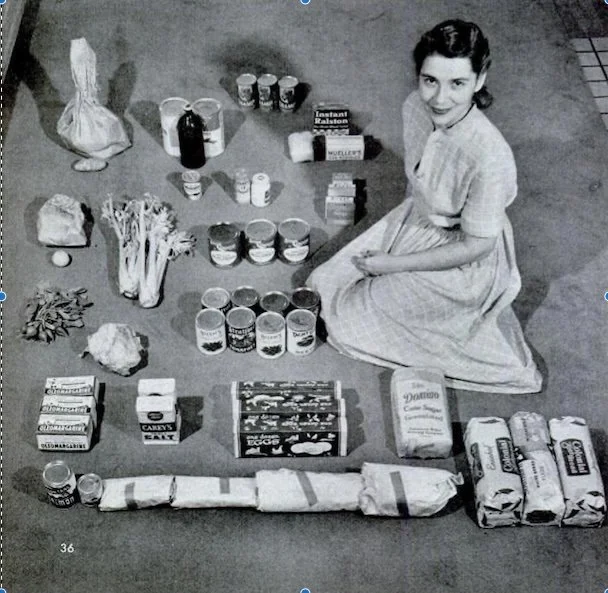
The picture below is from Life Magazine from November 10, 1947. The groceries in the picture fed a family of 4 (parents and 4-year-old twins) plus their cat. There might not be any plastic in the picture! The meat and bread appear to the wrapped in paper. The eggs are in boxes and there are canned goods. There isn’t much produce (celery, lettuce, radishes, onions, potatoes); the potatoes and onions are in paper bags and the rest is unwrapped.

I’m not advocating reverting to the 1940s – but we should revie the history of food packaging now that we are understanding the downsides of its single-use design that results in environmental contamination. No one wants to be full of plastic and the associated health challenges.

Plastics Crisis – Coming in with the Tide

NPR published a story just before Christmas (At this museum, the tide brings in odd treasures that become a lasting lesson) that I thought was worth featuring in a blog post of its own rather than just adding it to my weekly gleanings post.

My first thought was how familiar so many of the objects looked. Most are relatively small. They are colorful. They don’t look worn although some of them might be decades old. It is easy to image them accidently floating away in the water rather than being thrown away intentionally. Then again – most of them were so inexpensive that maybe their owners were not bothered too much that they were lost on a beach.

My second thought was how this museum and the crafted message about “human consumption and the eternal life of plastic waste” can serve as a tutorial for how to talk about plastics and microplastics in our community. We need to find ways to be “persuasive without being preachy.”

Plastics Crisis – Holiday Plastic

Plastic is everywhere…so it isn’t hard to spot in our holiday preparations.

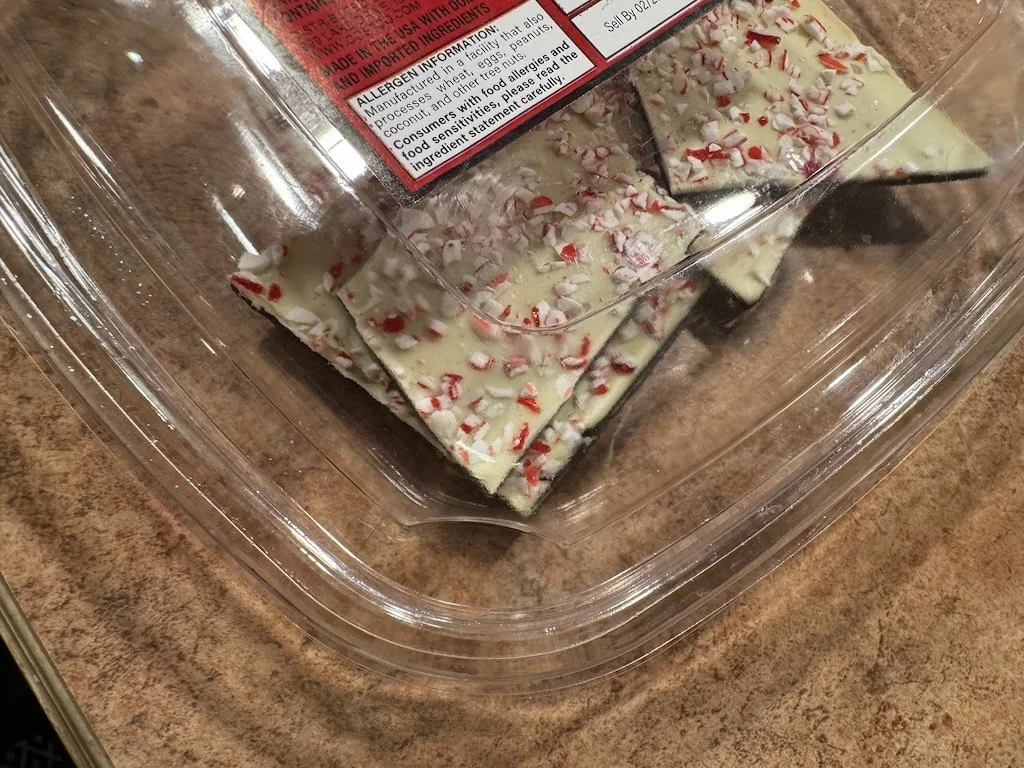
For example – if we buy holiday desserts at the grocery store, they are likely to be in plastic clamshells which are not generally recycled even though most of the manufactures try to say that they are. My curbside recycling company does not accept them and the city recycling center doesn’t either. They are plastic that touches food (not good) …and they go immediately into the trash since there are very few ways to reuse them. The only way to avoid them it to make your goodies from basic ingredients (no weird additives) that come in less toxic packaging.

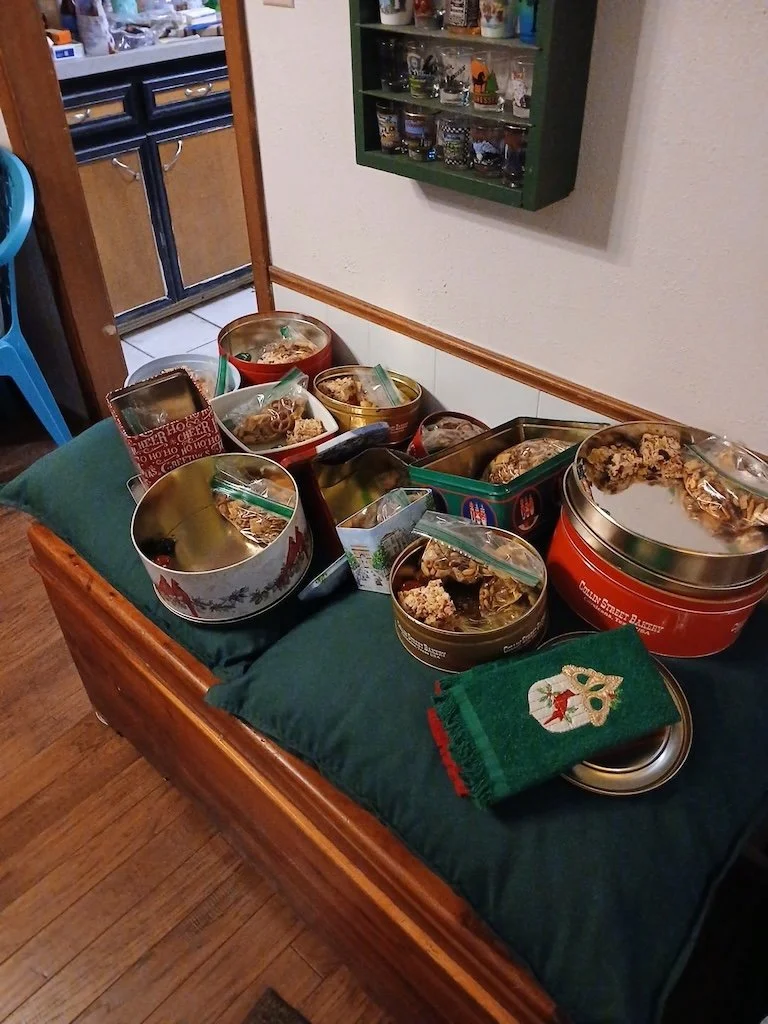
My sister made homemade goodies for the family and the staff at my dad’s memory care facility this year. The party mix (a tradition in our family for decades) is in Ziplocs so some plastic…but all the other things are contained in tins that are reused. The version she gave me had the party mix in a tin of its own so mine had no plastic.

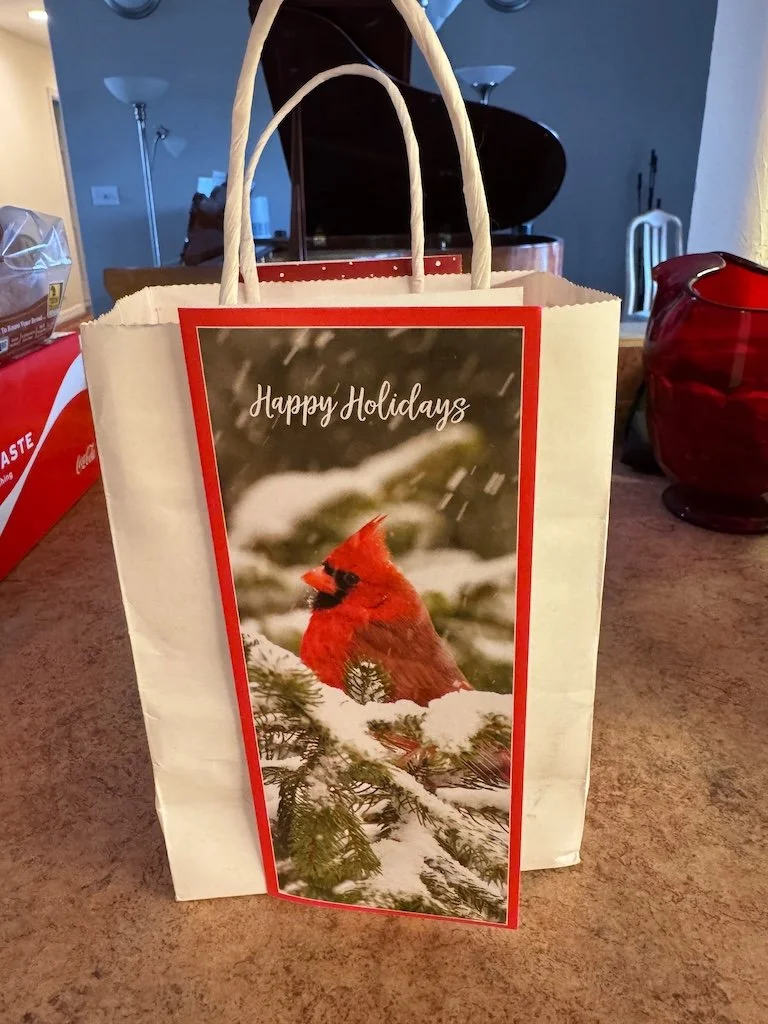
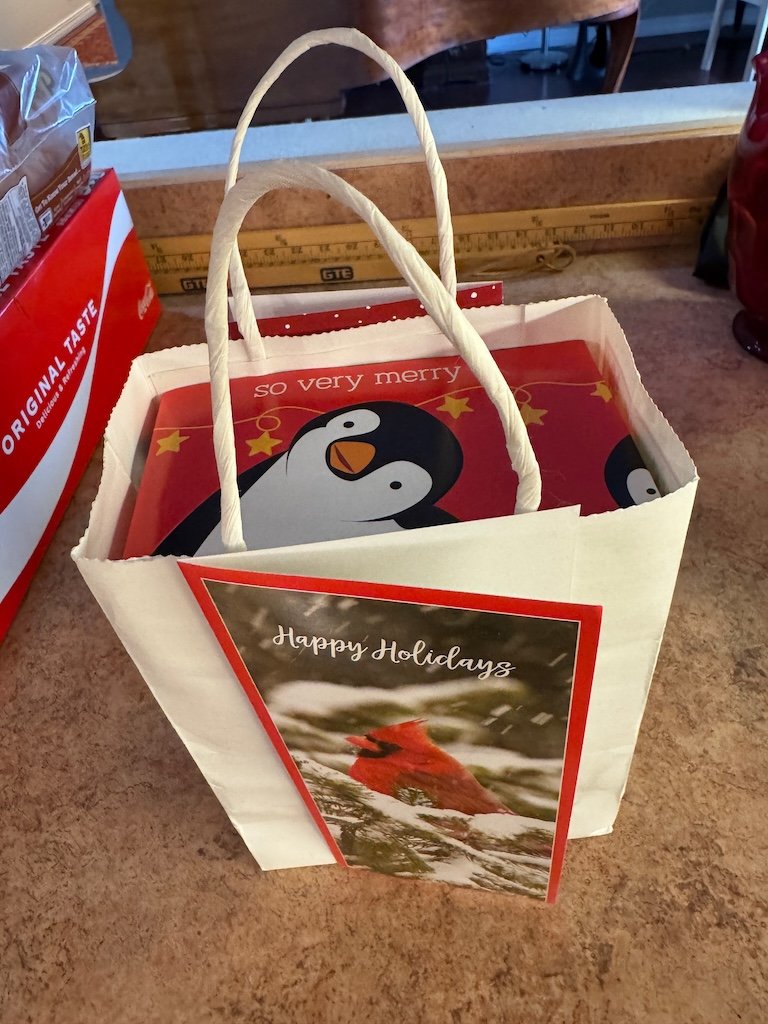
I selected some boxes of tea bags to give to my sister (paper/cardboard packaging) and reused a bag I had from a soap shop….hiding the logo and covering the top with Christmas cards!

Later I tried wrapping a present with no tape…and wasn’t quite successful (I had to add 2 pieces of tape). I used cotton crochet thread to tie around the package. So – not plastic-free but less plastic than I would have used previously.

It’s hard to avoid plastic but it occurs to me that at least some of the time there are benefits to thinking about it beyond reducing plastic in the environment – reduced cost by reusing something I already have, healthier treats with known ingredients, and more thoughtful presents!

Plastics Crisis – Rorra Countertop Water Filtration System

After reading a lot about municipal water quality, I realized that the water filtration I have been using the past few years (Brita Elite) was not good enough. Yes, the filters claimed to remove some microplastics (I guess they would be considered ‘Particulates (Class 1)’, but I was unclear what testing had been done on the filter). Then there were the issues of the filter housing (plastic) and the pitcher it was installed in (plastic). I started looking for possible upgrades.

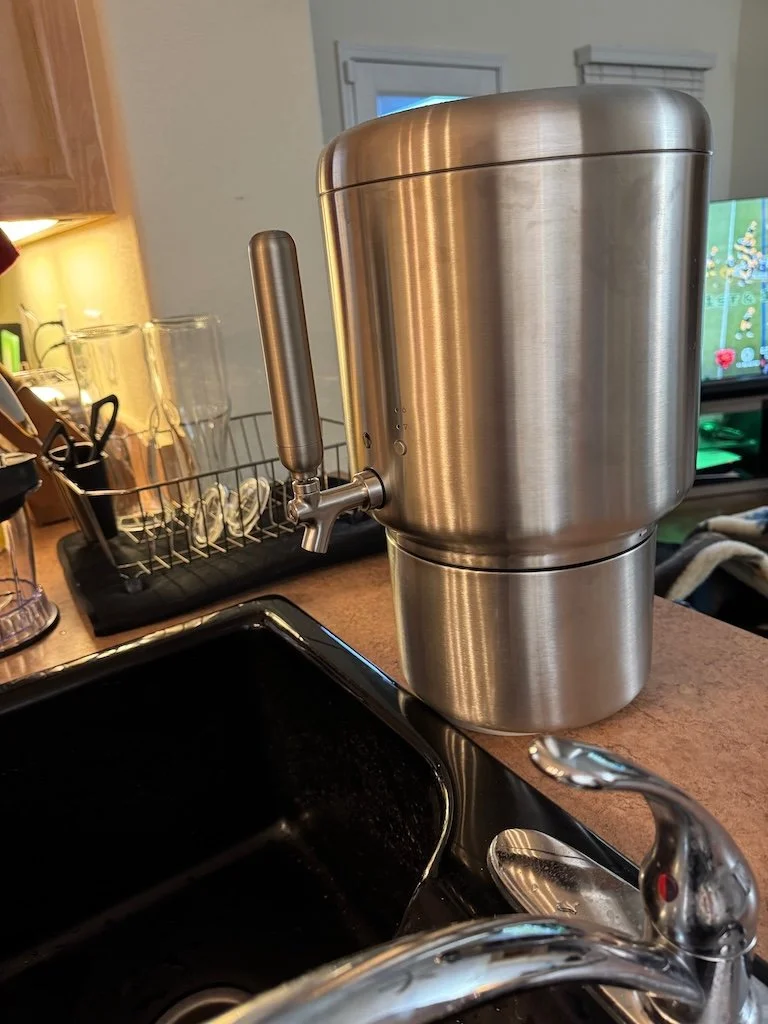
I opted to replace my Brita pitchers with a Rorra Countertop Water Filtration System. It is a 2.5-gallon countertop unit that has stainless-steel parts. I bought the unit along with a filter subscription since it will probably need a new filter every 90 days. The company has results from NSF and NSF/ANSI accredited testing showing that system reduces over 50+ contaminants including Total PFAS, Lead, Microplastics, and Estrone. It is engineered and manufactured in the US.

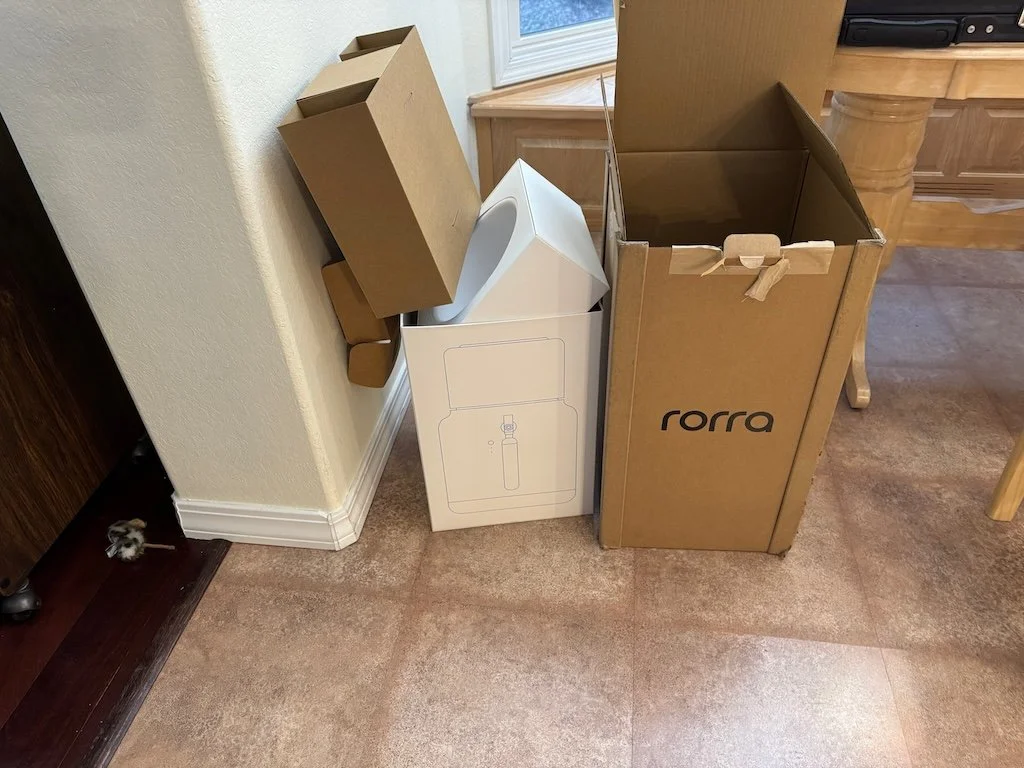
The set up was relatively easy once I got it out of the box! There were an outer box and several inner boxes. I am still working to segregate the recyclable parts from the (relatively small) amount that is not cardboard. They recommended washing all the parts with soapy water which was a little daunting because of the size (like a large mixing bowl). I had to watch the video a couple of times about how to get the filter in properly but – in the end – it was easy.

I have enjoyed the Rorra so far although I am thinking about moving it to another location around the sink, so I don’t have to reach all the way over the sink to fill it from the top. I have carafes that I am using to put water in the refrigerator and to carry downstairs for use for tea in my office. I also use the carafes to fill the reservoir as needed. The spigot is very convenient!

Looking back, I am glad I started filtering our drinking water several years ago. The water supply to our house is from our municipality and it is hard to address the potential of plastic water pipes in our city, community, and house (they probably would shed more microplastics they older they are)…or the microplastics that come from the source of water to our city (wells). Now – with the Rorra – we are upgrading that filtering. It is an investment for our long-term health – not eliminating microplastics (since there are so many other sources of microplastics in our environment) but a dramatic reduction in this one source is a good thing.

Gleanings of the Week Ending December 20, 2025

The items below were ‘the cream’ of the articles and websites I found this past week. Click on the light green text to look at the article. (Note: I have changed the format to include the date and source of the article.)

11/30/2025 NPR  More cities are seeing PFAS pollution in drinking water. Here's what Louisville found - What we do is manage risk, and we start that at the river. It sounds weird, but source water protection – keeping the stuff out of the river – is a big deal.

11/25/2025 Artnet Radiant Tiffany Landscape Window Leads Major Auction of the Studio’s Masterpieces – Beautiful glass…there are some coming to auction in December. I enjoyed the pictures in the article.

12/2/2025 Washington Post ‘Everywhere chemicals’ are in our food, decades after scientists recognized dangers - A large body of science has linked phthalates to a variety of serious health conditions, including premature birth and infertility. The costs to society are huge. A 2024 NYU-led study that catalogued health effects from phthalates exposure in the United States — including contributions to diabetes levels and infertility — estimated that dealing with phthalate-related diseases cost $66.7 billion in a single year. Previous Washington Post article on phthalates from last September: The health risks from plastics almost nobody knows about.

12/2/2025 Science Daily Is your gut being poisoned? Scientists reveal the hidden impact of everyday chemicals - Many chemicals designed to act only on one type of target, say insects or fungi, also affect gut bacteria. Some of these chemicals had strong effects. For example, many industrial chemicals like flame retardants and plasticizers -- that we are regularly in contact with -- weren't thought to affect living organisms at all, but they do.

12/7/2025 Clean Technica Your Single-Use Plastic Bottles Are Killing Endangered Sea Turtles - A recent study published in Proceedings of the National Academy of Sciences concludes that plastic ingestion has been documented in nearly 1,300 marine species, including every seabird family, marine mammal family, and sea turtle species. Researchers analyzed data from more than 10,000 autopsies from marine creatures killed by ingesting plastic; they calculated amounts consistent with a 90% likelihood of death:

  • 23 pieces (0.098 cm3/cm) in seabirds;

  • 29 pieces (39.89 cm3/cm) in marine mammals: and,

  • 405 pieces (5.52 cm3/cm) in sea turtles (377 for juveniles).

12/2025 Greenpeace Plastic Merchants of Myth: Circular Claims Fall - After decades of meager investments accompanied by misleading claims and a very well-funded industry public relations campaign aimed at persuading people that recycling can make plastic use sustainable, plastic recycling remains a failed enterprise that is economically and technically unviable and environmentally unjustifiable. (Press release for the document)

12/8/2025 The Conversation PFAS in pregnant women’s drinking water puts their babies at higher risk – Data on all births in New Hampshire from 2010-2019 were analyzed. The 11.5 thousand births that occurred within 3.1 miles of a site known to be contaminated with PFAS and where mothers were served by public water system (well based) were selected for further analysis. PFAS was greater in the water system wells downstream from the site. Births in the area served by wells downstream were 43% more likely to be low-weigh (under 5.5 pounds), 20% greater chance of preterm birth, and 191% greater chance of the infant not surviving its first year. Research was done at University of Arizona.

12/8/2025 Science Daily Humans are built for nature not modern life - Human biology evolved for a world of movement, nature, and short bursts of stress—not the constant pressure of modern life. Industrial environments overstimulate our stress systems and erode both health and reproduction. Evidence ranging from global fertility declines to chronic inflammatory diseases shows the toll of this mismatch.

12/7/2025 Clean Technica The Floating Solar Revolution - Despite this year’s sharp U-turn in federal energy policy, the renewable energy transition continues to branch out in new directions. One emerging factor is the relatively new area of floating solar. The field has already begun to scale up in some regions around the world, and innovative solar firms are carving out new opportunities here in the US as well.

12/7/2025 Science Daily New moonquake discovery could change NASA’s Moon plan - Scientists have discovered that moonquakes, not meteoroids, are responsible for shifting terrain near the Apollo 17 landing site. Their analysis points to a still-active fault that has been generating quakes for millions of years. While the danger to short missions is low, long-term lunar bases could face increasing risk. The findings urge future planners to avoid building near scarps and to prioritize new seismic instruments.

Plastics Crisis – Action at the Community Level

Over the past month or so, I have begun working with a small group of people to create a Beyond Plastics local group. We chose to call ourselves Beyond Plastics Ozarks to reflect that we are going to be working across a larger area than Springfield MO. We are thrilled to see our pin on the Beyond Plastics map – filling in the southwest Missouri space.

We have met twice and are working on our website; the part of the website that might be worth looking at now is our collection of recent plastics related articles. We are fortunate that we can leverage the efforts of the Show we less plastics project at the state level since they are offering a Plastics learning series (webinars) in the first quarter next year….allowing us to get that message out while we focus on honing our action plans. We have also benefited from the Beyond Plastics guide for setting up a new local group and that they provide a Zoom account for us too. The logo below was created for us by Beyond Plastics. Both state (Show me less plastics) and national (Beyond Plastics) organizations have materials we can use as well. Now for the hard work of picking campaigns that will be effective for our area of Southwest Missouri.

Concurrently we have identified three campaigns and have started exploration/planning for two of them. 2026 is going to be a busy year and I am hopefully that we will find additional people to help…and lots of people that are interested in learning more about the plastics issue.