Gleanings of the Week Ending September 26, 2026

The items below were ‘the cream’ of the articles and websites I found this past week. Click on the light green text to look at the article.

09/22/2026 The Conversation Bangladesh has lost 900 children to measles – a warning to other countries where vaccine rates have slipped - Almost 900 people in Bangladesh are suspected to have died in a measles outbreak that began in March. Most of those affected are children. Vaccines only work if people actually receive them. The science has already done its job: measles vaccines are safe, effective, and have protected children for decades. What’s missing is trust, access, and the urgency needed to close the gap – until that changes, outbreaks like this one won’t be the last.

09/18/2026 Yale Environment 360 Microplastics in Soil a ‘Trojan Horse’ for Toxins - To protect long-term food production and soil health, policy must catch up. We urgently need standardized plastic monitoring, full manufacturer transparency, and risk assessments that evaluate through different species how microplastics interact with co-pollutants.

09/17/2026 Science Daily This popular fermented food may help flush nanoplastics from the body - A kimchi-derived bacterium can bind to nanoplastics under gut-like conditions and may help carry them out of the body. In mice, the probiotic more than doubled the amount of nanoplastics detected in feces, pointing to a surprising potential use for microbes from fermented foods.

09/16/2026 BBC Future To save scarlet macaws, scientists are rescuing chicks from their lethal parents - Scarlet macaws are an iconic but declining tropical bird…and they intentionally starve their youngest chicks. Wild fostering techniques for those rejected chicks might contribute to the faster recovery of some populations.  

09/19/2026 The Prairie Ecologist A Simple Guide to Identifying Red-Tailed Hawks – A one page identification guide.

09/22/2026 NPR Abortion is on the ballot again as post-Roe policies continue to evolve – Again in Missouri - the state's Republican-dominated legislature is asking Missouri voters to overturn the abortion protections they recently supported. The conflicting measures even have the same title: Amendment 3. But while a "yes" vote in 2024 supported adding protections to the state constitution, a "no" vote in 2026 would keep them. (A citizen with a 2024 sign) covered the "YES" on her yard sign with a "NO" made from black duct tape before placing the sign back in her yard.

09/21/2026 Smithsonian Magazine An Armadillo Found in Ohio Is the Latest Surprise in the Armored Animals’ Expansion North. Where Are They Now, and What’s Driving Their Movement? - Over the past decades, scientists have tracked the armadillo’s steady northward crawl, from Texas to wider expanses of the South, Southeast and Midwest. Now, the recent discovery indicates that the mammals might soon gain a foothold in the Buckeye State. The animals moved across the Rio Grande in the mid-1800s, passing from Mexico into Texas. From there, they generally expanded north and east, reaching Louisiana by the 1920s and Kansas by the 1940s. With their strong leg muscles and long front claws, the mammals will root through soil in search of insects and create extensive burrows that can reach several feet underground. This behavior can damage gardens, agriculture, building infrastructure or golf courses. The burrows have positive effects, too. In a 2022 study in Arkansas, researchers used motion-triggered cameras to find 64 other species interacting with armadillo burrows—19 mammals, 4 reptiles, 1 amphibian and 40 birds.

09/15/2026 My Modern Met Amazing Winners of the 2026 BMC Ecology and Evolution and BMC Zoology Image Competition - The photo contest is an opportunity for people in biology to showcase their research to a broad audience. Ecologists, evolutionary biologists, and zoologists worldwide submitted work for the 2026 competition.

09/17/2026 Yale Environment 360 Why Germany Is Building an Ark for U.S. Climate Data - As researchers around the world begin work on the next U.N. climate assessment, fears are growing that the Trump administration could meddle with critical U.S. climate data. In response, scientists are preparing to transfer vast troves of that data to repositories in Germany. In a world where political upheaval is growing, storing data in one place is increasingly thought to be precarious. Assumptions that U.S. government agencies will store data long-term “are proving tenuous at best.”

09/15/2026 Archaeology Magazine Landslide Exposes Pre-Roman Burial in Eastern Italy - A landslide in central Italy has exposed a Picene burial estimated to date to the sixth century B.C. The Picenes are known to have lived near the Adriatic Sea and imported pottery, bronzes, and other goods from Greece.
Road Trip to Texas – November 2024

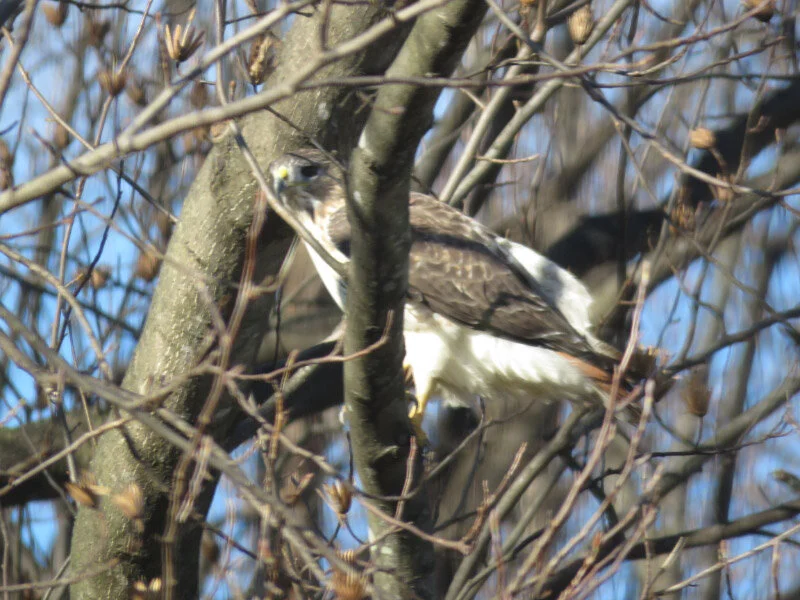
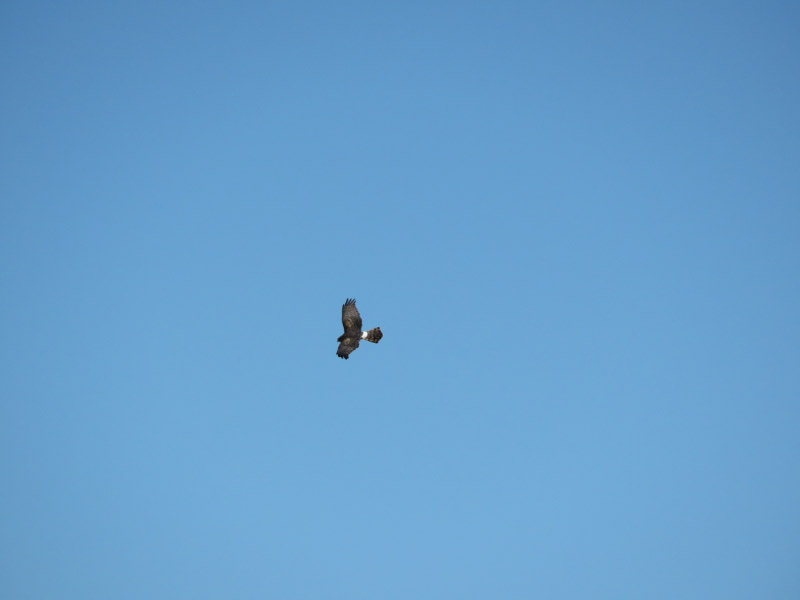
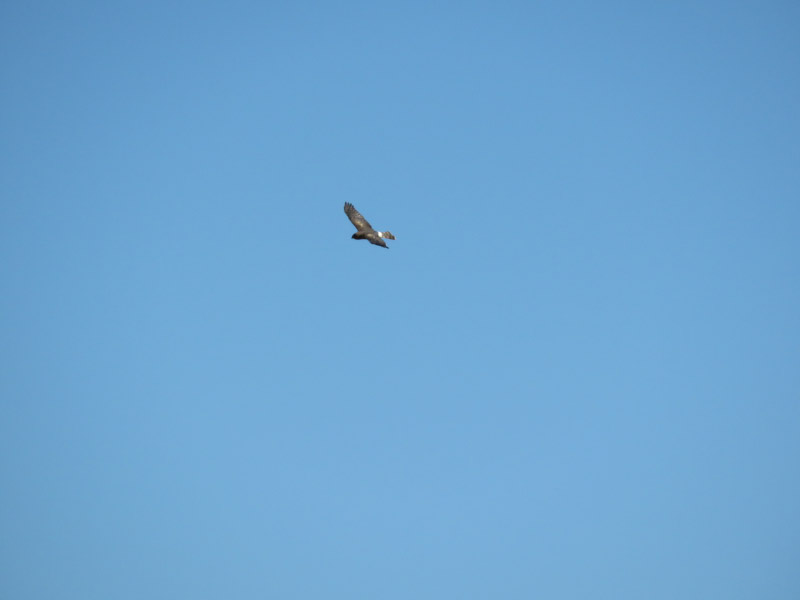
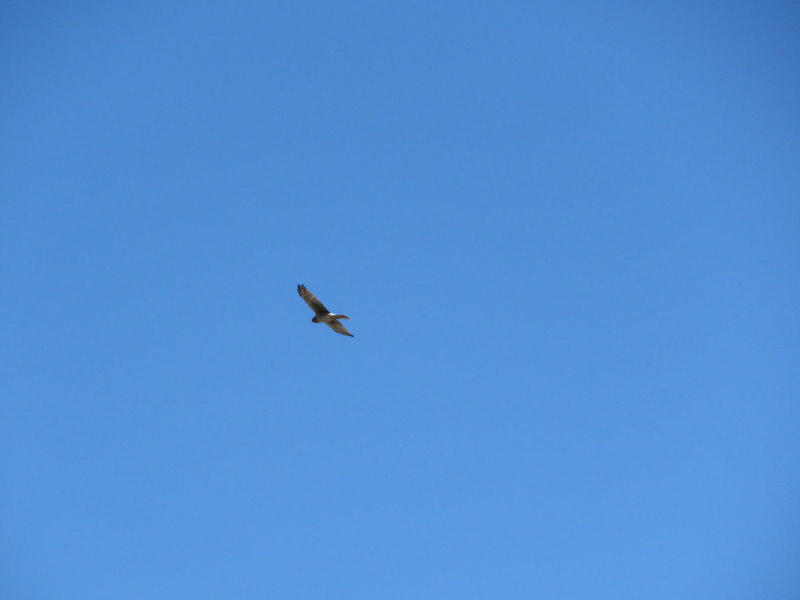
My monthly 2-day road trip to Texas to visit my dad was sunny and full of fall sights. The temperatures were decidedly cool. On the first day, I noticed more hawks that usual on high branches of roadside trees – particularly in Oklahoma. Some of them were probably red-tails but some were obviously smaller. Going 70 miles an hour, I only get a quick glimpse (avoiding becoming a distracted driver).

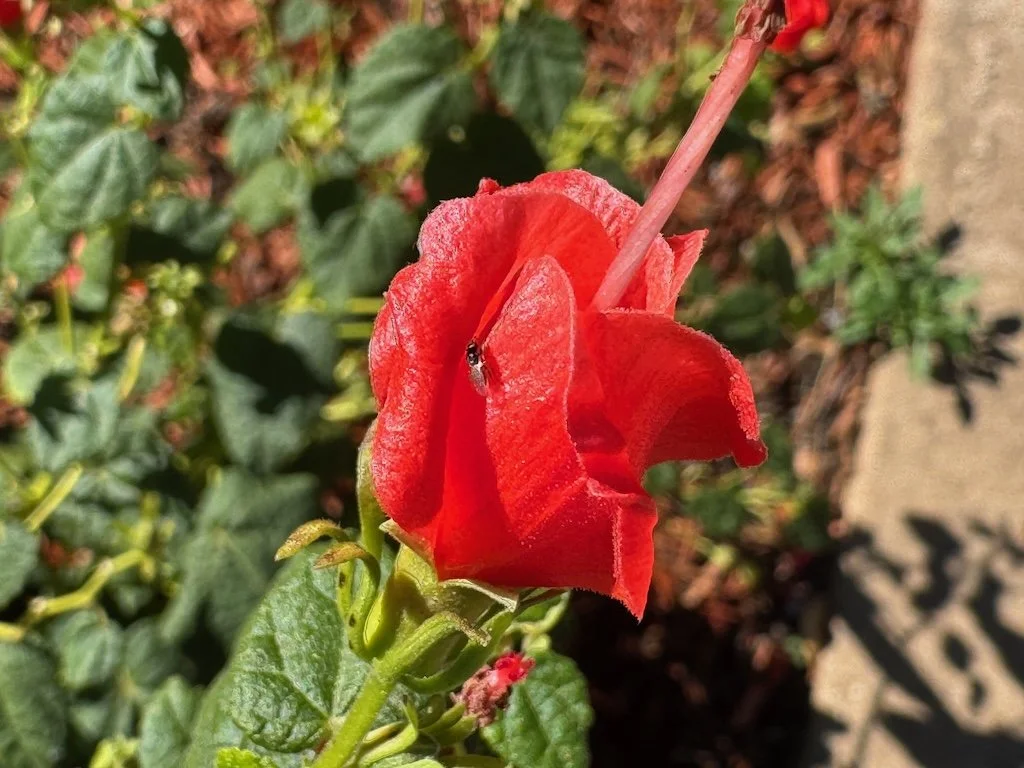
I stopped at the Texas welcome center on US 75 after leaving Oklahoma to eat my lunch and enjoyed their native plant garden. The Turk’s cap was still blooming.

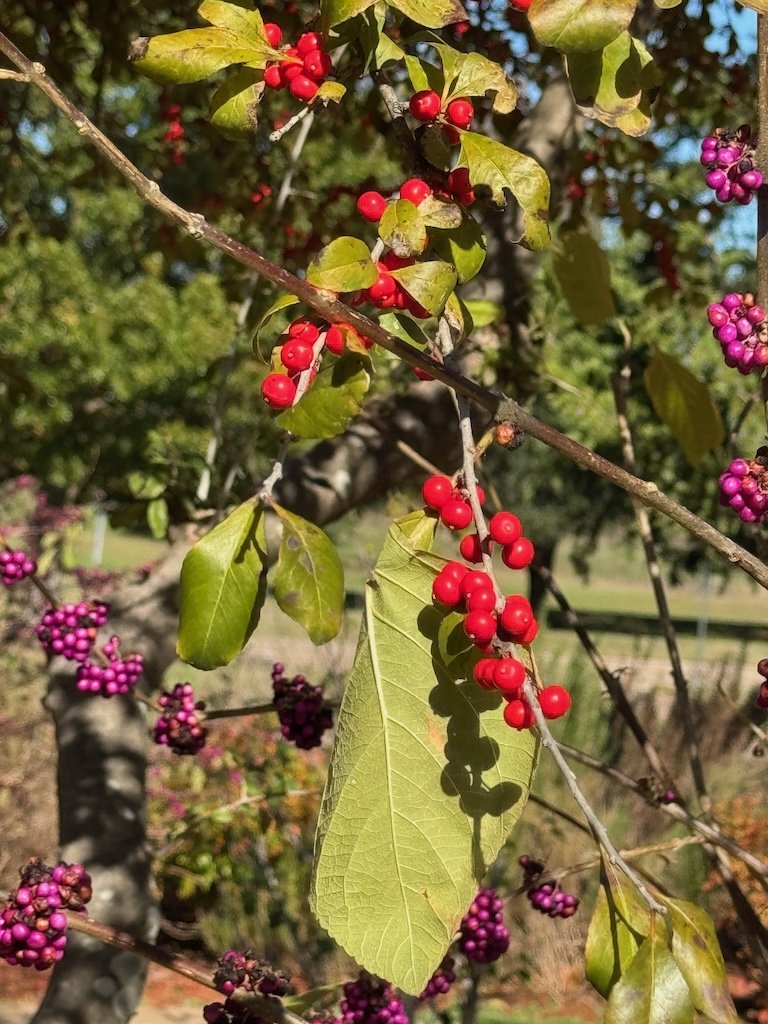
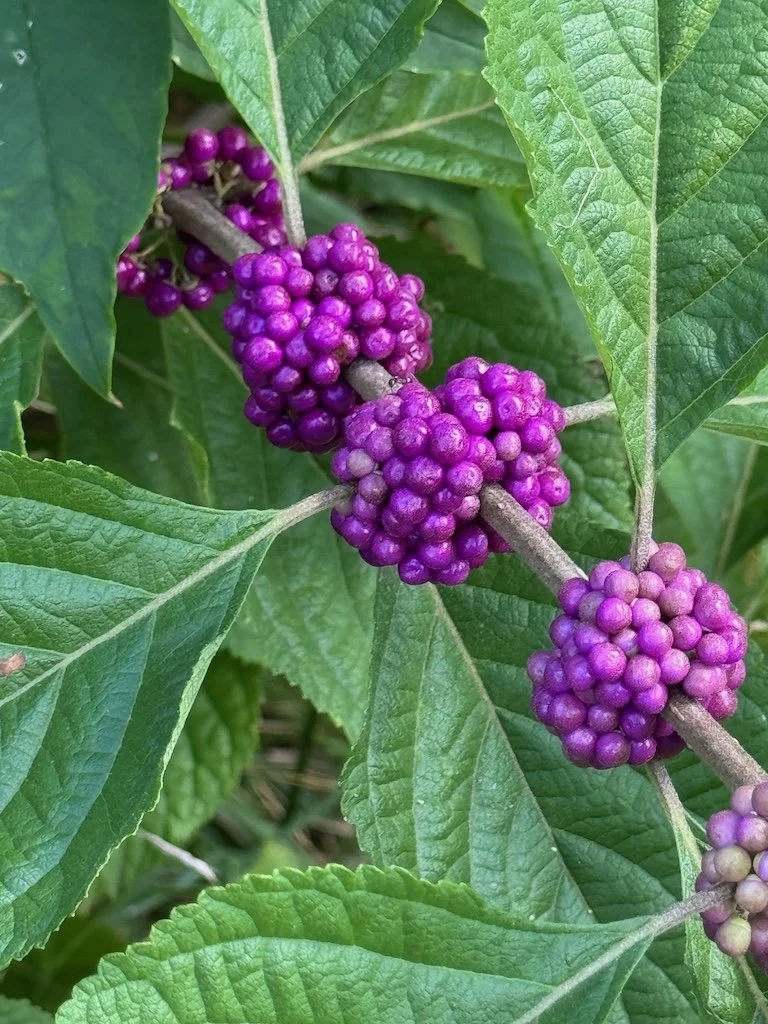
The American beautyberry has clumps of purple drupes but some that were on the top part of the clump looked burnt. I wondered if they got the most summer sun…and were damaged by many days of the high temperatures.

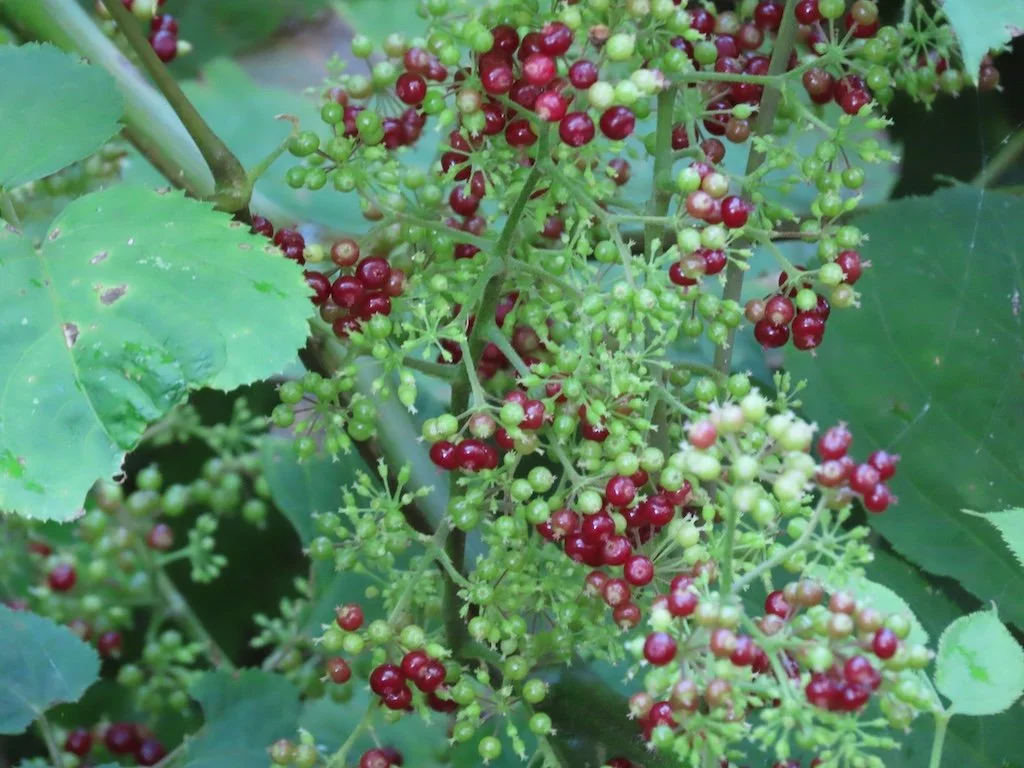
There was a small tree that had a lots of red berries. I managed to ID it: possumhaw (Ilex decidua). It is a native deciduous holly. It grows in Missouri and I might plant one in my yard…maybe replacing a non-native.

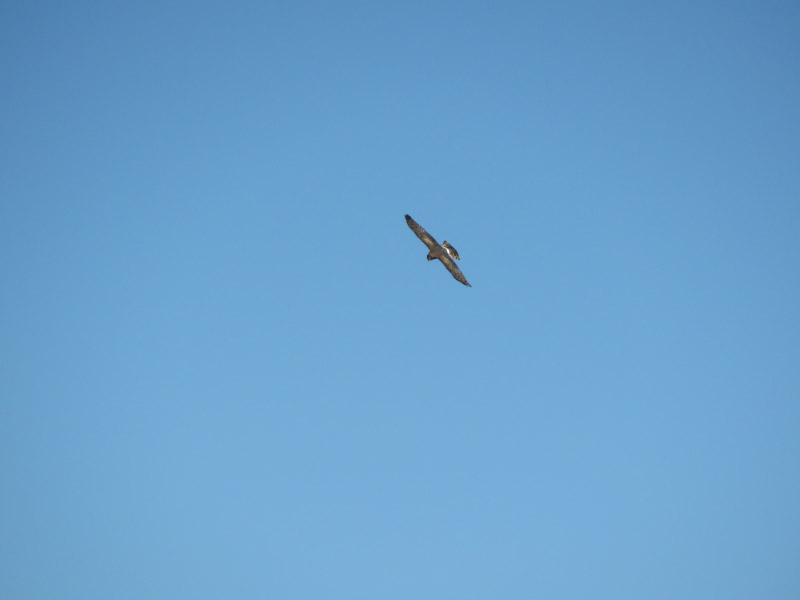
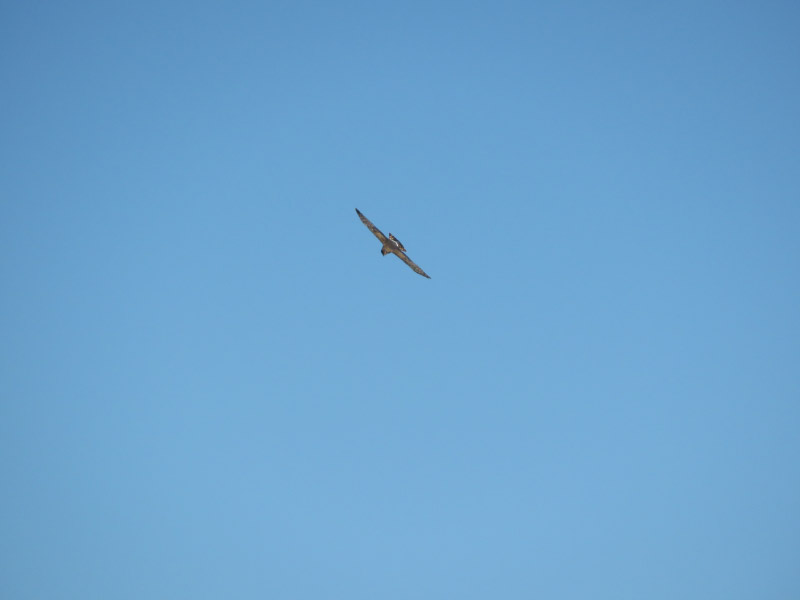
It was very windy the next day on my drive back to Missouri. I didn’t see hawks perching….but did see some soaring. One was flying low over a field near the highway --- obviously hunting.

The sun was going down by the time I got back to Missouri. The light from the setting sun gave the roadside trees and orange glow. It was a good scenic finale for the road trip.

Zooming – January 2023

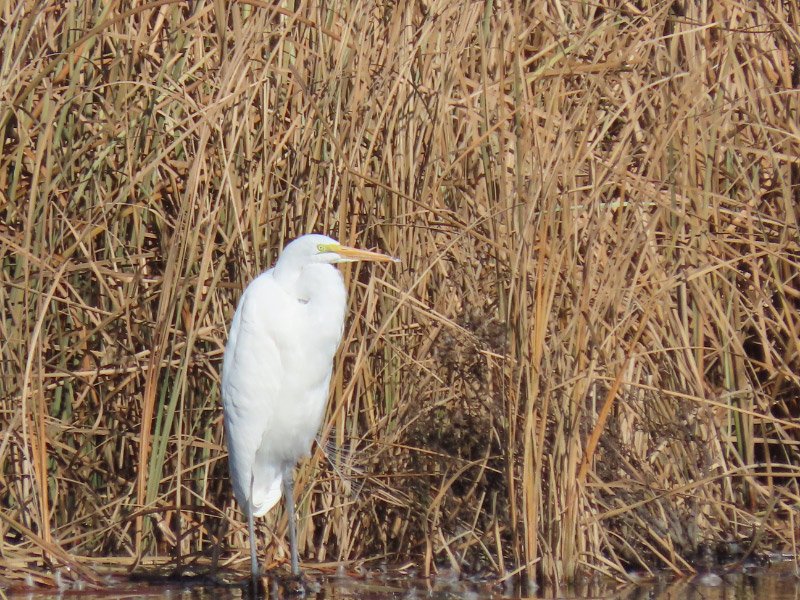
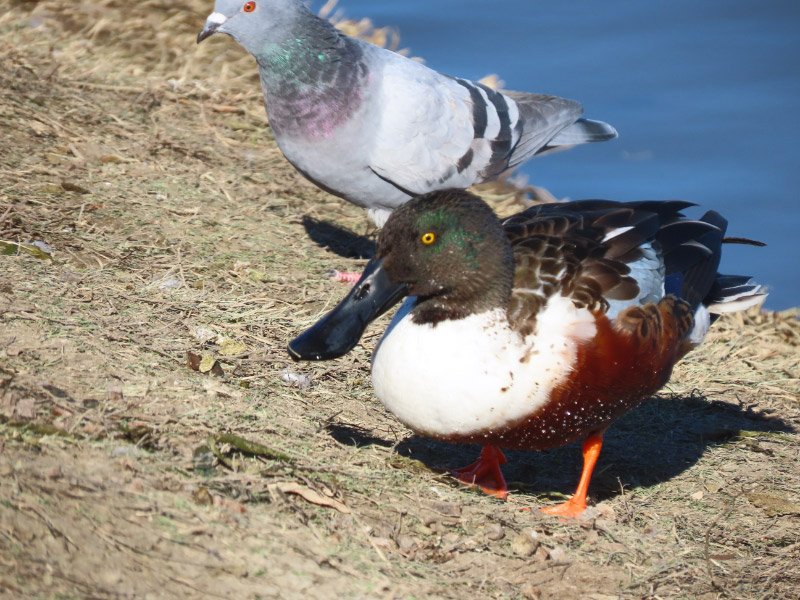
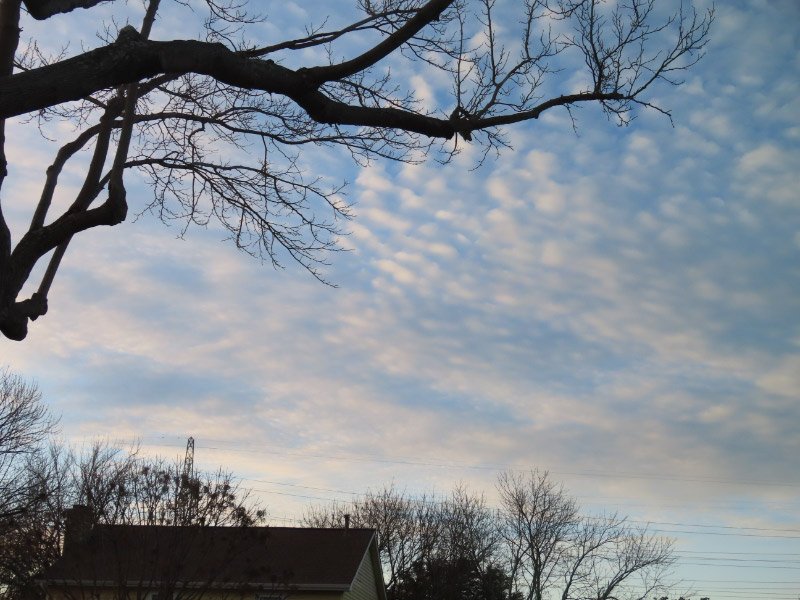
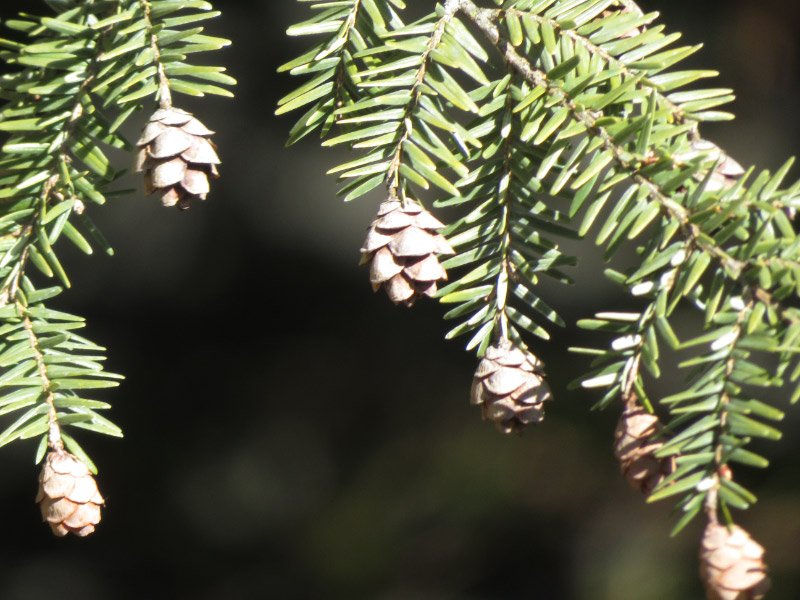
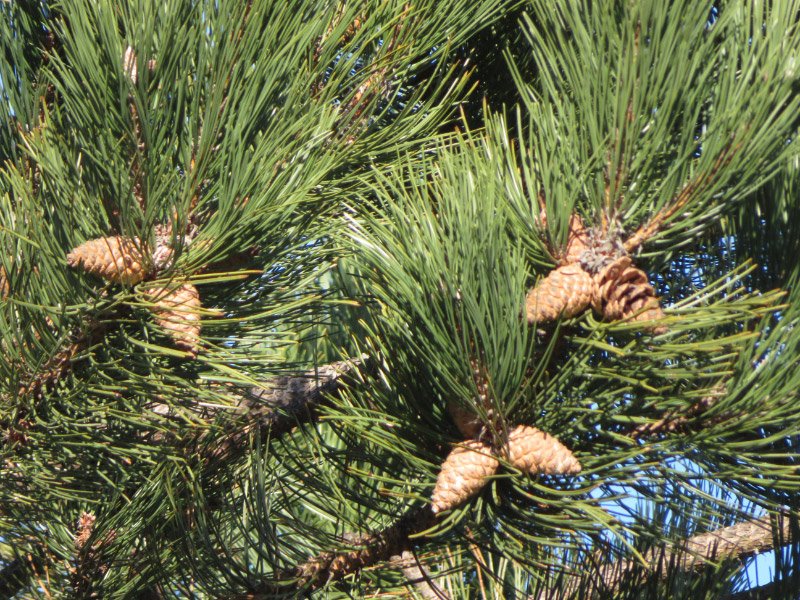
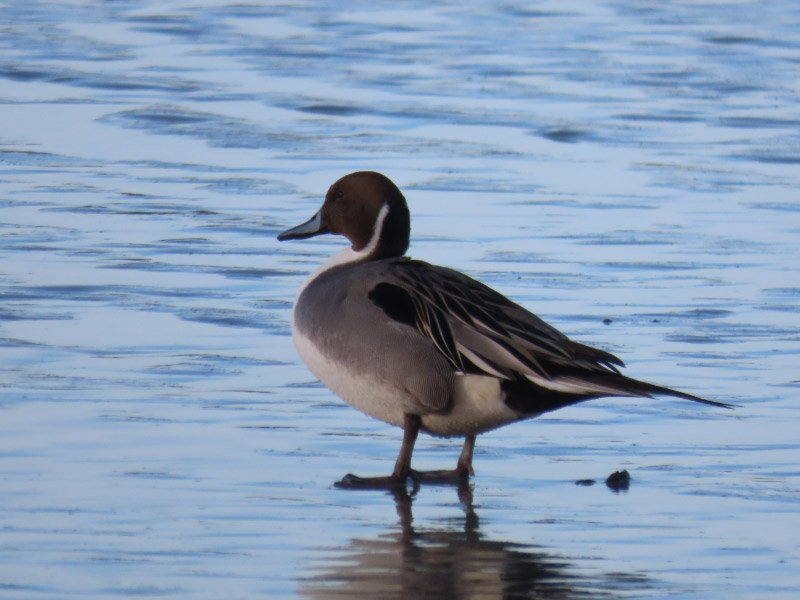
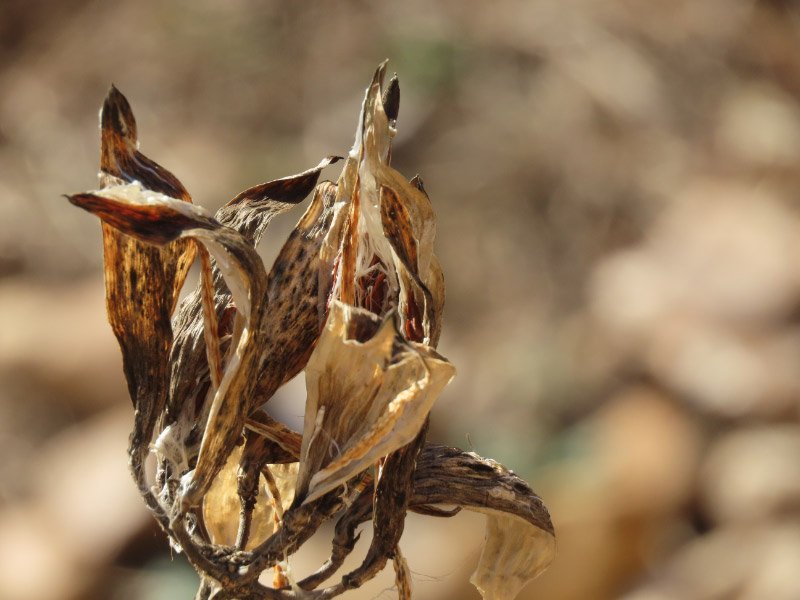
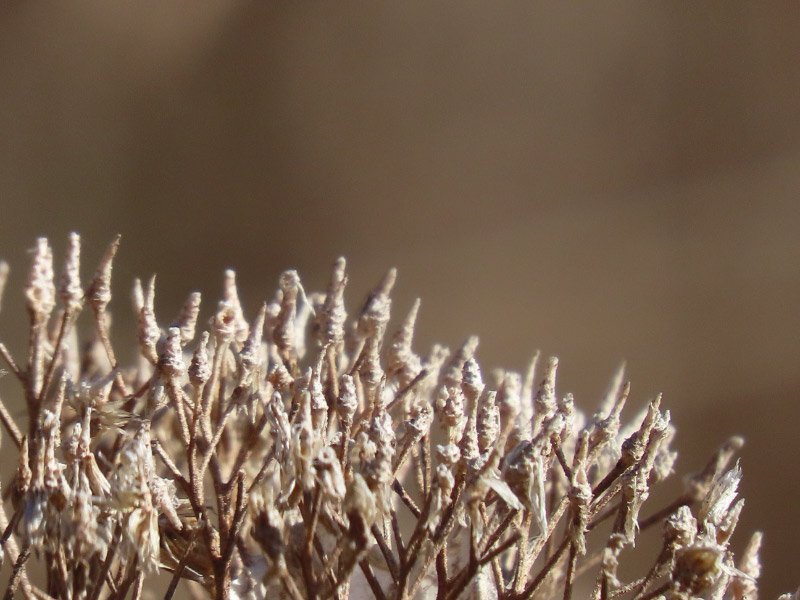
Birds (Great Egret, Northern Shoveler, Great Blue Heron, Northern Pintail, Red-tailed Hawk)….evergreens…dried (or frost damaged) plants…Texas sky - January was good month using the optical zoom on my camera! The locations were Texas (Carrollton, Hagerman National Wildlife Refuge) and Missouri (Nixa, Springfield). Enjoy the slideshow!

Birds near the Lake Springfield Boathouse

My husband and I enjoyed a walk in the Lake Springfield Boathouse last week. The first bird I saw was an Eastern Bluebird! Unfortunately, I was dealing with glare on my camera’s (Canon Powershot SX70 HS) viewfinder/screen, so I didn’t get a very good picture.  I guess it was enough thrill to see the birds there.

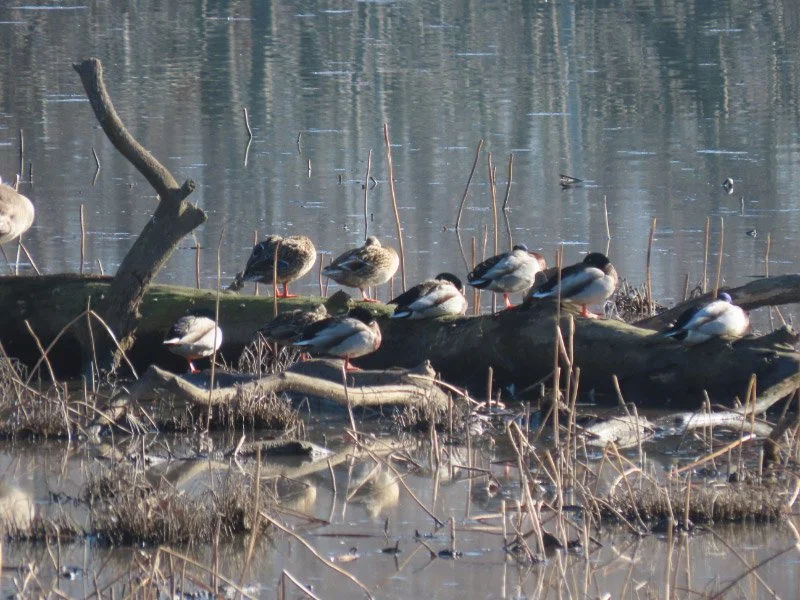
There were some birds further out in the water…not very photogenic…but it seems that they are all mallards.

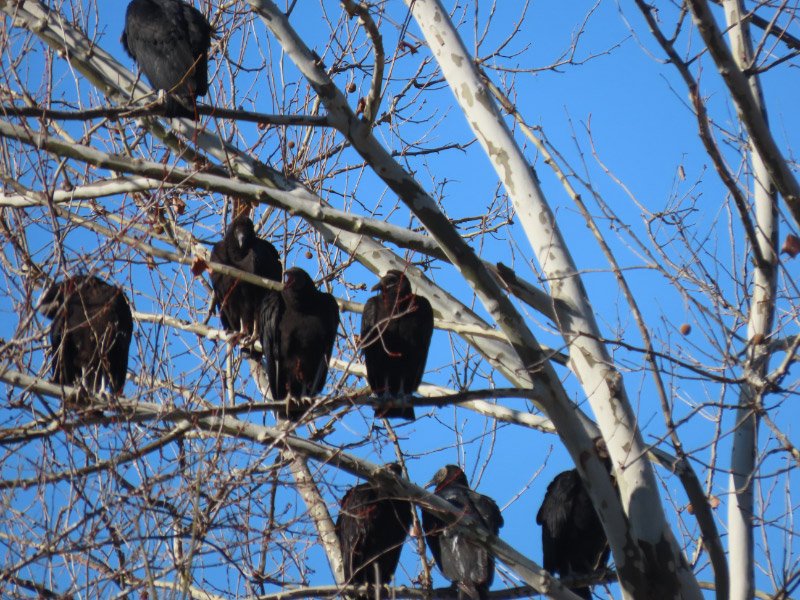
The most numerous birds we saw were black vultures – in a sycamore, warming up in the morning sunshine. There were three that seemed to be communicating with each other.

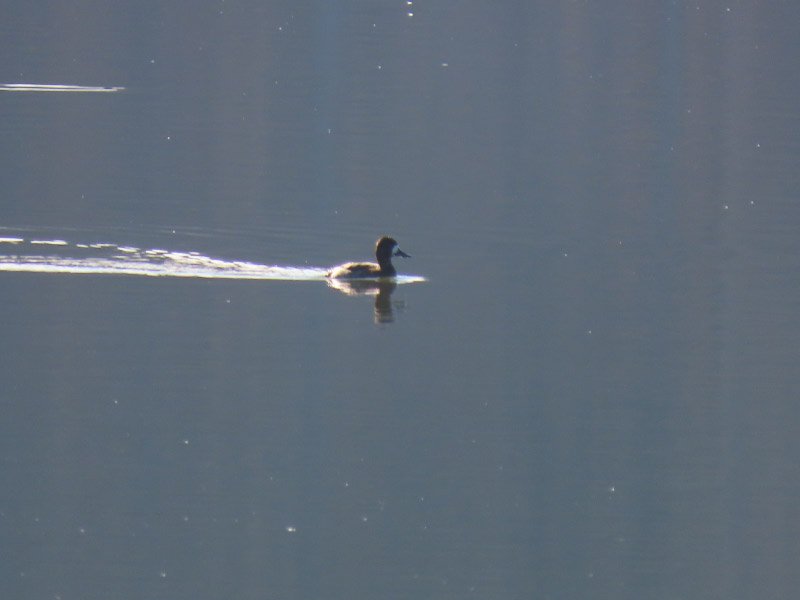
I photographed two birds almost too far out on the water – realized once I got home that they were scaups (male and female).

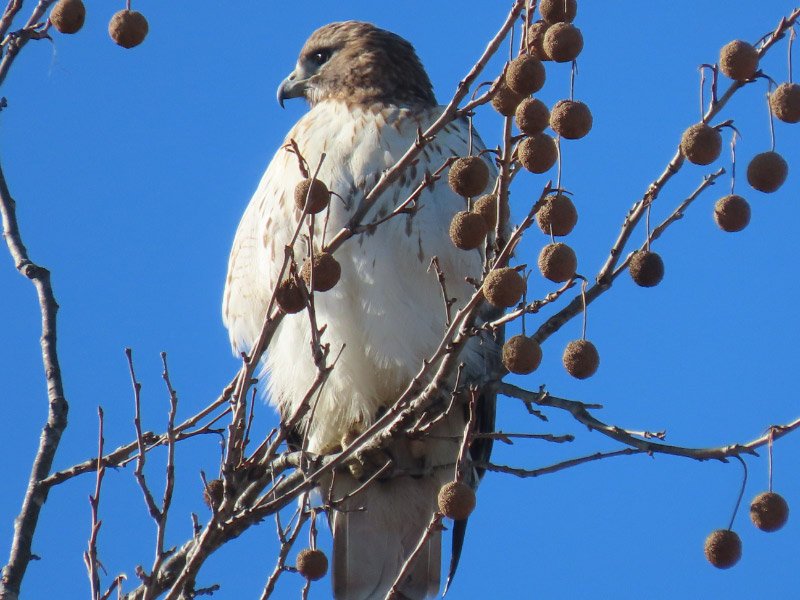
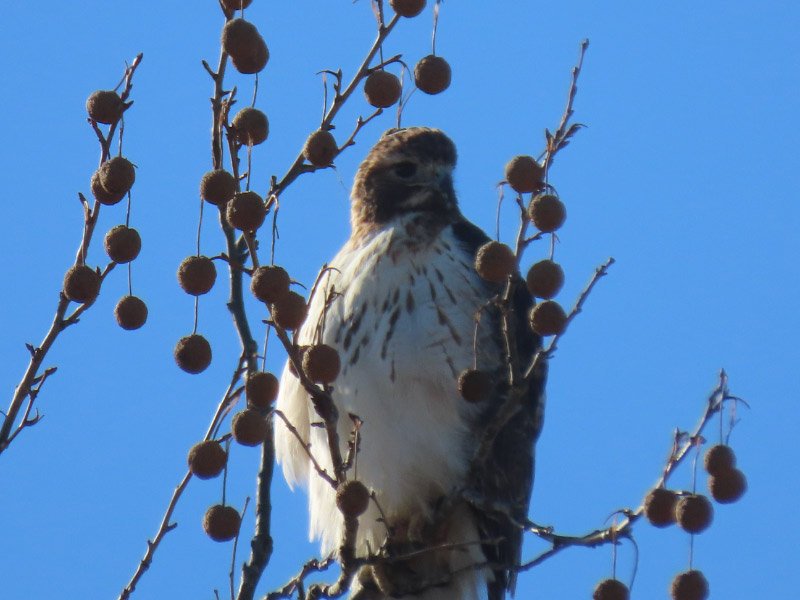
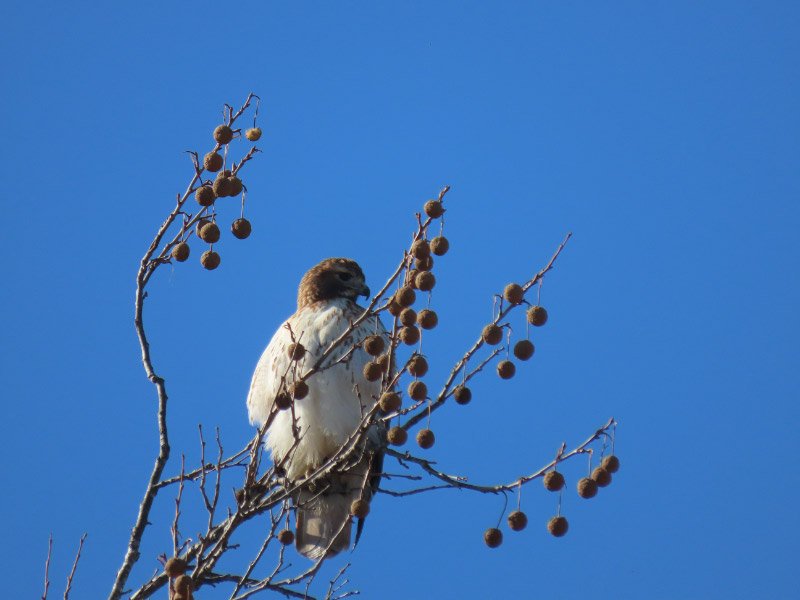
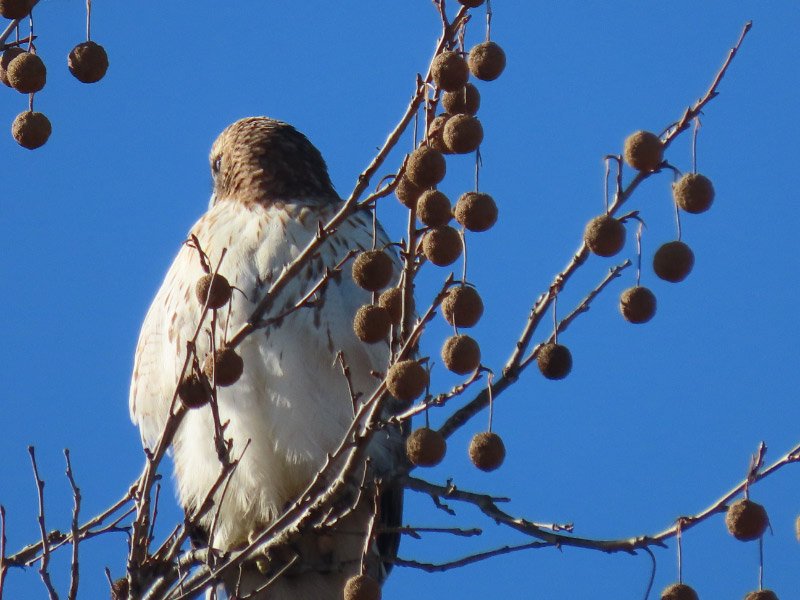
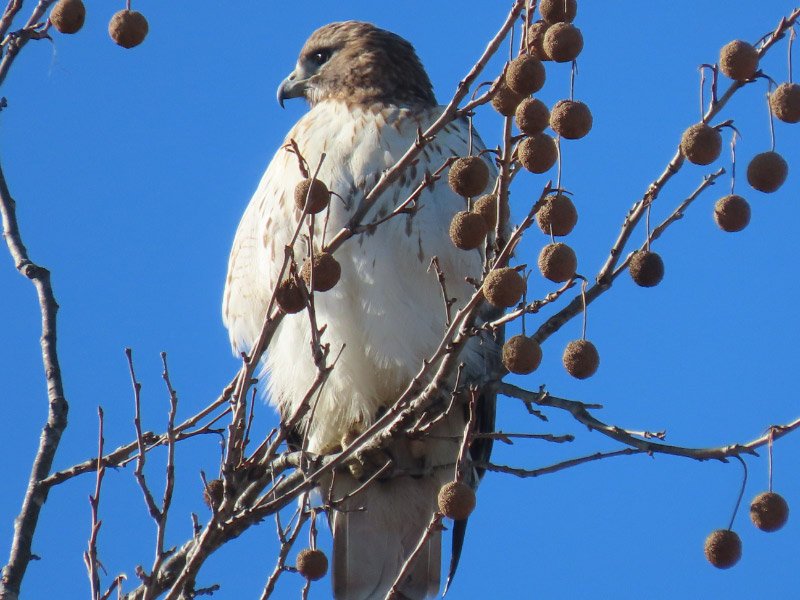
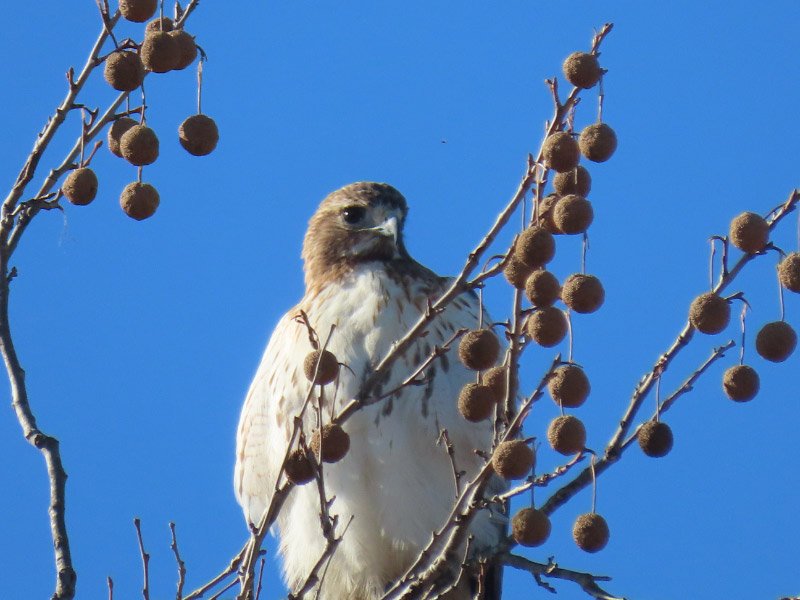
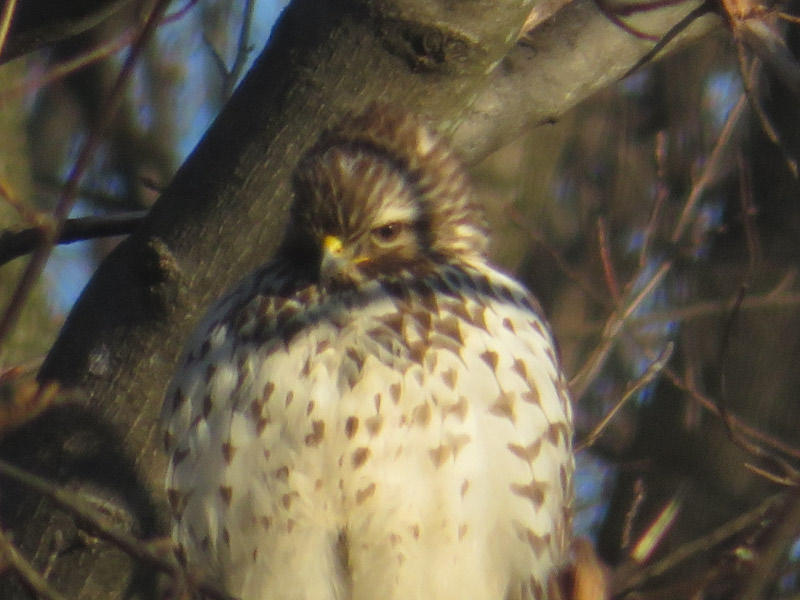
And then….a red-tailed hawk…perched at the top of a sycamore with lots of seed pods near the dam.  The bird’s breast feathers were fluffed against the cold. The area has more traffic, and I was glad the hawk did not seem disturbed by the noise.

Filling a Day of Social Distancing - 5/6/2020 - Routine

Continuing the blog post series prompted by COVID-19….

Here are the unique activities for yesterday:

Photographing an iris bud. I decided to do some macro photography of the iris bud that had dried up before it put it in the compost. The materials for the project: clip-on macro lens, jeweler’s loupe, a sharp knife and cutting board, and then the iPad to use as a light table. The sections were cut as thinly as possible (not microtome thin, unfortunately).

The loupe provides 22x magnification, so I started with that. These are cross sections of the desiccated bud.

20200506_100513.jpg

The cross section of the stem was not desiccated, but obviously not functioning well enough to get water up to the bud.

20200506_101007.jpg

The sleeve around the bud was almost completely dry although there was still a little reddish color that I photographed a few days ago.

20200506_100212.jpg

I took one picture with the clip-on lens to show the whole bud cross section in one frame.

Making biscuits. Sometimes I get hungry for breads…but not enough to buy a loaf. Making biscuits from scratch fills the craving. This batch was made with a little more milk and spread into a shallow pan to bake. The sheet was about 1/2 inch, so it was somewhat like bread. I slathered a rectangle with peanut butter in the first round…then had ginger preserves for the second serving (yesterday). I still have enough for at least one more serving!

Browsing McCall’s Magazines from the 1920s. Internet Archive has several McCall’s Magazines from the 1920s available. I’ve been browsing through them the past few days …. realizing that one of my grandmothers would have been 20 in 1927…wondering if she saw these magazines. All of them have a segment about clothes …. with patterns available. It was a time of drop waists (or no waist) … shorter hemlines … shoes that were color matched to dresses for formal occasions.

Watching the compiled hatching moments from Cornell Lab of Ornithology. A 3 minutes video of birds emerging from their eggs: Barred Owl, Osprey, Red-tailed Hawk.

Links to my previous “filling a day of social distance” posts  here.

And now about the beauty for routine….

I’ve been emphasizing some of the things that are different about each day…things that keep the days at home from settling into a sameness. But the routine is important too.

  • I get up about the same time every day…go to sleep about the same time every day too. My internal clock is quite strong. These days the birds are already beginning to make their morning song when I am waking up. I enjoy listening to them for a few minutes before I get up.

  • Breakfast is almost always a smoothie…enough that I consider it the routine. But the ingredients of the smoothie change from day to day…and some days I decide to something completely different. I had left over biscuits and ginger preserves yesterday because my husband was snoozing when I wanted to have breakfast (and I didn’t want to make noise with the Ninja to make the smoothie).

  • Creating at least one Zentangle tile is something that I do sometime during the day. Sometimes I do more than one but not in one sitting.

  • One way or another, I get 12,000 steps (counted by my Fitbit) during the day. I try to spread the activity out during the day and get at least 30 minutes of ‘active minutes’ as calculated by the Fitbit.

  • I browse (occasionally read) 4 eBooks a day. Sometimes I count magazines as books if they are lengthy…or I group several of them together to count as a book. For example, 4-6 of the Life magazines are counted as a book.

  • The blog post is also part of my routine…it was before the pandemic and has continued to be part of my daily rhythm.

  • And then there are the notes I keep for myself on whatever I am doing. I find that a learn better when I take notes while I listen…when I read…even just after I talk to people.

  • Noting at least 4 specific things I am thankful for and ways that I was kind to others and to myself  at the end of the day.

  • 20-30 minutes of yoga and Breathing app round out the daily routine.

Now that I am looking at my list, I am realizing that it hasn’t changed very much from what it was before the pandemic. Maybe I am doing a bit more reading and might not be as rushed to complete the whole routine every day.

Birds on Busy Days

Sometimes I manage to see something interesting from my office window even on a day I am not in my office very much. Back in December I walked into my office, glanced at the tulip poplar at the edge of the forest….and stopped because there was a hawk in the tree. I grabbed my camera for a quick picture and then it flew away. It looked like a red-tailed hawk.

2019 12 IMG_2076.jpg

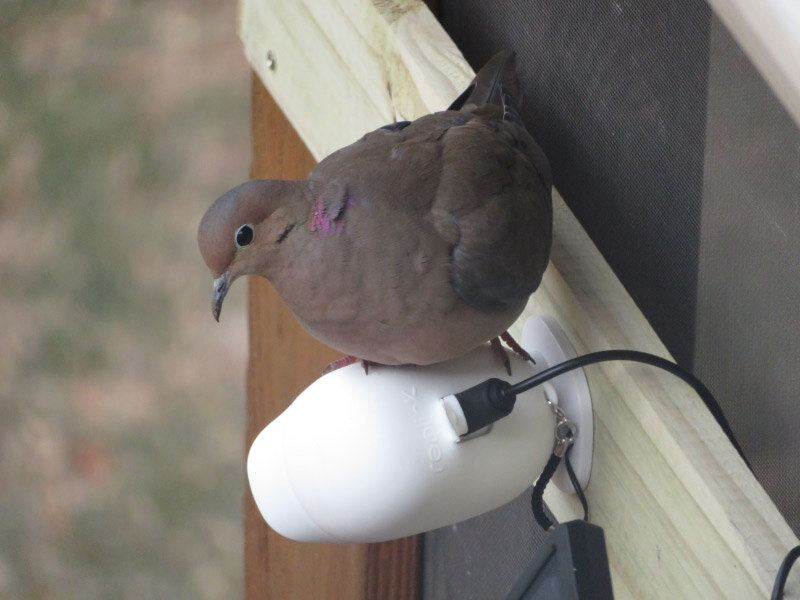
This month – right after we got the board set up for our birdfeed camera mount, I came into my office and discovered that the doves had already discovered the new perch. The camera is only big enough for one but there are other perches nearby – the gutter above and the solar panel to the side are popular.

Overall our back yard seems to be a popular place for birds. Fortunately, the predators are infrequent and don’t stick around. Our feeder and bird bath have busy times during the day…and other times are very quiet. Some visitors come every day while others come only occasionally. I’m always thrilled to find bird action when I first walk into my office!

Red-Tailed Hawk

I had a busy June and July…just catching up with some of the things that happened. One was a flurry related to a red-railed hawk in State College, Pennsylvania. We were coming back from dinner the day before the finally packing up and cleaning out of my daughter’s apartment – heading off to Springfield, Missouri.

As we turned into the apartment parking lot a large bird flew low just over the car toward the base of a tree. There was a lot of noise in the underbrush….and the hawk came up empty. The squirrel escaped into a nearby tree and the hawk sat on the ground for almost a minute – seemingly befuddled.

The bird flew up to a light pole and sat long enough for me to get my camera out and take a picture. It still looks a little scruffy (and maybe frustrated) from the encounter!

My daughter had told me about the red-tails she had heard and observed frequently from her apartment window in State College…and I was thrilled to see one in action.

Belmont Field Trips

BioBlitz for middle schoolers and Nature Tales for pre-K – the Howard County Conservancy field trips at Belmont had quite an age range.

2019 06 IMG_4652.jpg

Early in the month before a middle school BioBlitz, a red-tailed hawk sat on the Carriage House roof watching the flurry of preparation below. It stayed until the first groups of students arrived to fly away.

The last field trip of the season was a pre-K group. My station was all about trees. I took a picture of it before they arrived. I’d had pulled some tulip poplar seedlings to show since the nearby sycamore trees that I used to talk a lot about had been cut down (before they fell on a nearby building).  The was the calm before the 56 4-year-olds with their chaperones arrived on 4 buses. I was glad that they came to my station in 4 separate groups rather than all at once! The weather was near perfect…the children thrilled to be outdoors…and a good time was had by all…and maybe they learned a little about trees too. It was a good finale to the spring field trip season.

Festival of the Cranes – part 8

After the fly out, we headed to the Bosque del Apache National Wildlife Refuge visitor center to meet the bus for a Raptor ID tour.

The refuge is home to many red-tailed hawks…several different morphs. The basic ‘football’ shape is what we were looking for in the trees.

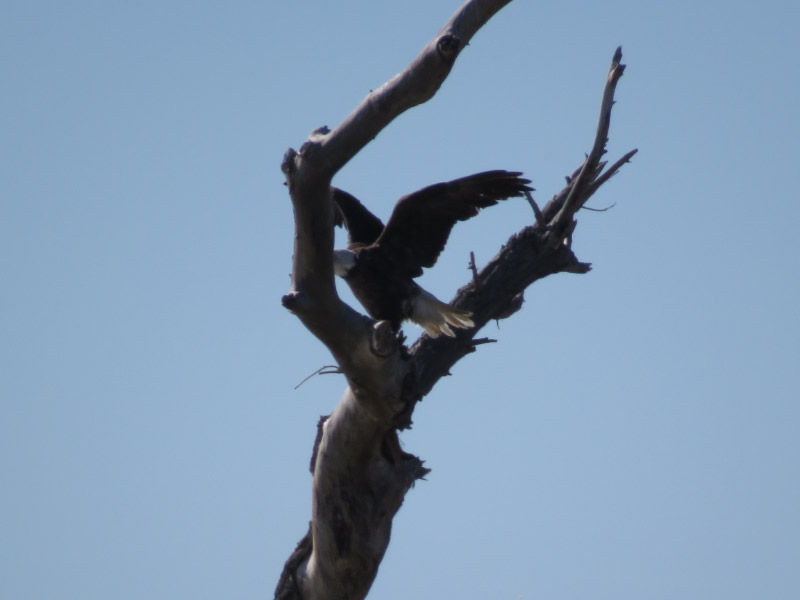
The bald eagle was in the snag in the middle of the flight deck pond. Nothing happened when the eagle opened its wings and moved all little (just as I snapped a picture…good enough to identify it as a bald eagle but not much else).

2018 11 IMG_8282.jpg

Later the bird suddenly flew away….and caused a cloud of snow geese to rise all at one time from the water’s surface.

2018 11 IMG_8337.jpg

There are a lot of northern harriers this year too. Every time we drove the wildlife loop, we saw a few. They fly low over the fields looking for their prey.

There were other birds that were not raptors that we saw too. The ravens seemed to pose of us.

2018 11 IMG_8280.jpg

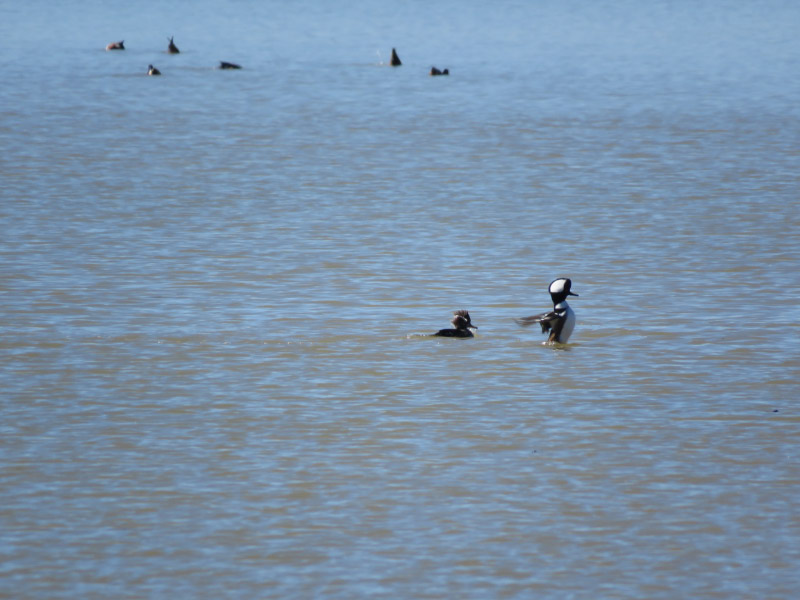
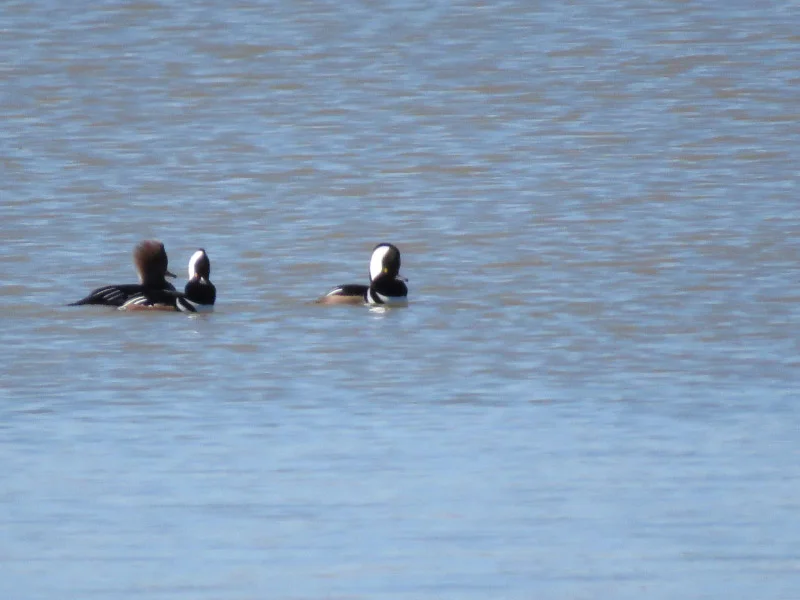
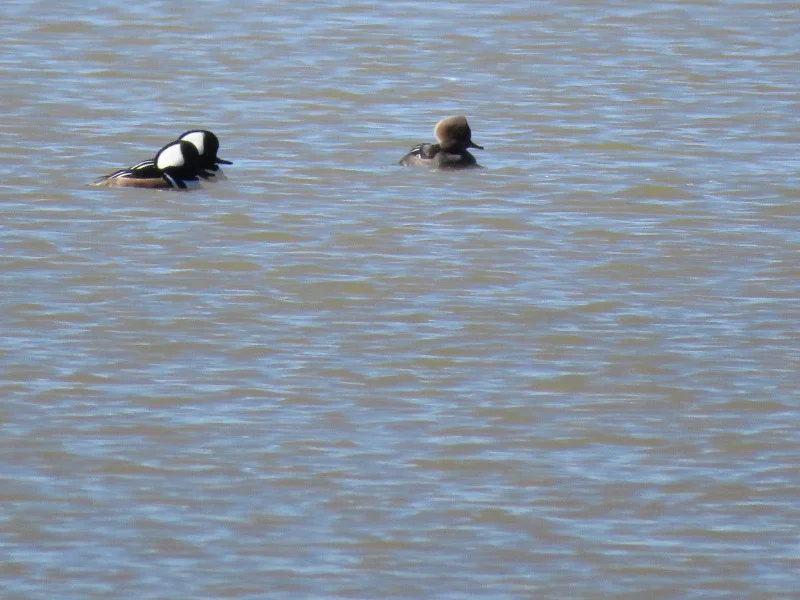
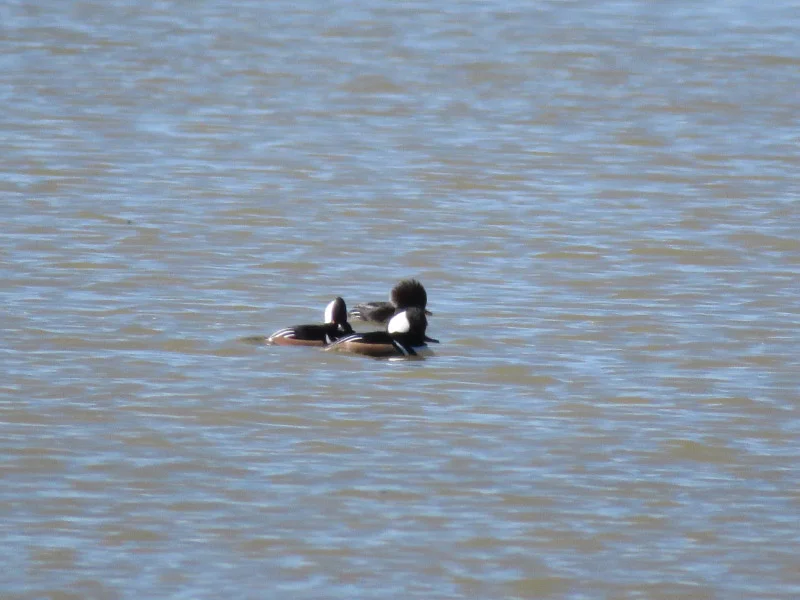
My favorite birds to watch were the hooded mergansers. At first there was just one pair interacting…then another male came along and then another female. They were almost beyond the range of my camera without the monopod. The first pair was acting a lot like is was time to breed but New Mexico is far from their breeding grounds.

The tour was an enjoyable 3 hours around the refuge wildlife loop.

Birding through a Window January 2018 (2)

Continuing from yesterday….

The goldfinches come to our bird bath frequently. They are still drab in their winter plumage. Maybe it is wishful thinking but sometimes think they are looking a little more yellow.
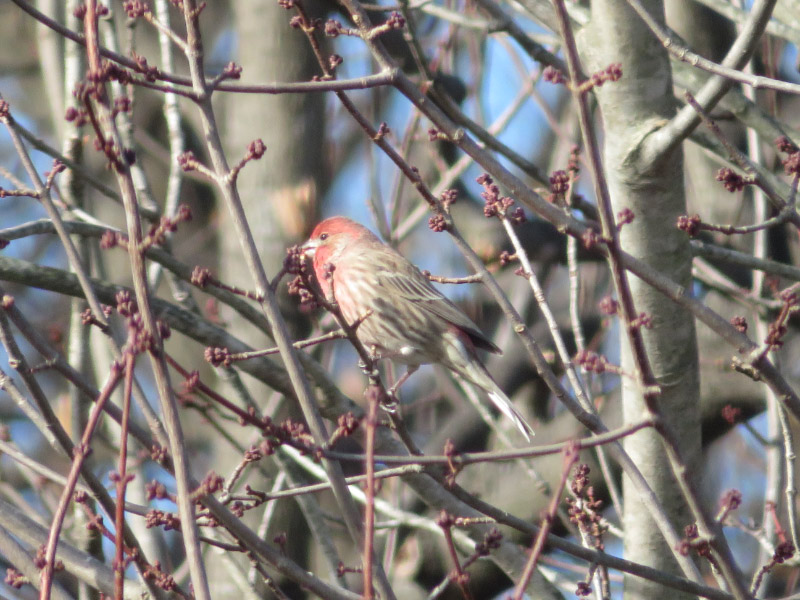
The house finches keep their color even in winter. They seem to like the sycamore and the maple more than the bird bath.

Northern Flickers visit our yard during this time of year. They are hard to see with a back drop of pine needles or fallen leaves….but stand out at the bird bath. The amount of yellow in their wing and tail feathers can be seen sometimes.

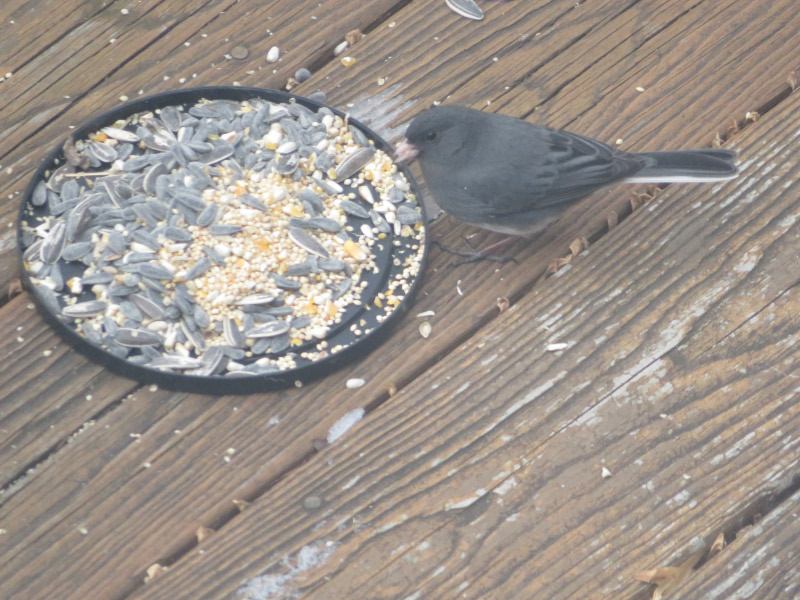
The dark-eyed juncos are winter visitors to Maryland…and come in groups to our feeder and bird bather. They explore the gutters too.

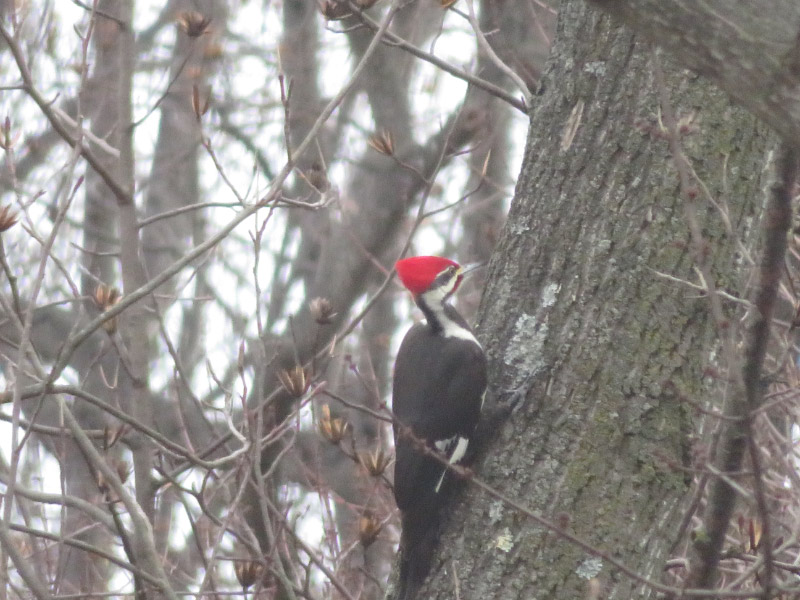
The pileated woodpeckers are infrequent visitors to the woods behind our house. If I added a suet feeder maybe they would come….but I’m content to see them in the forest. I got a fleeting glimpse of a red-bellied woodpecker this month as well….but was not fast enough to get a picture.

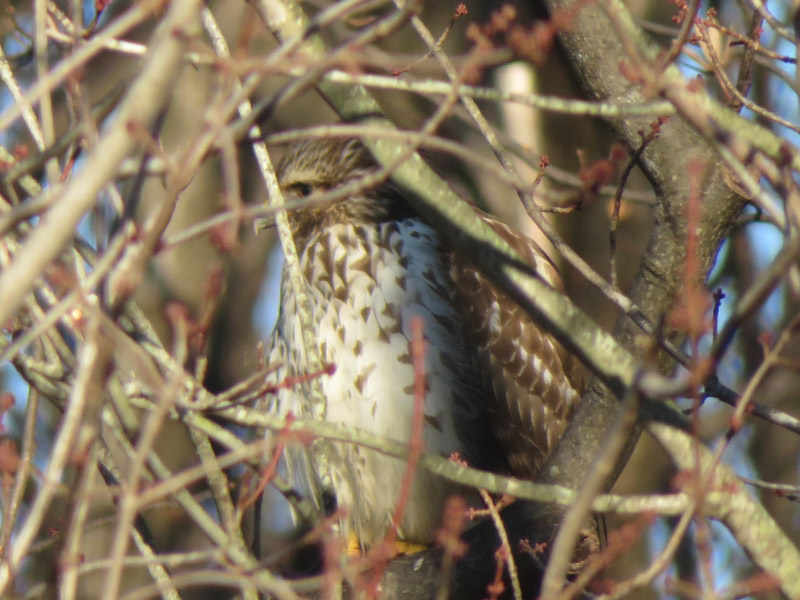
There is a red-tailed hawk that visits the edge of the forest – watching the open area between the trees and our house. Typically, the small birds leave the vicinity when the hawk is around.

The Titmouse always seems to have bigger eyes than other birds of its size.

2018 01 IMG_7969.jpg