Gleanings of the Week Ending October 24, 2026

The items below were ‘the cream’ of the articles and websites I found this past week. Click on the light green text to look at the article.

10/02/2026 Inside Climate News Maryland Demands Answers as Fuel Leak Persists from Joint Base Andrews - Maryland environmental regulators say jet fuel continues to seep into Piscataway Creek from Joint Base Andrews more than six months after the spill was reported, despite the base’s assurances that it has isolated the damaged fuel system and stopped the leak.

10/10/2026 Science Daily A plastic once thought harmless may be fueling fatty liver disease - Texas A&M researchers discovered that polyethylene microplastics can contribute to fatty liver disease, with potentially worse effects when combined with an unhealthy diet. Even more surprising, this widely used plastic was previously considered relatively harmless. (Polyethylene is the most commonly produced plastic. It is primarily used for plastic bags, plastic films, geomembranes and containers including bottles, cups, jars, folders, etc.)

09/29/2026 CNN Over 90% of common household items contain hazardous plastic chemicals - Potential health harms include cancer, genetic changes, and endocrine, reproductive and organ toxicity. Five categories of plastic people use almost every day include: 1) Almost 92% of the chemicals found in food-contact plastics were of high risk to human health;  2) Nearly 89% of children’s toys contained high-risk plastics; 3) Some 93% of textiles and clothing were made with dangerous chemicals; 4) Over 92% of common household products — such as bottled water, kitchenware, tableware, gardening tools, toilet articles and office supplies — contained high risk chemicals; 5) Nearly 93% of hygiene and medical plastics also contained dangerous chemicals. Those products include dental floss, tampons and other menstrual products, pill casings, patches, and syringes, to name a few.

10/8/2026 Our World in Data A 73% average decline in wildlife populations: an overview of the 2026 Living Planet Index report – 73% decline since 1970. This covers mammals, birds, reptiles, amphibians, and fish; it doesn’t yet include invertebrates or plants. Digging deeper - it’s more effective to target restorative and protective efforts to populations in serious trouble than to assume that all populations are struggling.

10/8/2026 NASA Fighting Drought in Texas Cotton Country - Satellite images highlight the scale of the problem in Lubbock and adjacent counties. Brown, parched crops and vacant plots dominated the landscape in September 2026. In contrast, much greener landscapes prevailed in September 2025 which was a more typical year for the area with a relatively healthy harvest.

10/10/2026 BBC Future The US produces millions of tons of rice waste each year. Now people are building homes with it - Previously viewed as a waste product and even pollutant, rice husks are now attracting attention for their potential as a versatile, sustainable construction material. With hundreds of new homes in the US now using rice husk paneling and other rice husk products from porches to playgrounds available. While rice husk paneling costs slightly more to install compared to cedar, the long-term maintenance costs are lower due to its resistance to moisture, sun and fire.

10/08/2026 Yale Environment 360 The U.S. Public Is Losing Its Say on Environmental Policy - Public participation is a hallmark of environmental regulation, embedded in every major environmental statute enacted over the past half-century. There are good reasons to speed up the process of writing regulations and issuing permits, but truncating public input has serious costs. It can result in flawed policy that is harder to implement, full of avoidable error, and more vulnerable to being struck down by courts. Research shows that when people participate in decisions that affect them, they are more likely to view those decisions as legitimate. There are good reasons to reform our regulatory and permitting system, but not by dispensing with public participation.

10/09/2026 Smithsonian Magazine September’s Ozone Hole Was the Biggest It Has Been in 25 Years - In September, the Antarctic ozone hole peaked at 10.6 million square miles—the second largest ever observed for this time of year. Researchers are still trying to understand how climate change impacts the strength of the polar vortex, and why bigger ozone holes are persisting longer than they used to. It could be that changes in global atmospheric dynamics are making longer-lived ozone holes more likely, which in turn could mean our timelines for ozone recovery need to be adapted.

10/09/2026 Inside Climate News Looking for Oil in Alaska, No Environmental Strings Attached - Oil companies will no longer be required to conduct environmental reviews before exploring for fossil fuel reservoirs in the Western Arctic, the largest tract of federally managed public land in the United States. The Western Arctic is the traditional land of the Iñupiat people and serves as a critical wildlife habitat for hundreds of thousands of caribou across three major herds.

10/08/2026 Science Daily Scientists tested 5 natural compounds on cancer cells. One stood out - All five disrupted cancer cell energy production and pushed many of the cells into a non-dividing state, with curcumin producing the strongest overall effect. Curcumin also showed a relatively favorable safety profile, while some other compounds caused more toxicity.

Gleanings of the Week Ending December 7, 2024

The items below were ‘the cream’ of the articles and websites I found this past week. Click on the light green text to look at the article.

No need to overload your cranberry sauce with sugar this holiday season − a food scientist explains how to cook with fewer added sweeteners – Cranberries are one of my favorite seasonal foods. I like them so much that I buy enough to freeze and use well into spring – even summer. During the cold months I use them for relishes, adding to stir fry veggies, and in muffins. I’ll make the relishes more savory than sweet from now on!

Researchers Investigate Sustainable Ancient Construction Techniques – Studying the best-preserved earthen building in the Mediterranean. It was built between the eighth and sixth centuries BCE.

Floating Wetlands Bring Nature Back to Baltimore’s Inner Harbor – Built as part of the National Aquarium. The article interested me since we lived near Baltimore for so many years.

Check Out the Highest-Resolution Images Ever Captured of the Sun’s Entire Surface – Images from European Space Agency’s (ESA) Solar Orbiter.

Climate change and air pollution could risk 30 million lives annually by 2100 - Under the most probable projection, annual mortality rates linked to air pollution and extreme temperatures could reach 30 million/year by the end of the century. In 2000, around 1.6 million people died each year due to extreme temperatures, both cold and heat. By the end of the century, in the most probable scenario, this figure climbs to 10.8 million, roughly a seven-fold increase. For air pollution, annual deaths in 2000 were about 4.1 million. By the century's close, this number rises to 19.5 million, a five-fold increase. And yet – there is not the political will to change the scenario.

Vincent van Gogh’s Brilliant Blue ‘Irises’ Were Originally Purple – The paint faded since the painting was created in 1889. It’s still beautiful – either way.

Bee alert: Pesticides pose a real threat to over 70% of wild bees - Alarming risks that pesticides pose to ground-nesting bees (i.e. bumblebees, squash bees), which are crucial for pollination and food production.

The Chilling Sound of the Aztec Death Whistle - Creating 3D digital reconstructions of original Aztec death whistles…then recording sounds from originals and the reconstructions. Both produced sounds like a human voice or scream. There is a link to recording samples at the bottom of the post.

Overwhelmed by ever more clothing donations, charities are exporting the problem. Local governments must step up - There are more and more clothes in circulation, and they are getting cheaper and lower quality. That means the clothes you give away are worth less and less. Worldwide, we now dump 92 million tons of clothes and textiles a year, double the figure of 20 years earlier. Local governments usually handle other waste streams. But on clothes and textiles, they often leave it to charitable organizations and commercial resellers. This system is inherited from a time when used clothing was a more valuable resource, but the rising quantity of clothing has pushed this system towards collapse.

Oysters as large as cheese plates: How New Yorkers are reclaiming their harbor’s heritage – Perhaps the main accomplishment of the project, even more than increasing oyster population, is reminding New Yorkers that they are islanders. It's hard to care about something that is only abstract, something you don't have experience with. Ultimately, people have a much greater ability to improve water quality than the oysters ever will.

Ten Little Celebrations – December 2023

December has been one of the most unusual (and stressful) of my life. Along with all the upheaval – there were still little celebrations to notice and savor.

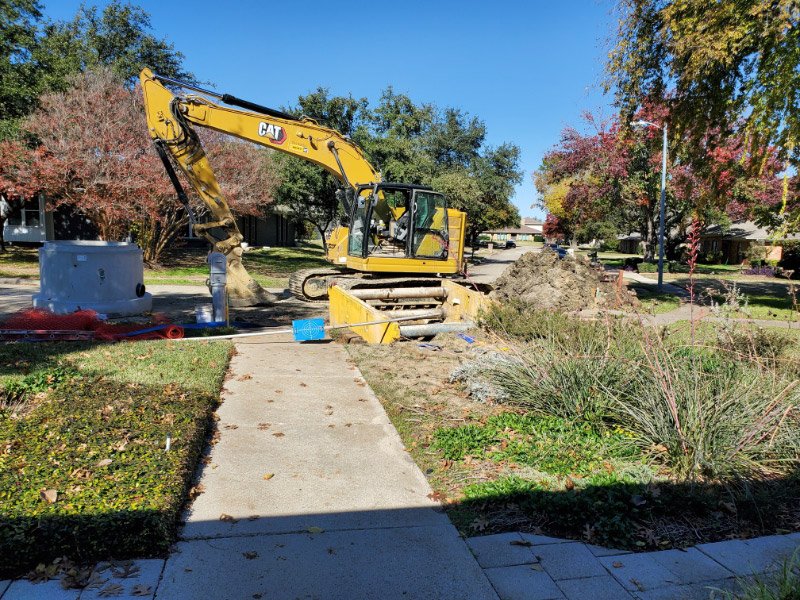
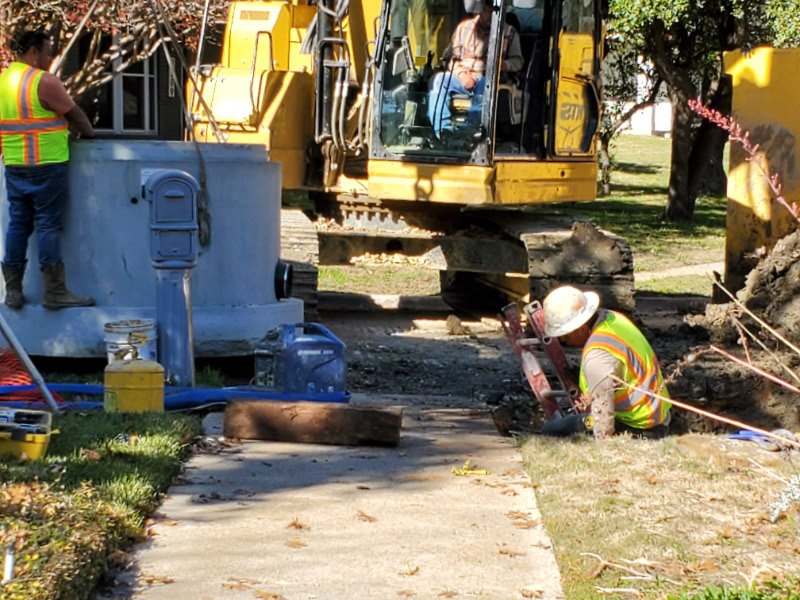
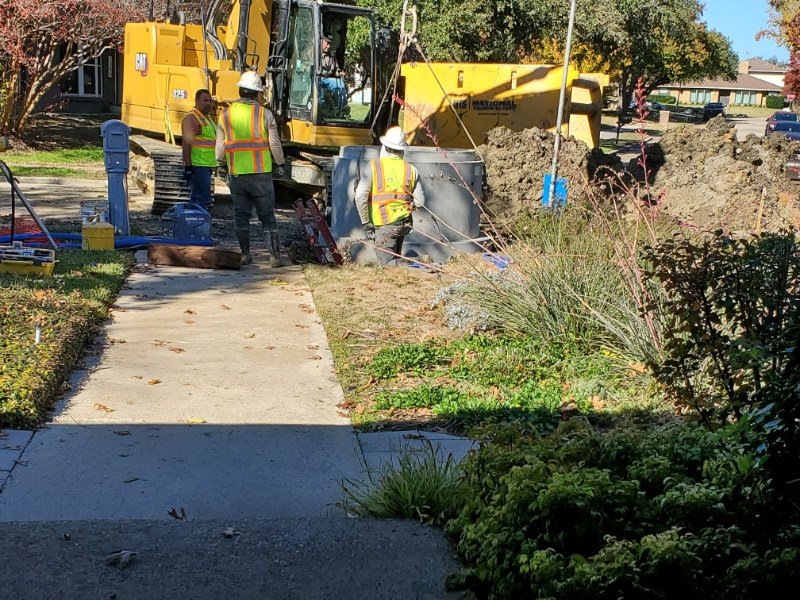
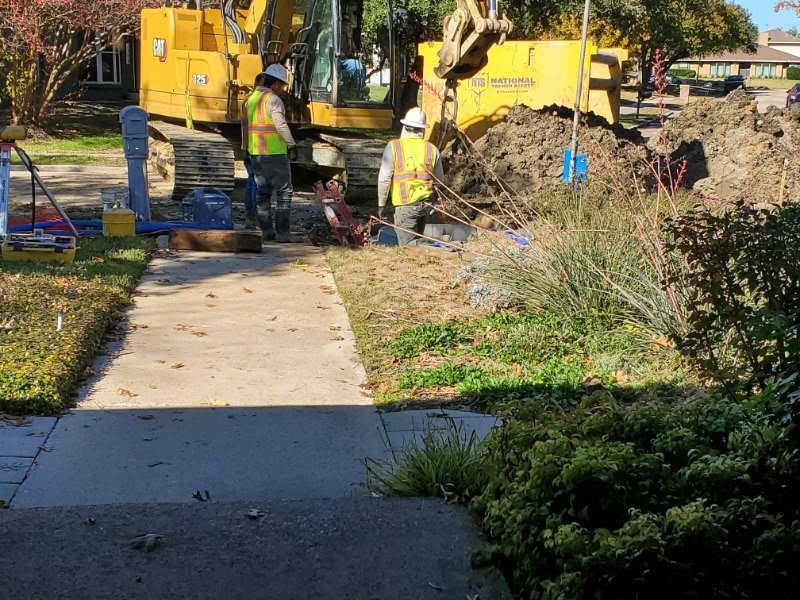
Completion of a construction project. Big machinery digging in the street/sidewalk, the alleyway, and backyard of my parents house. The city was replacing an old sewer pipe. It was interesting to watch…although there were a few anxious moments too. We all celebrated when they finished within the 3 days they’d estimated for the project!

A warm day to mow the leaves. The leaves didn’t really begin to fall in Carrollton TX until December. We celebrated a warm day to mow them into the yard.

Crystalized ginger, big peppermint sticks. I savored special foods from the past that I haven’t eaten as much in recent years. I bought the crystalized ginger and a sister provided 6 of the big barber pole peppermint sticks. I started the celebration of my birthday early!

Red velvet cake. When I was growing up, my usual birthday cake was red velvet cake – made by my mother. This year one of sisters and her husband discovered a diner that had an excellent version of the cake – and bought me two pieces – which I enjoyed 2 days in a row prior to the actual birthday!

A break. My other sister came to make lunch for my parents and I took a break away from my parents’ house. I went to a small café for brunch and they had a special: birthday pancakes! I opted to get that special (another early birthday celebration) and thoroughly enjoyed it. Then I walked (and took pictures of birds) around Josey Ranch.

December celebrations. My birthday is just one of the normal December celebrations in my family. There is also my parents’ anniversary (their 71st) and Christmas! It’s always a hectic month…full of family visits.

Good sleep. I usually sleep well but it has not been as consistent this month….so I celebrated a particularly good night!

Fall foliage of crape myrtles. I’d never noticed crape mytles in the fall before. At my parents the conditions must have been just right for them to turn from green and hold their leaves this year. I celebrated how great they looked with the leaves and seed pods.  

Finding assisted living. Change is hard. We had moments of discovery and panic…celebrated finding an assisted living group home for my parents and then realizing that the details required another burst of energy. As I write this we are all celebrating how much we have accomplished with our combined efforts.

Daughter arriving. My daughter came for my birthday and the anniversary. She took me out for Ethiopian food to celebrate my birthday!

December 2023….what a cresendo for the year!

Construction in the Carrollton Yard

My parents’ neighborhood is getting a refresh of infrastructure (water, sewer). Streets, sidewalks, and alleys are being repaved too. There was a notice taped to the door shortly after Thanksgiving about a mini-project replacing a sewer line that ran along their property line (from street to alley) and it started a few days later. They estimated it would take 3-4 days. They started before 8 on the 1st morning.

We watched the big equipment remove half the sidewalk in front and then dig a big hole where the old manhole cover had been at the edge of the yard….at the edge of the bed with red yuccas. The construction would use a pipe bursting technique (which we never did fully understand) so that only a hole at both ends of the pipe would be required (i.e. no long trench).

They discovered that the sewer connection for my parents’ house and the house next door was not on the alley end of the sewer line as expected. They put a camera through the pipe to determine where the connections were…and communicated with us about where they would dig in the yard. Fortunately, it was a small part of a flower bed near the fence and then a grassy area that was not included in the sprinkler system. (They told me a story of a similar situation elsewhere in the neighborhood where they had discovered a connection that was directly under a big tree….not sure how they resolved that one.)

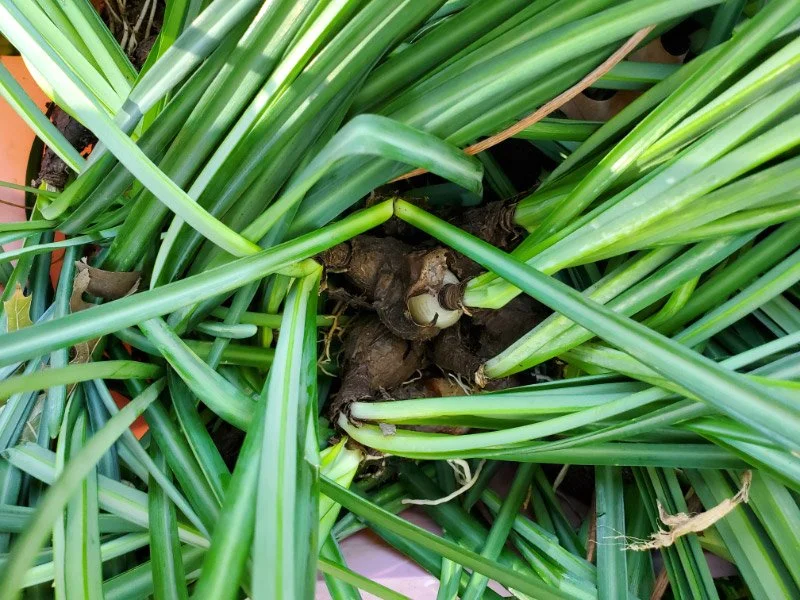
We were able to get bulbs/rhizomes (spider lily and iris) out of the flower bed that would be disturbed by the hole in the yard before it was dug on the 2nd day. The bulbs/rhizomes that are now in buckets and bins will be planted in my garden in Missouri!

The hole in the yard was done carefully to reduce damage to the yard. A panel of fence was removed to allow entry of a smaller machine to dig the hole and a tarp was spread over the grass where the dirt pile would accumulate. Within 24 hours – the hole was made, connections were made, the hole filled, and iris rhizomes that had been disturbed (that we hadn’t gotten out previously) were replanted in neat rows by the crew!

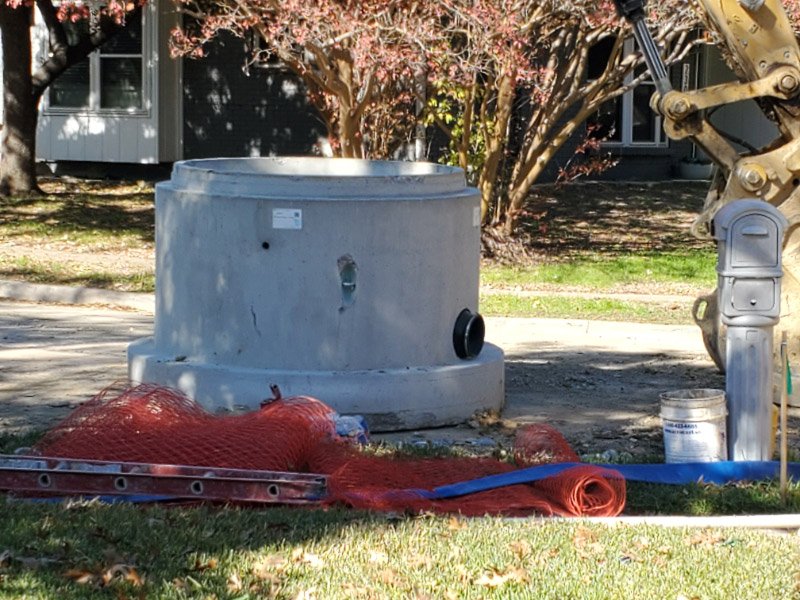
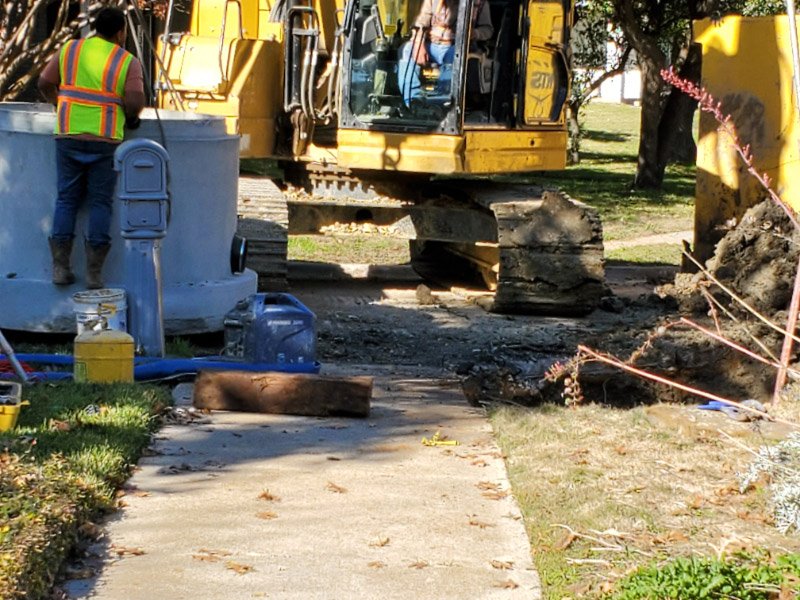
Also on the second day – they put the new concrete pipe (where the manhole cover would be) into the ground. It was impressive how the crew aligned everything, chains were attached to the pipe and the big arm of the machine what would lift it and set it down perfectly into place.

The crew seemed to be in a very good mood as they filled the hole. The man in the big backhoe seemed to have a smile on his face every time the machine swung around where I could see him!

I was left with the impression that the crew has worked together for some time…and they enjoy what they do. They want the project to be successful even if they discover something different than expected and have to tweak the plan to make it so.

I was also impressed with the personnel from the city that made sure we understood what needed to happen. It’s good the city is proactively replacing/renovating the infrastructure in the 50+ year old neighborhood!